Compendium › Breathwork › Functional patterns
Box Breathing
Four equal sides: inhale, hold, exhale, hold — commonly four counts each. A square drawn in breath, steadying by way of symmetry.

AI-generated demonstration image.
How it's practiced
- Sit comfortably tall. Breathe normally for a few breaths first.

- Inhale through the nose for a comfortable count of four.
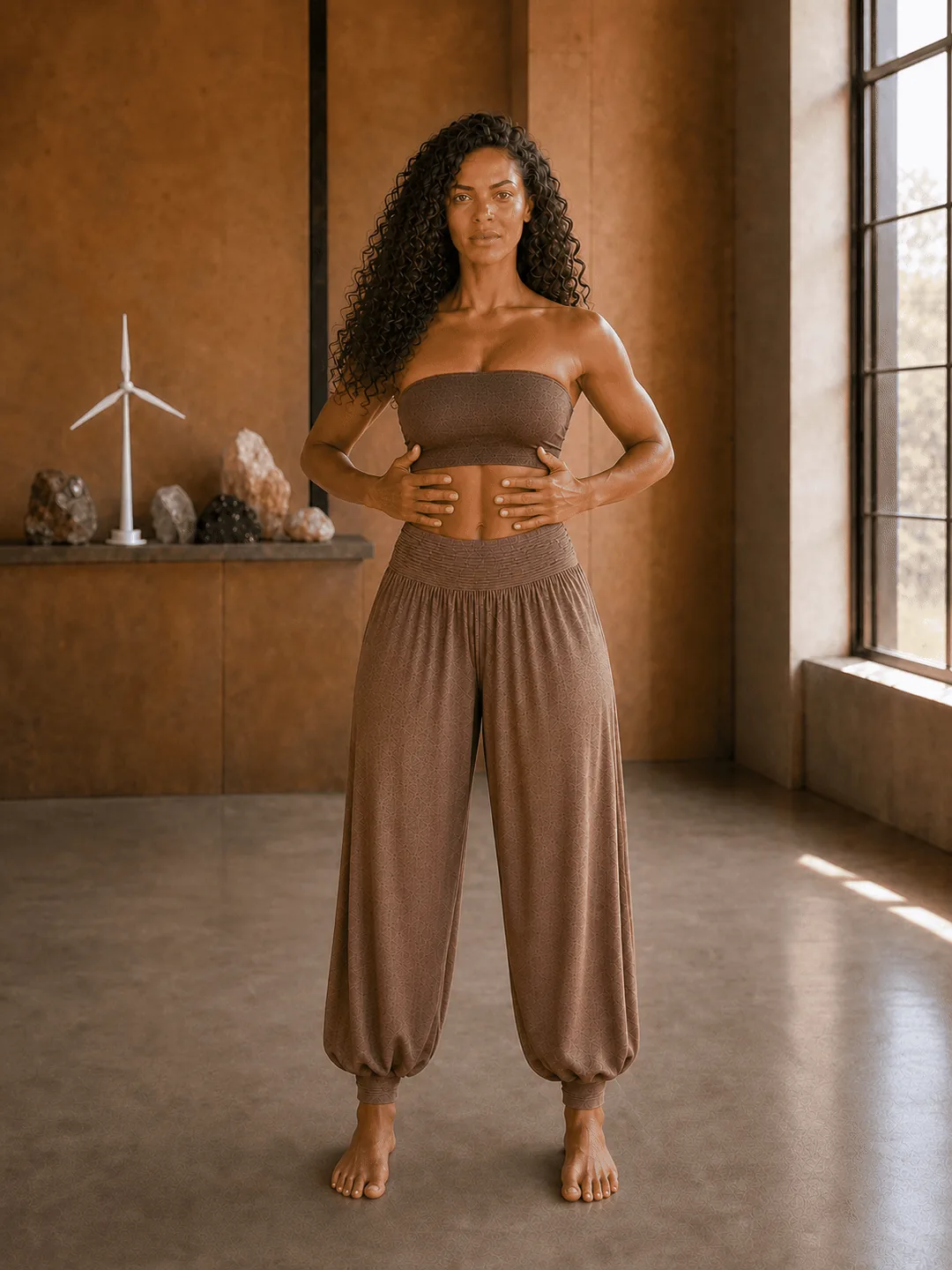
- Hold the air gently for four — soft throat, no clamping or pressure.

- Exhale through the nose or mouth for four.

- Rest empty for four, staying relaxed rather than braced.
- Repeat for four to eight rounds. If four counts feels like straining, use three, or two — the square matters, not its size.
Breath
Equal-count inhale, hold, exhale, hold. The holds are gentle pauses, never pressure. Shrink the count before you strain.
Variations
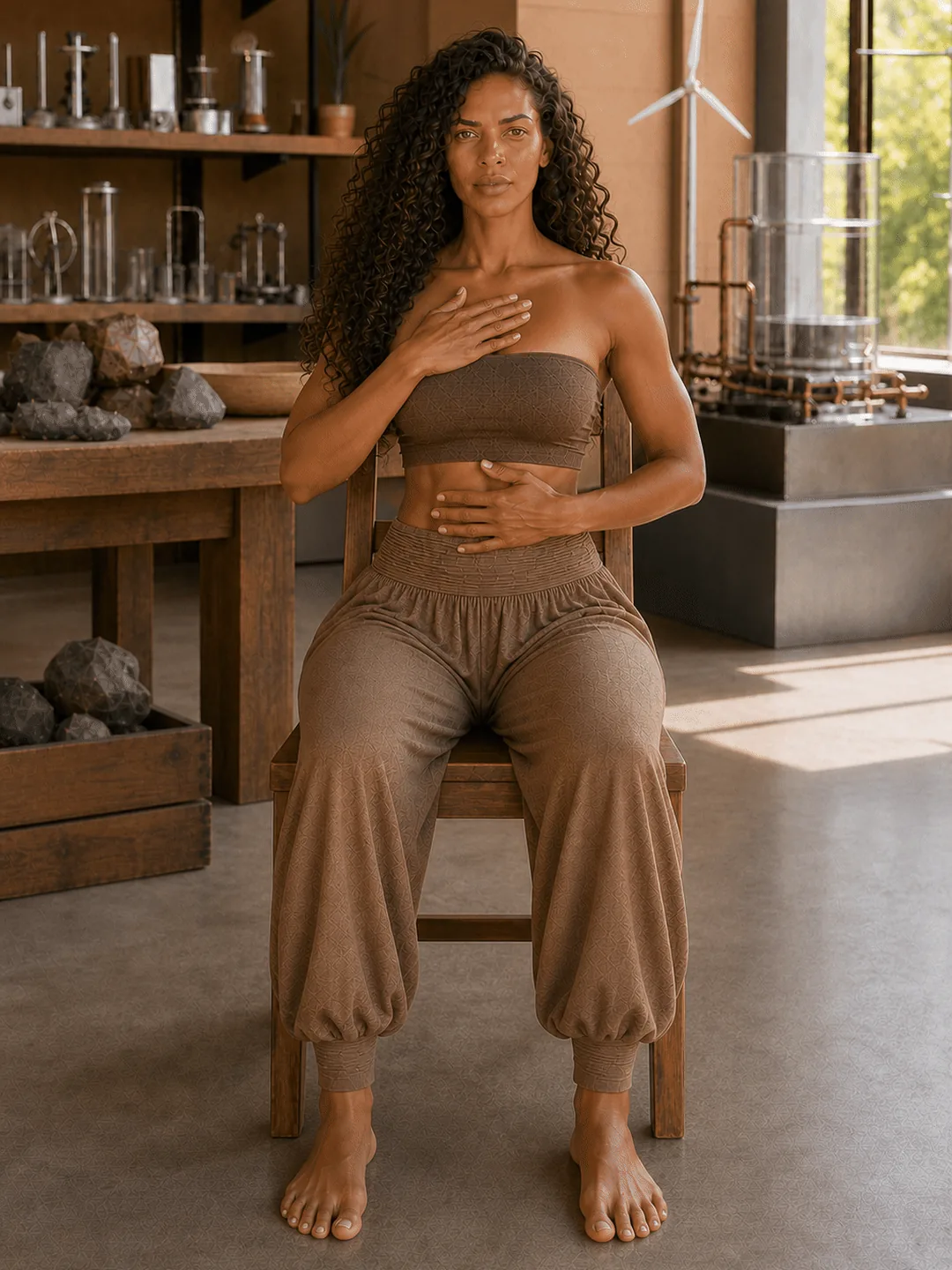
Seated Chair
Identical seated; position-independent.
Low Range
Two- or three-count square, or a 'rectangle': inhale four, exhale four, no holds.
How hard is it, honestly?
These two numbers are close — the practice is honestly what it appears to be.
What's happening in the body — and why
Equal counts give the nervous system a predictable rhythm and give the mind a job small enough to actually complete. Slowing the breath toward roughly six cycles a minute is where most of the measurable settling happens; the pauses mainly train comfort with stillness at both ends of the breath. The counting is scaffolding, not magic.
Regions most involved. Original diagram — schematic, not anatomical reference.
Muscles
- KINESIOLOGYDiaphragm and intercostals pace a controlled inhale and exhale; the pauses train tolerance for stillness at both ends of the breath.
- KINESIOLOGYPostural muscles hold easy uprightness so counting stays comfortable.
Joints & skeleton
- KINESIOLOGYRibs move evenly through the four phases; nothing else is required.
Traditional organ framework
- —
Traditional energetic framework
- —
What you might notice
Newer or limited mobility
EXPERIENCEFully accessible in any position. If pauses feel unpleasant, skip them and simply even out the inhale and exhale — that is a complete practice.
Moderate experience
EXPERIENCEThe counting occupies the mind pleasantly; many people notice steadier attention within a few rounds. Responses vary.
Experienced
EXPERIENCESoften the corners of the square — let each phase turn into the next without a grab or a lurch.
Stop signals
- dizziness, tingling, or real air hunger — return to normal breathing
- any chest pain or unusual shortness of breath: stop and seek appropriate medical help
- if breath holds trigger anxiety or symptoms, practice without holds or with professional guidance
Effects over time
Right away
EXPERIENCECommonly reported: steadier, slower breathing and a more gathered attention within a few minutes. Individual responses vary.
Weeks
EVIDENCESlow-paced breathing practices generally show modest short-term effects on self-reported stress in reviews; box-specific long-term research is limited.
Months
EVIDENCELimited pattern-specific evidence; no claims made.
Recovery
None needed.
Timing & rhythm
- Time of day: PRACTICALBefore demanding moments, or as a transition between work and home.
- Food: PRACTICALComfortable any time; large meals can make holds feel stuffy.
- Frequency: A few minutes, once or twice daily, or as needed.
Pairings
Combos with compounding effect
- meditation.sitting.breath-awareness — Box first to settle pacing, then release the count and rest in ordinary breath — structure dissolving into ease.
Strength pairings
- —
Stretch pairings
- —
Everyday life
Draw the square while the kettle heats or the printer complains. Four sides fit almost exactly one page of most printers' groaning.
Contemplative pairing
Practice phrase: CANONOriginal Yarra practice phrase: Four walls of breath; inside them, nothing needs doing.
Meditation pairing: A natural preamble to sitting practice.
Take care
- respiratory or cardiac conditions → professional guidance; consider no-hold variation
- pregnancy → skip or minimize holds
- panic-prone → no-hold rectangle variation
- never practice extended holds in water or while driving
Sources & further study
What this page is built on
- Reviews of slow-paced breathing and brief structured breathing patterns on short-term stress measures (cite at page build)
Follow it further
- EVIDENCESlow-paced breathing research on PubMed
- REFERENCENCCIH: relaxation and mind-body approaches (public domain)
Images on this page are original to this site. We do not republish third-party instructional photography; where another source is useful, we link to it rather than copy it. See our sources & images policy.
Your practice
Stored only in this browser. Mindful repetitions count; rushing doesn't. Optional goal — not a health target.