Compendium › Breathwork › Functional patterns
Coherent Breathing
Slow, even breathing at around five to six breaths per minute — roughly five counts in, five counts out — continued for a few unhurried minutes.
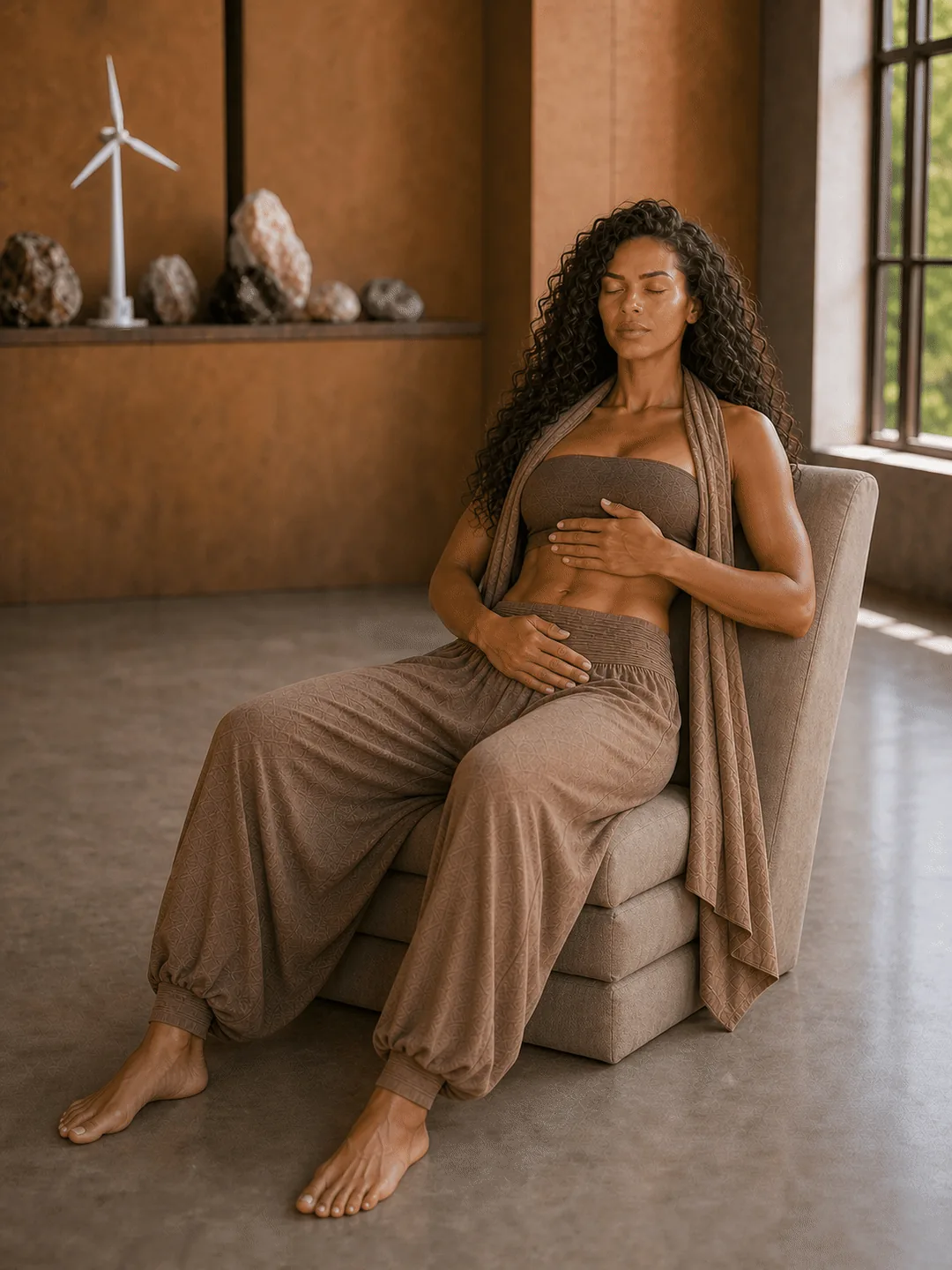
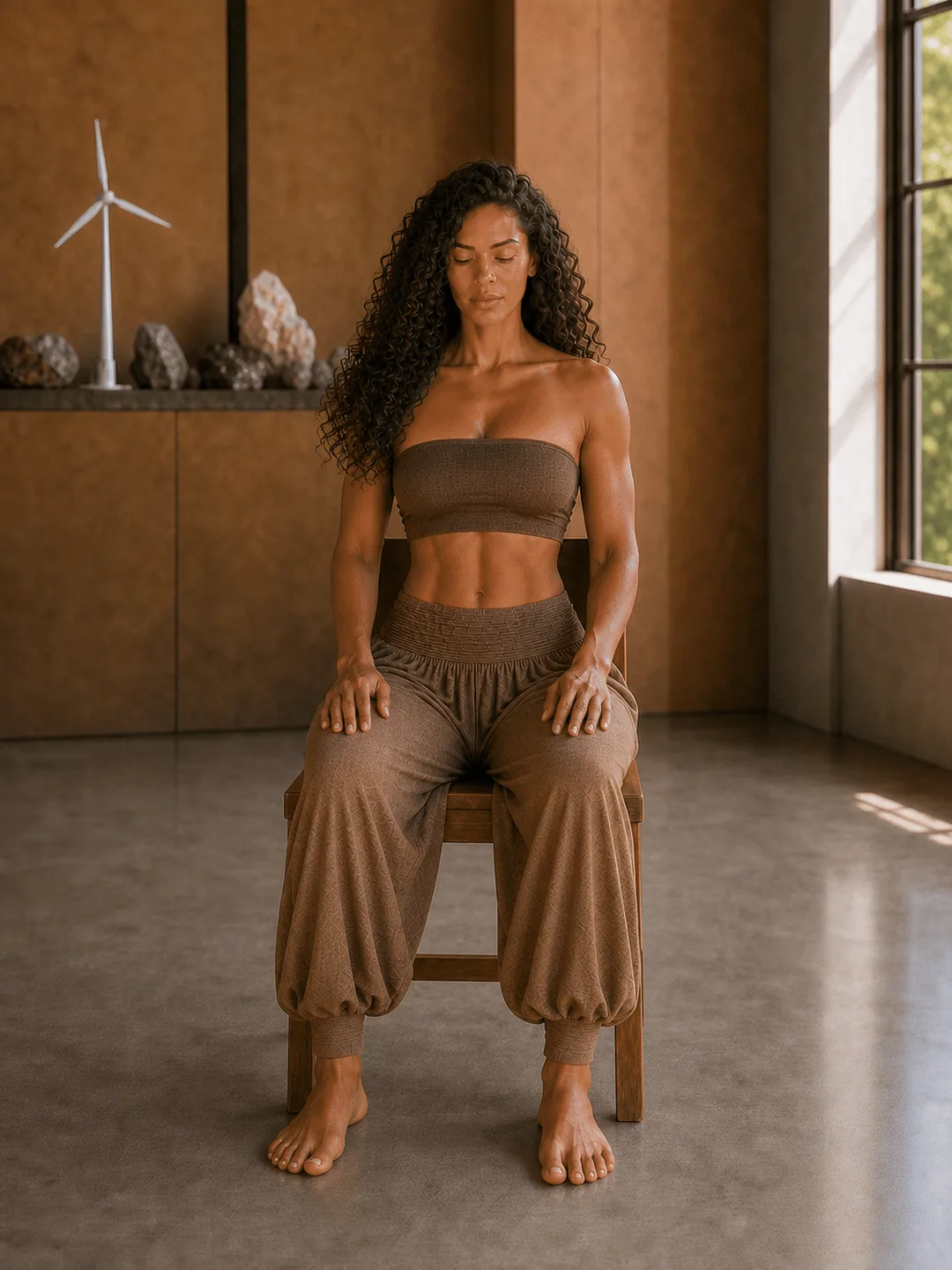
AI-generated demonstration image.
How it's practiced
- Sit or lie comfortably. Let the breath be nasal if that's easy.
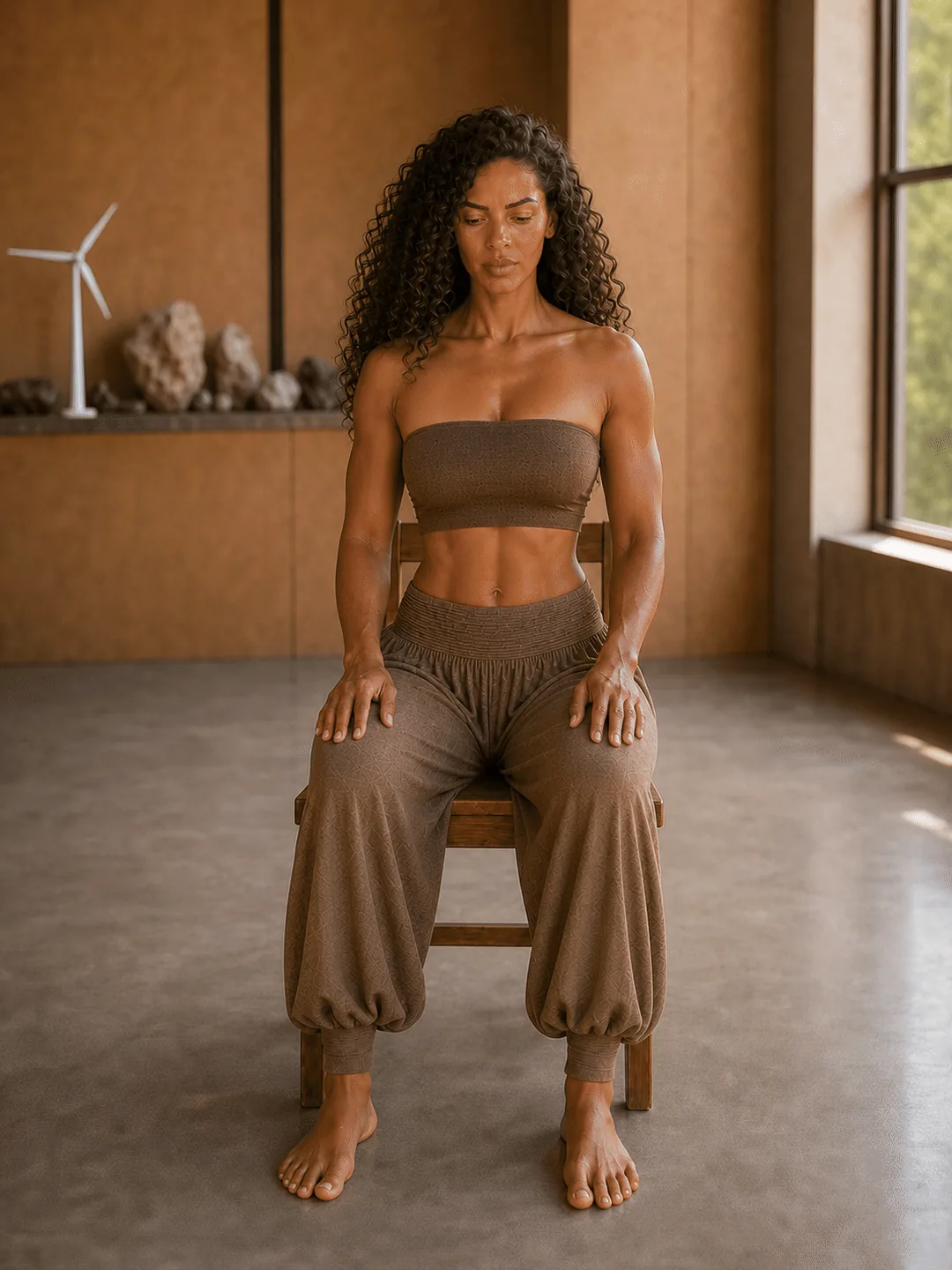
- Inhale gently for about five counts.
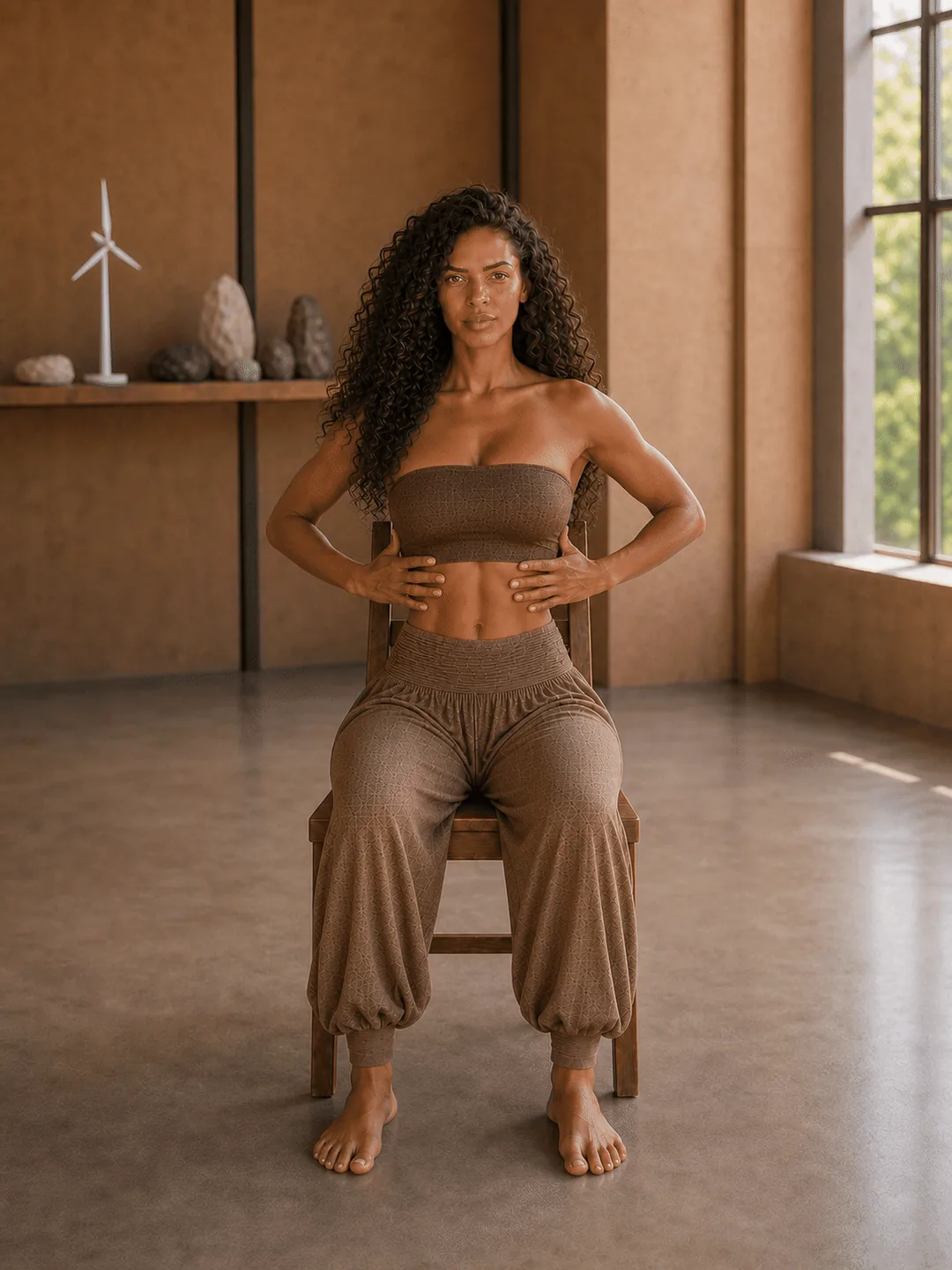
- Exhale gently for about five counts, with no pause engineered at either end.
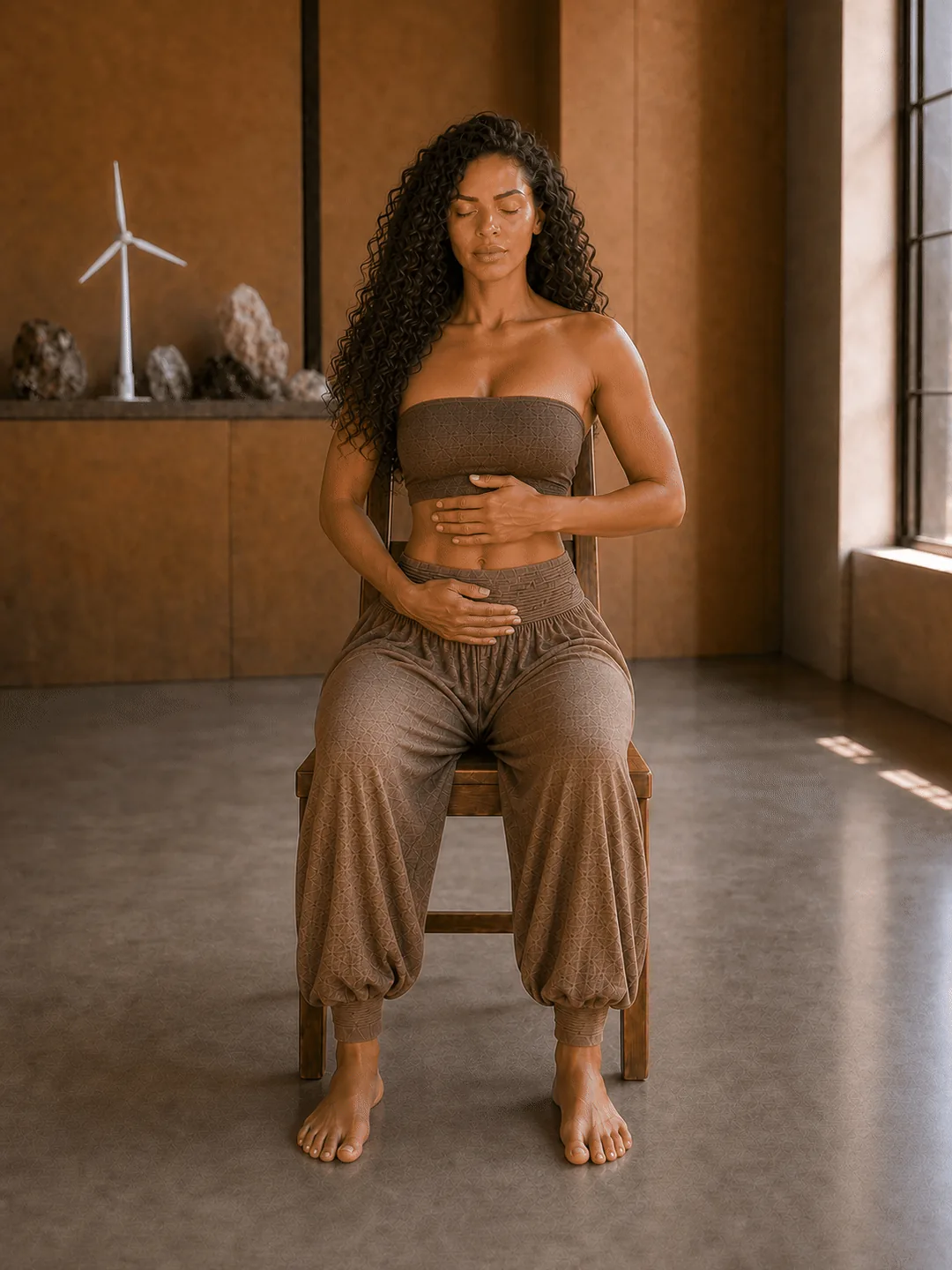
- Continue for two to five minutes, letting the count fade into rhythm once the pace feels natural.
- Finish by letting the breath do whatever it likes, and notice what that now is.
Breath
Even inhale and exhale, about five to six breaths per minute, always at comfortable volume — a rocking chair, not a metronome you must obey.
Variations
Seated Chair
Identical seated; position-independent.
Low Range
Four-count version, or simply 'exhale a little longer than usual' for one minute.
How hard is it, honestly?
These two numbers are close — the practice is honestly what it appears to be.
What's happening in the body — and why
Breathing at about five to six cycles per minute lines the breath up with a natural rhythm in the cardiovascular system, and heart-rate variability rises measurably during the practice. That is one of the more reliably reproduced findings in breathwork research. The felt experience — a tidal, rocking quality — is the same phenomenon from the inside.
Regions most involved. Original diagram — schematic, not anatomical reference.
Muscles
- KINESIOLOGYDiaphragm paces long, easy cycles; accessory breathing muscles get to stand down.
- KINESIOLOGYNo other musculature required — this pattern rewards doing less.
Joints & skeleton
- KINESIOLOGYGentle, rhythmic rib excursion; comfortable in sitting, lying, or reclining.
Traditional organ framework
- —
Traditional energetic framework
- —
What you might notice
Newer or limited mobility
EXPERIENCEFully accessible in any position. If five counts feels long, four is fine — evenness matters more than length.
Moderate experience
EXPERIENCEA settling, slightly tide-like rhythm; some people feel it in the chest as warmth or ease. Responses vary.
Experienced
EXPERIENCERelease the counting entirely and let the rhythm self-sustain, noticing the least effort that keeps it going.
Stop signals
- dizziness or tingling — return to normal breathing
- any chest pain or unusual shortness of breath: stop and seek appropriate medical help
- distress of any kind — stop; breath practice should not be endured
Effects over time
Right away
EVIDENCESlow breathing near six breaths per minute reliably increases heart-rate variability during the practice in lab settings; felt calm commonly accompanies it. Individual responses vary.
Weeks
EVIDENCEReviews of slow-paced breathing programs report modest improvements in self-reported stress and mood measures across weeks; study quality varies.
Months
EVIDENCELong-term evidence is thinner; no strong claims made.
Recovery
None needed.
Timing & rhythm
- Time of day: PRACTICALEvenings and pre-sleep are popular; equally useful before demanding conversations.
- Food: PRACTICALAny time; very full stomachs may prefer sitting over lying.
- Frequency: Two to five minutes, daily or as wanted.
Pairings
Combos with compounding effect
- breath.functional.physiological-sigh — Sigh once to open the door, then coherent breathing to stay in the room.
Strength pairings
- —
Stretch pairings
- —
Everyday life
Match the breath to a slow walk — about three steps in, three steps out — and the sidewalk becomes the metronome.
Contemplative pairing
Practice phrase: CANONOriginal Yarra practice phrase: The tide comes in; the tide goes out; the shore is not in a hurry.
Meditation pairing: Blends seamlessly into body-scan or sitting practice.
Take care
- respiratory or cardiac conditions → professional guidance
- not while driving if drowsiness appears
- orthostatic symptoms → practice seated
Sources & further study
What this page is built on
- Research on slow-paced breathing (~5-6 breaths/min), HRV, and self-reported stress (cite specific reviews at page build)
Follow it further
- EVIDENCESlow breathing and heart-rate variability on PubMed
- REFERENCENCCIH: relaxation and mind-body approaches (public domain)
Images on this page are original to this site. We do not republish third-party instructional photography; where another source is useful, we link to it rather than copy it. See our sources & images policy.
Your practice
Stored only in this browser. Mindful repetitions count; rushing doesn't. Optional goal — not a health target.