Compendium › Breathwork › Functional patterns
4-7-8 Breathing
Inhale four, hold seven, exhale eight — a strongly exhale-weighted pattern, popularized as a wind-down ritual. The counts are a proportion, not a law.
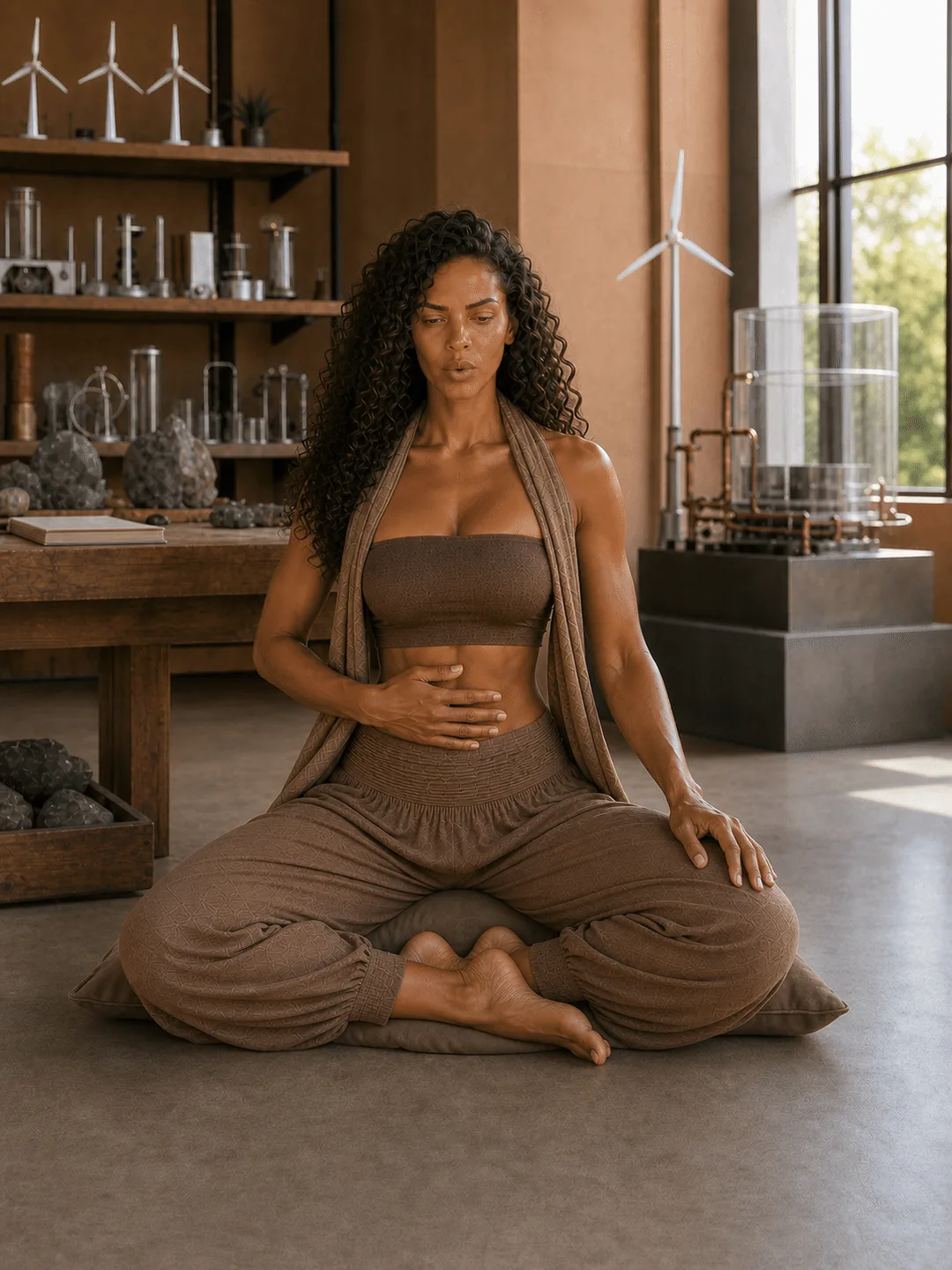
AI-generated demonstration image.
How it's practiced
- Sit comfortably or lie down. Rest the tongue lightly behind the upper front teeth if that's comfortable — traditional to the popular method, optional here.
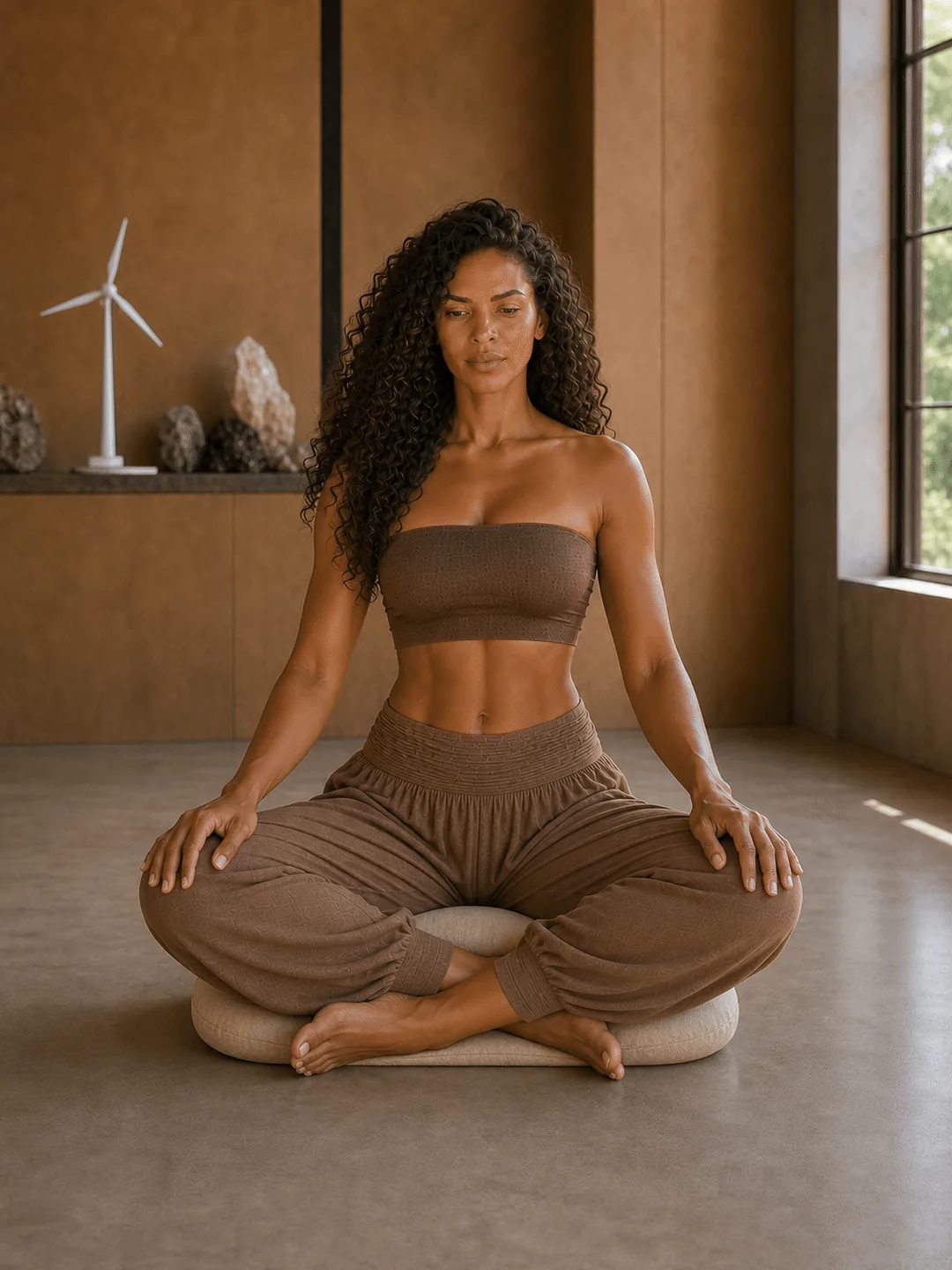
- Exhale fully once through the mouth.
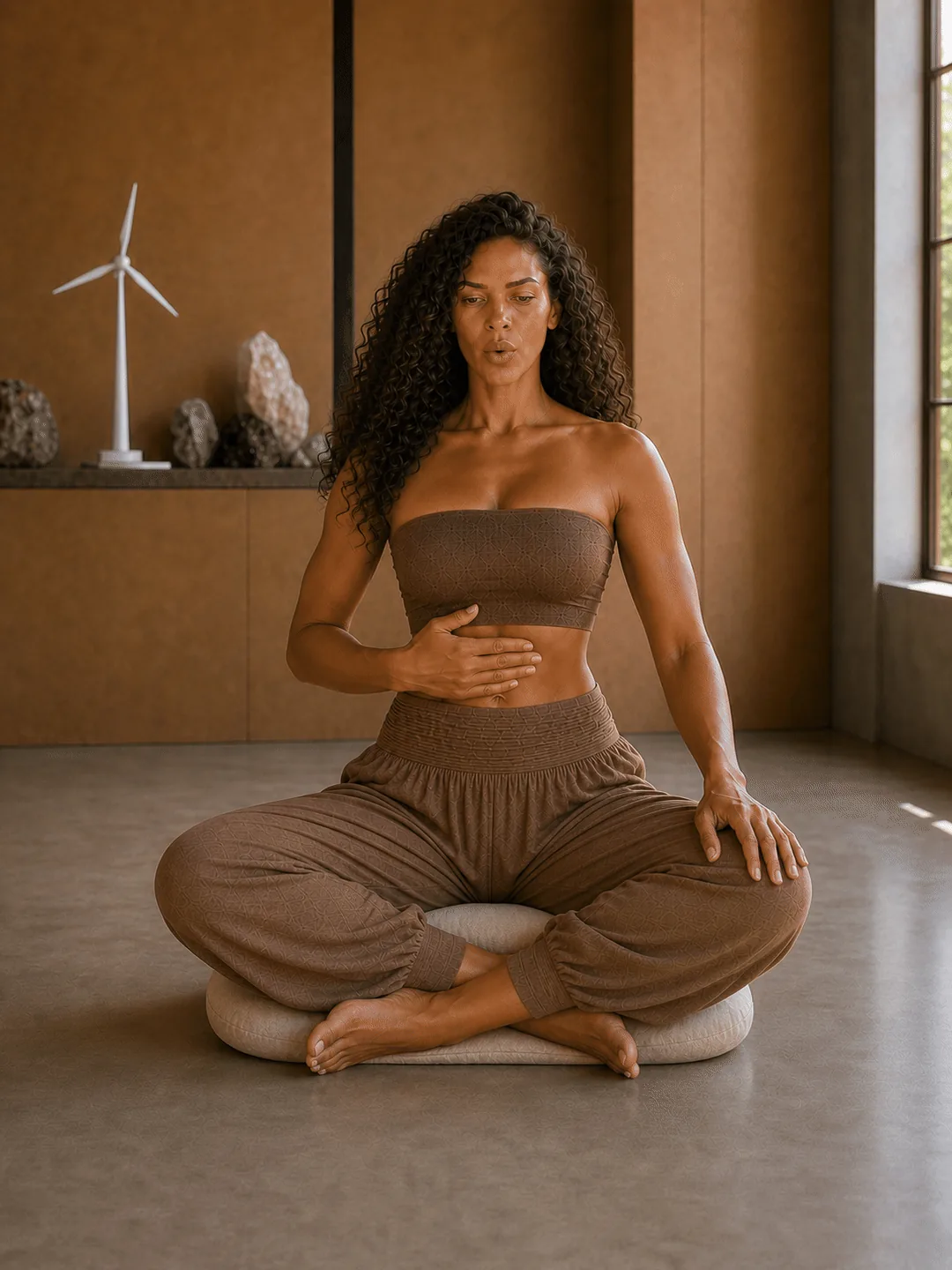
- Inhale quietly through the nose for four counts.
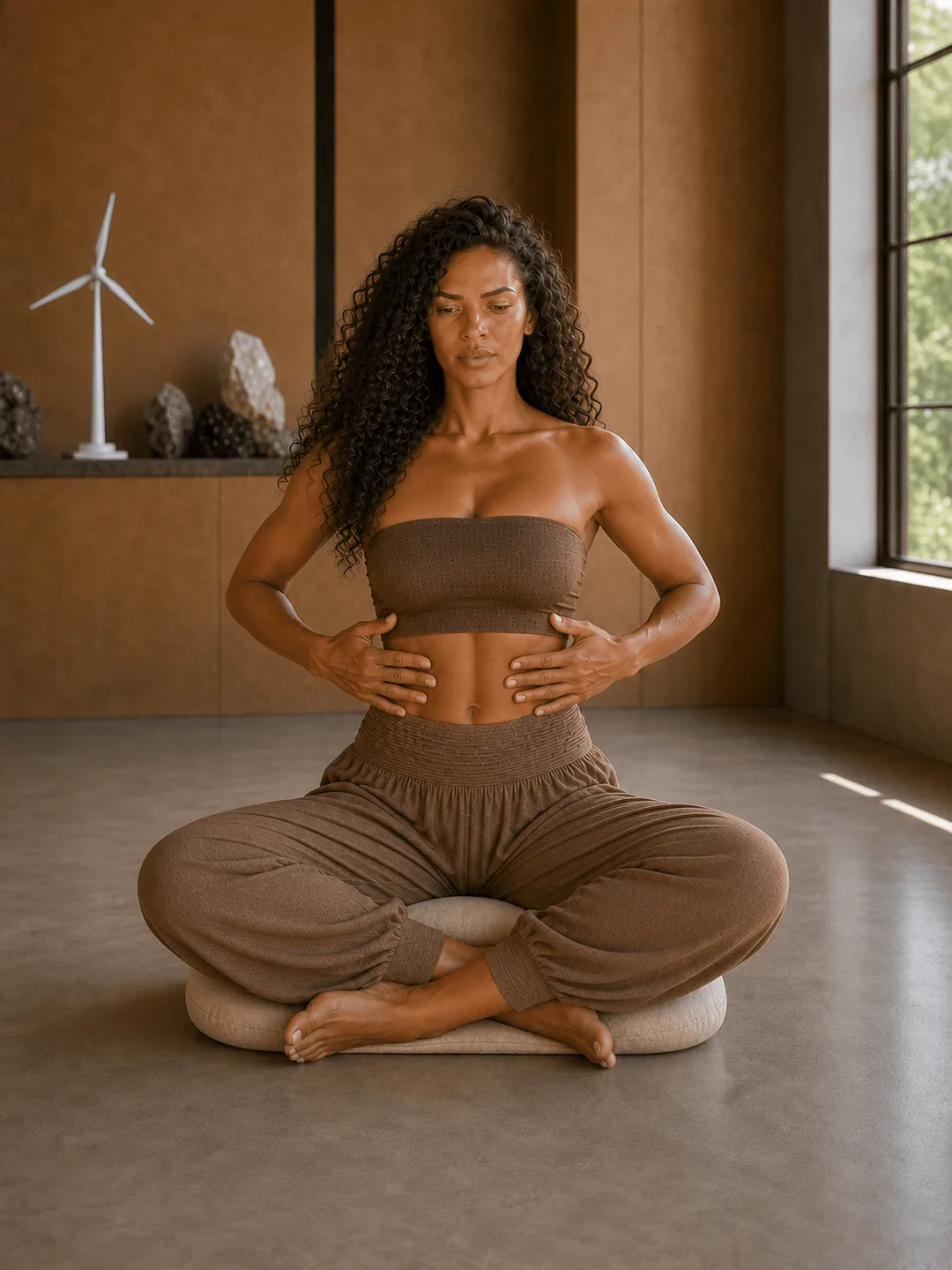
- Hold gently for seven counts — soft, unbraced, no pressure in the head or chest.
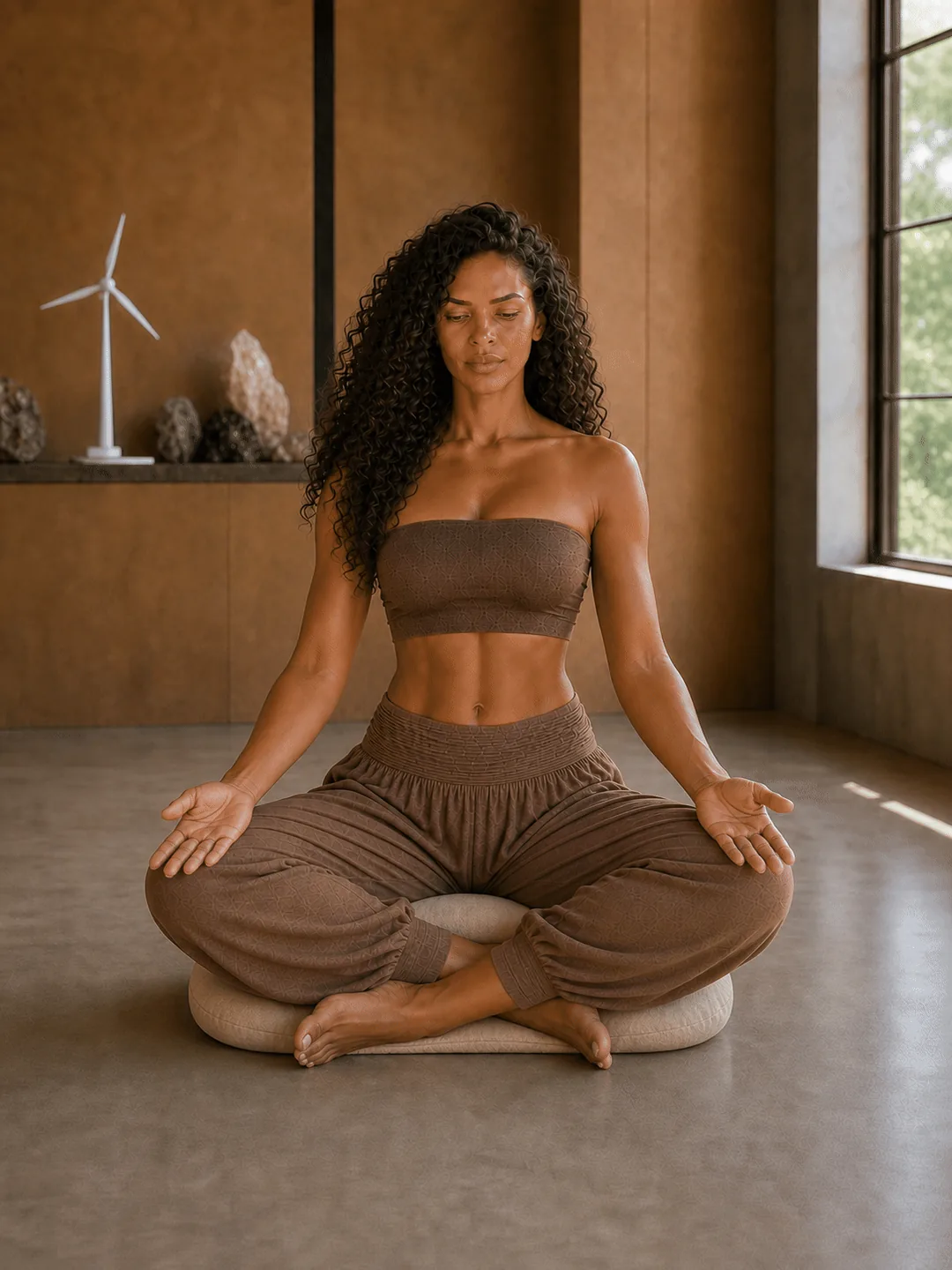
- Exhale audibly through the mouth for eight counts, slow and unforced.
- That is one cycle. Two to four cycles is plenty; stop earlier if lightheaded.
Breath
4:7:8 proportion, exhale nearly twice the inhale. Scale the whole ratio down (2:3.5:4) rather than straining any phase.
Variations
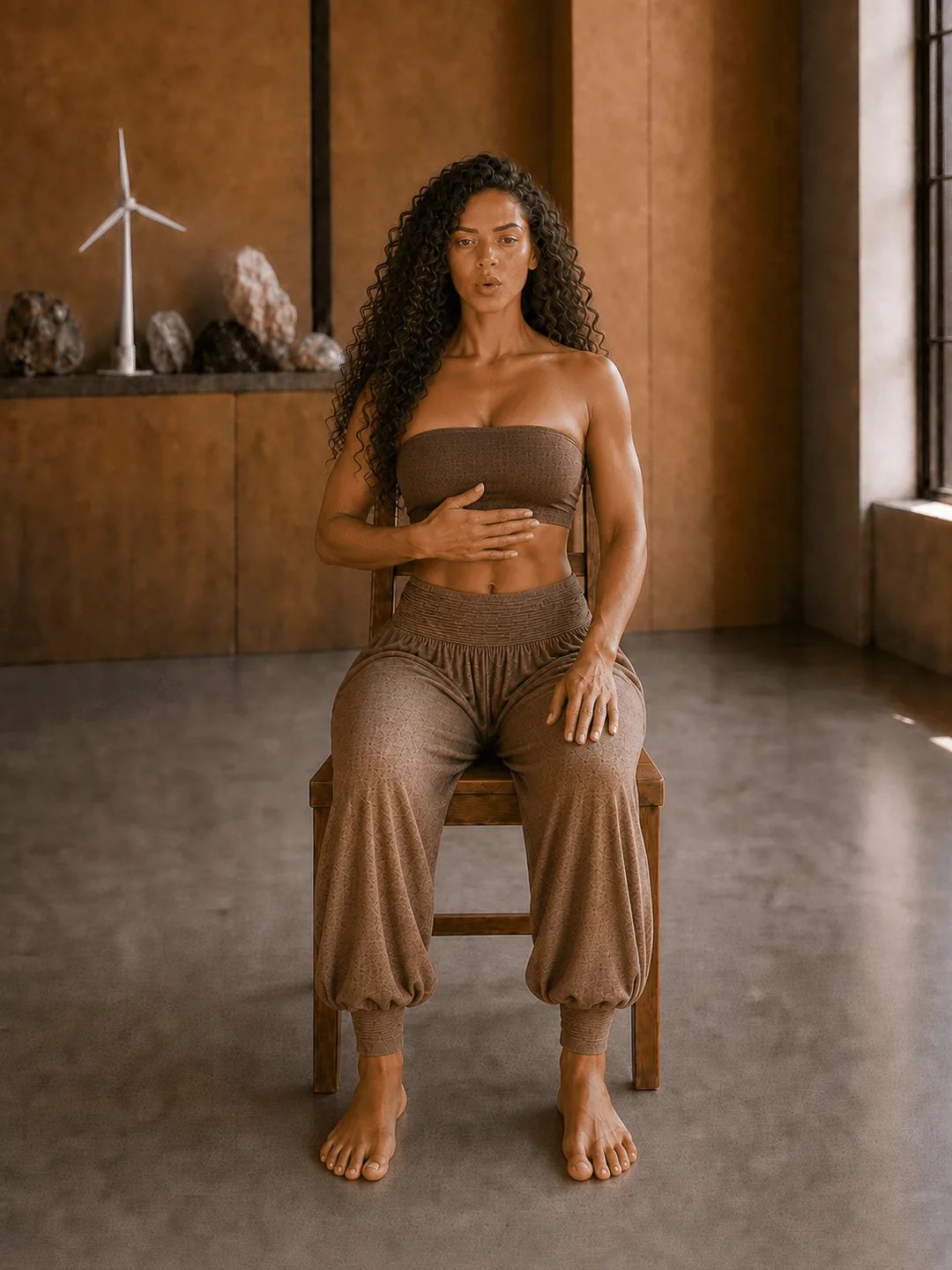
Seated Chair
Identical seated; position-independent.
Low Range
Halved counts (2-3.5-4), or drop the hold entirely: inhale four, exhale eight.
How hard is it, honestly?
These two numbers are close — the practice is honestly what it appears to be.
What's happening in the body — and why
An exhale nearly twice the length of the inhale is the active ingredient; the long out-breath is where the settling lives, and the hold mostly stretches the ratio. Pattern-specific research is thin, so we describe the mechanism honestly rather than promising an outcome. Practice it seated until you know how strongly it affects you.
Regions most involved. Original diagram — schematic, not anatomical reference.
Muscles
- KINESIOLOGYDiaphragm on a short controlled inhale; a long, mostly passive exhale with gentle abdominal finish.
- KINESIOLOGYThe hold trains stillness without bracing — jaw, neck, and shoulders stay soft.
Joints & skeleton
- KINESIOLOGYRibs settle progressively through the extended exhale.
Traditional organ framework
- —
Traditional energetic framework
- —
What you might notice
Newer or limited mobility
EXPERIENCEAccessible in any position; the counts are the challenge, not the body. Halve every number and it remains the same practice.
Moderate experience
EXPERIENCEThe long exhale often brings a distinct heaviness or sleepiness; mild lightheadedness in early sessions is common and should stay mild.
Experienced
EXPERIENCEKeep the seven-count hold genuinely soft and notice how the exhale can lengthen without ever being pushed.
Stop signals
- more than mild dizziness or tingling — return to normal breathing
- any chest pain or unusual shortness of breath: stop and seek appropriate medical help
- if holds provoke anxiety or symptoms, use the no-hold variation or professional guidance
Effects over time
Right away
EXPERIENCEWidely reported as sedating; useful before sleep. Controlled research specific to 4-7-8 is limited; exhale-weighted slow breathing generally associates with short-term calming in studies.
Weeks
EVIDENCEPattern-specific trials are few and small; no strong claims made.
Months
EVIDENCEInsufficient pattern-specific evidence; no claims made.
Recovery
None needed. Practice seated until you know how strongly it affects you.
Timing & rhythm
- Time of day: PRACTICALPopularly used at bedtime; avoid immediately before tasks needing alertness.
- Food: PRACTICALAny time; holds feel stuffier after large meals.
- Frequency: Two to four cycles, once or twice daily at most — this one rewards small doses.
Pairings
Combos with compounding effect
- meditation.sitting.breath-awareness — Two cycles as a runway, then land in ordinary sitting — the pattern quiets, the awareness stays.
Strength pairings
- —
Stretch pairings
- —
Everyday life
The last two minutes before lights-out, already lying down, phone already face-down across the room — that placement being the true advanced technique.
Contemplative pairing
Practice phrase: CANONOriginal Yarra practice phrase: A short hello, a patient pause, a long and honest goodbye.
Meditation pairing: Followed naturally by lying-down rest or sleep.
Take care
- respiratory or cardiac conditions → professional guidance; prefer no-hold variation
- pregnancy → minimize or skip the hold
- panic-prone → no-hold variation
- never practice while driving; sedation is the point
- never practice breath holds in water
Sources & further study
What this page is built on
- Literature on exhale-weighted slow breathing and pre-sleep arousal (pattern-specific 4-7-8 evidence is limited; cite honestly at page build)
Follow it further
- EVIDENCESlow-paced breathing research on PubMed
- REFERENCENCCIH: relaxation and mind-body approaches (public domain)
Images on this page are original to this site. We do not republish third-party instructional photography; where another source is useful, we link to it rather than copy it. See our sources & images policy.
Your practice
Stored only in this browser. Mindful repetitions count; rushing doesn't. Optional goal — not a health target.