Compendium › Qigong › Eight Brocades
Two Hands Hold Up the Heavens
两手托天理三焦 · Liǎng shǒu tuō tiān lǐ sānjiāo
The opening brocade: the hands travel from the lower abdomen to a comfortable overhead reach and return as the knees softly straighten and bend—an unhurried coordination of posture, gaze, and natural breath.
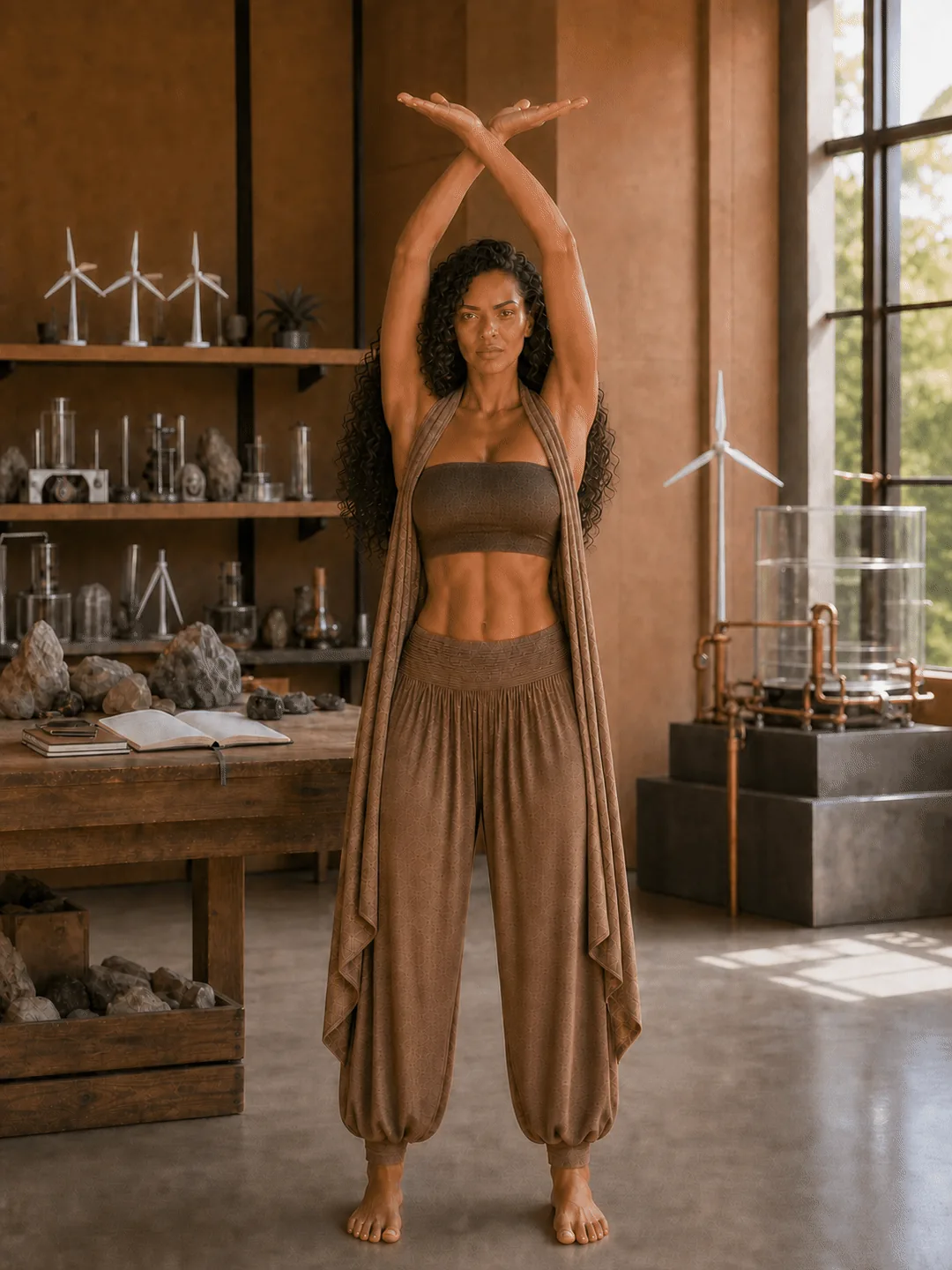
AI-generated demonstration image.
How it's practiced
- Stand with the inner edges of the feet about shoulder-width apart, toes facing forward, knees softly bent, torso upright, and gaze forward. Bring the hands near the lower abdomen with palms facing up and fingertips comfortably apart.
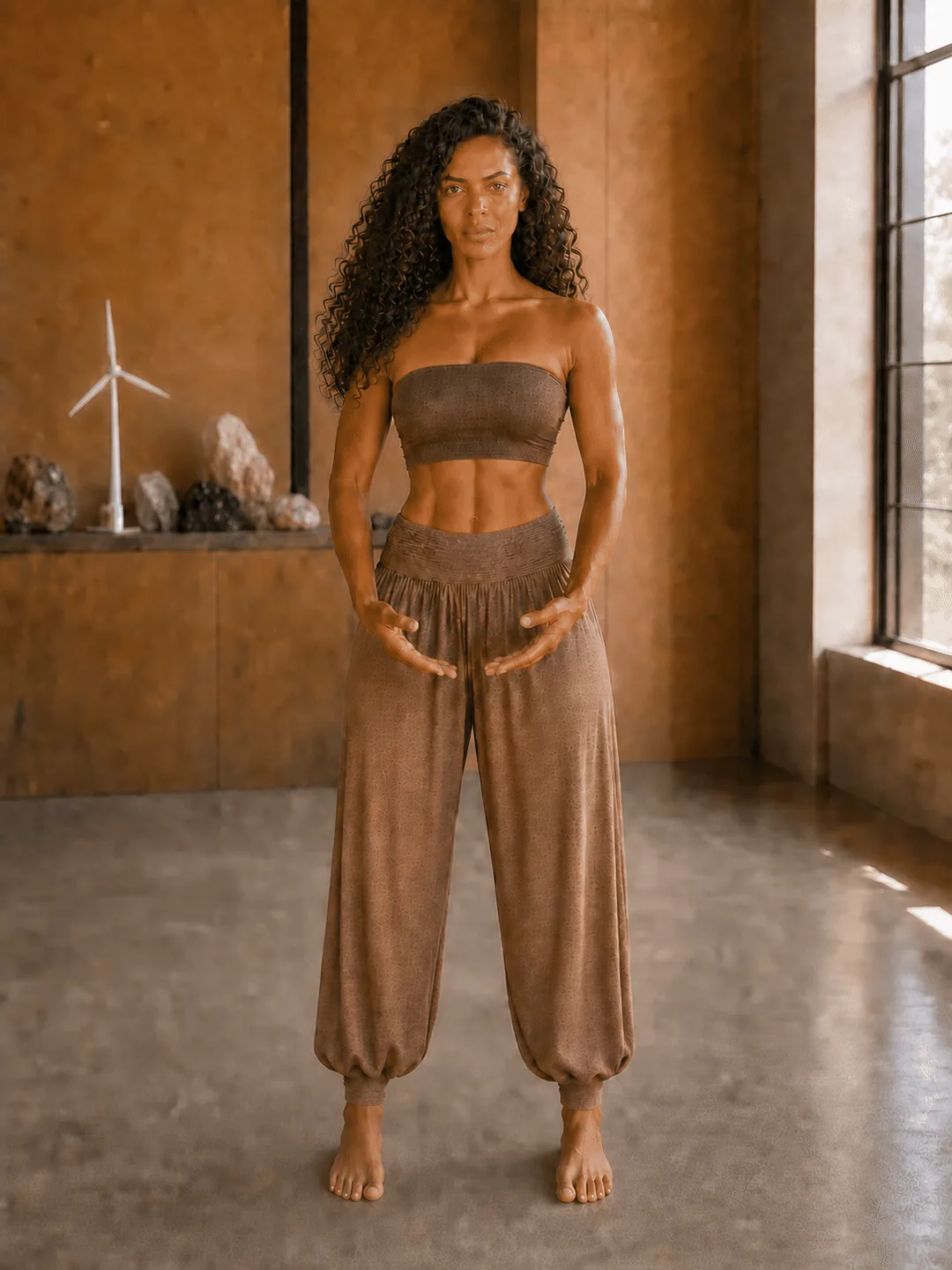
- Spread the fingers, then lightly cross or interlace them in front of the lower abdomen without gripping or forcing the wrists.

- Keeping the gaze forward, slowly lift the crossed hands close to the body's midline until they reach chest height, palms still facing upward.
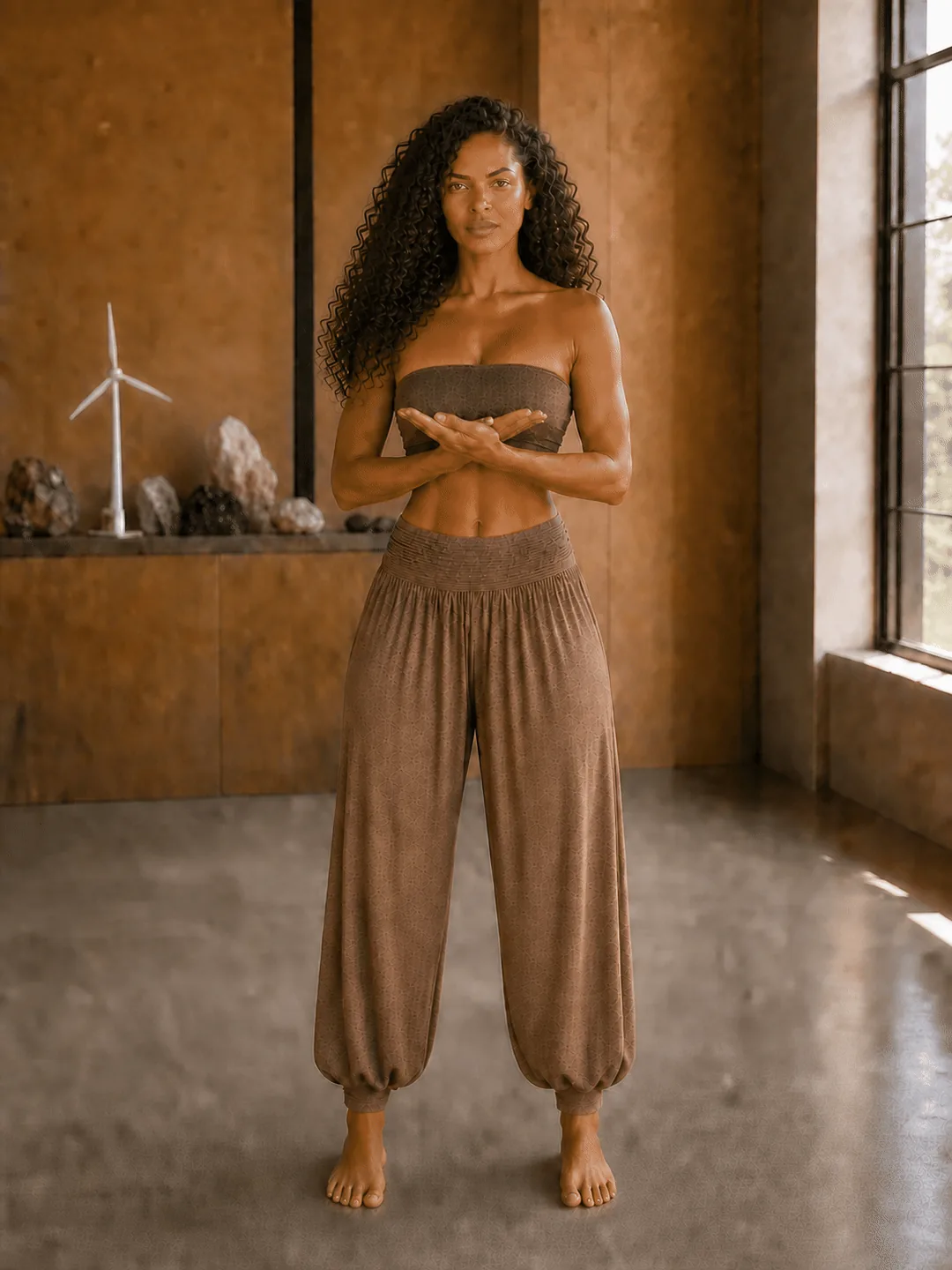
- Gradually straighten the knees within a comfortable range as the hands turn and continue upward. Let the eyes follow the hands briefly without throwing the head back.
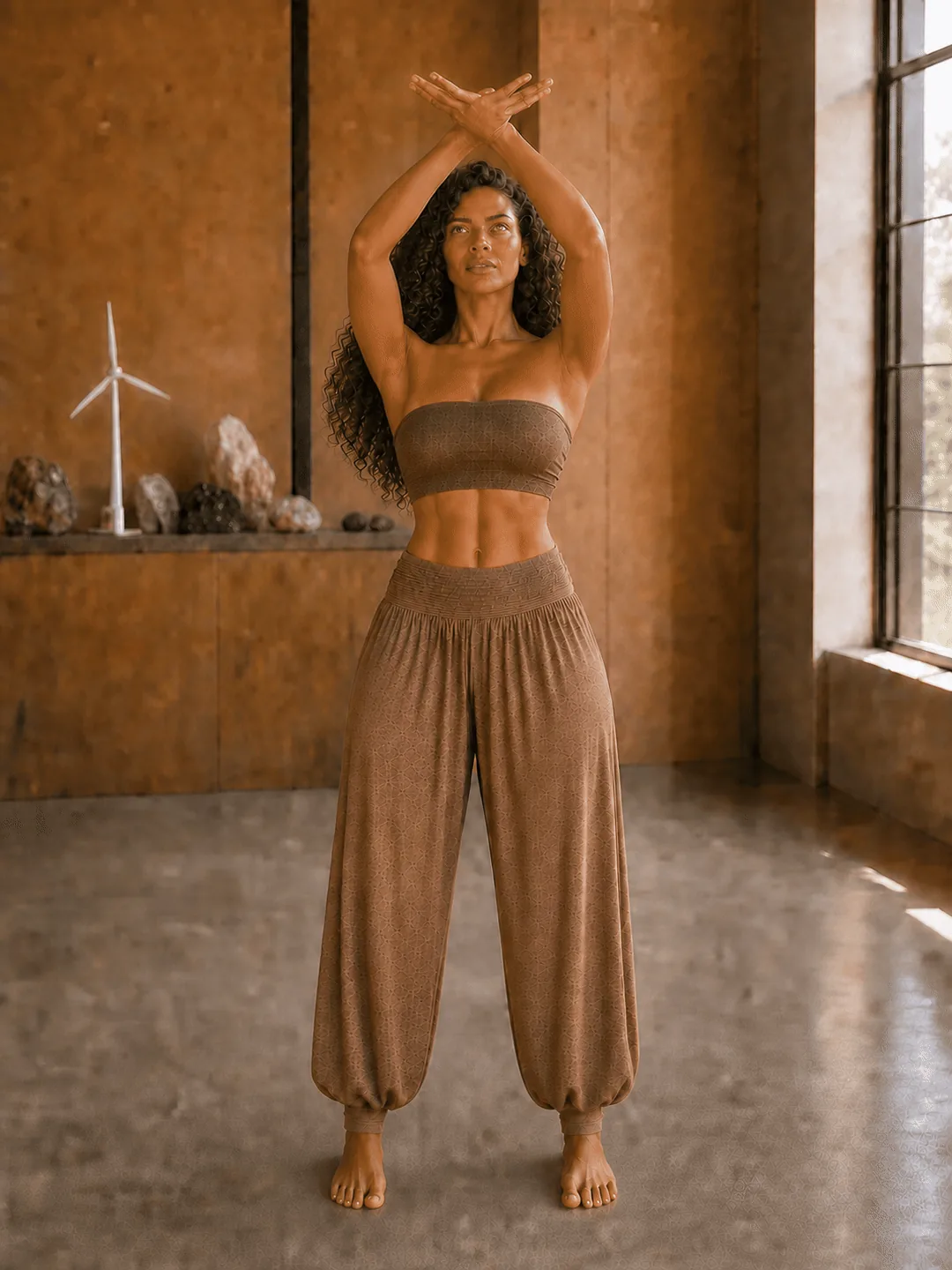
- Continue to a comfortable overhead reach, extending the elbows without locking them. Gently return the chin toward neutral and look forward. Stay upright rather than leaning backward, and stop below full height if the shoulders or wrists feel restricted.
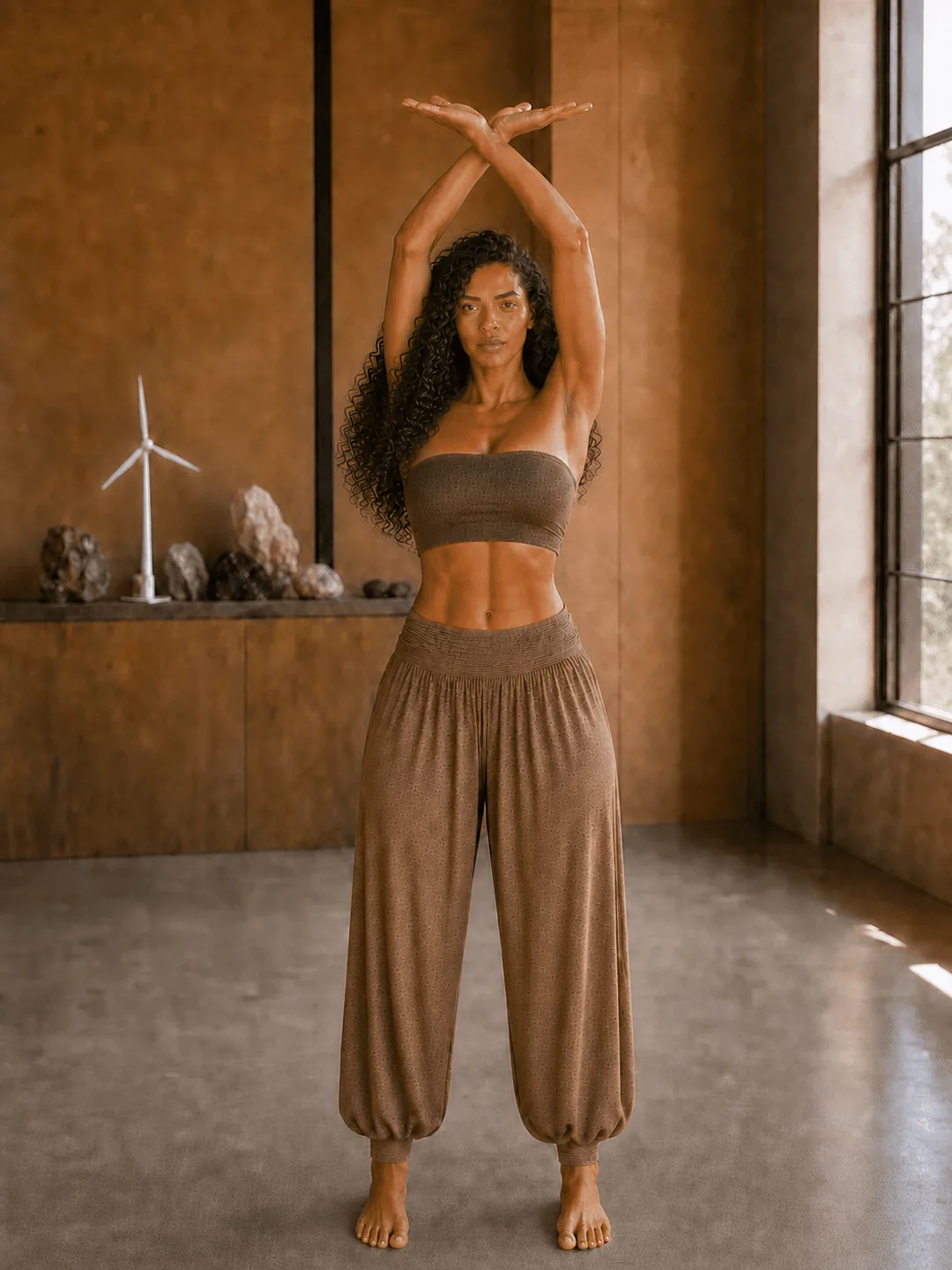
- Slowly soften the knees, separate the fingers, and lower the arms outward through the sides. Bend the elbows and return the hands, palms up, near the lower abdomen. This completes one cycle.
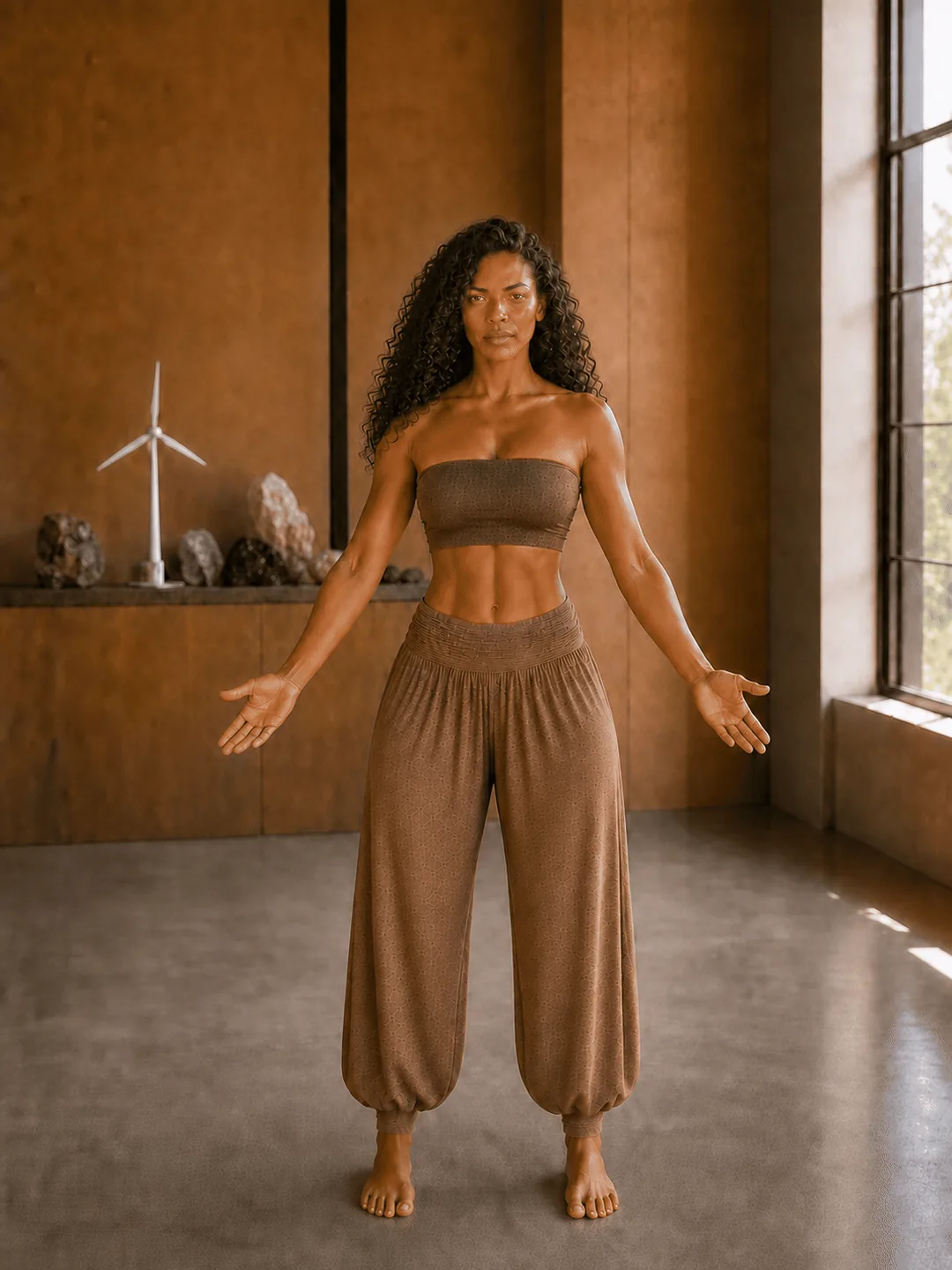
Breath
Begin with natural, unforced breathing. If matching breath to movement remains easy, inhale while the hands rise and exhale while they lower. Do not strain, suppress, or hold the breath in this beginner-facing version; make the movement smaller whenever the breath becomes uncomfortable.
Variations
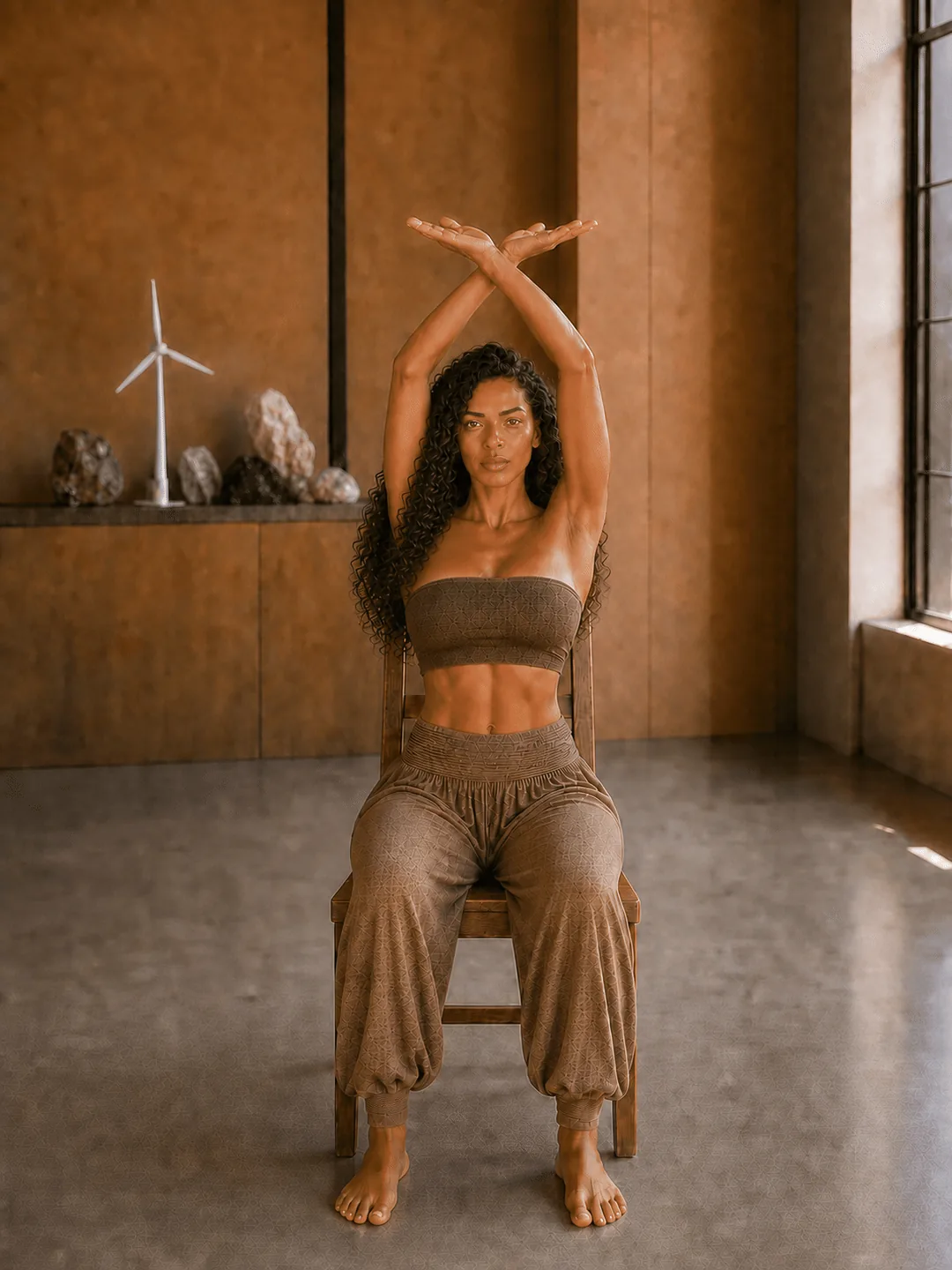
Seated Chair
Modern accessibility adaptation—not the standardized standing form: sit toward the front of a sturdy armless chair with both feet supported. Remain upright and perform only the hand-and-arm path that feels comfortable.
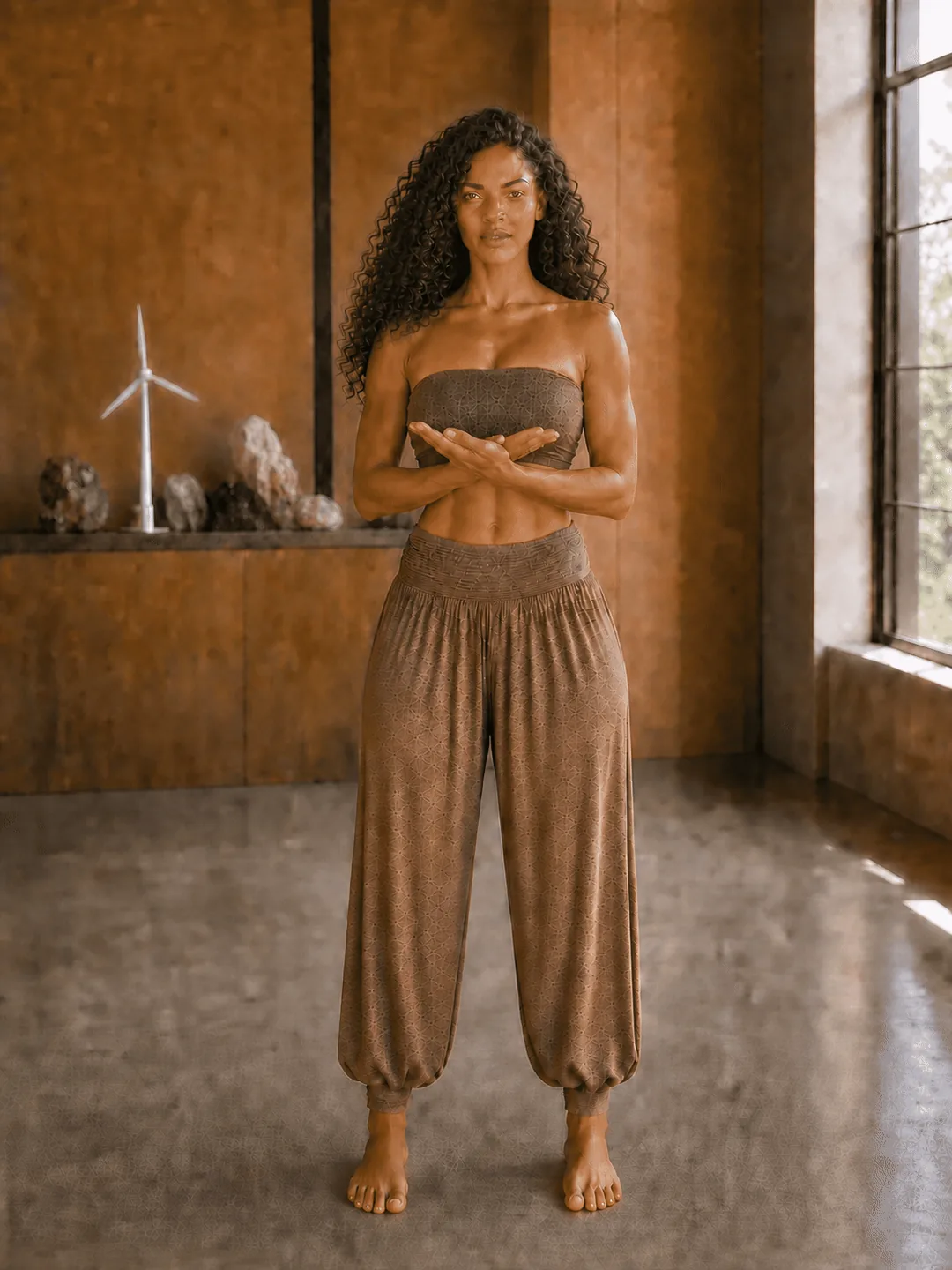
Low Range
Modern accessibility adaptation—not the standardized full reach: stop the lift at chest, face, or diagonal height. Keep the neck neutral and do not force the shoulders or wrists.
How hard is it, honestly?
A moderate gap: the traditional form asks noticeably more than the adapted one.
What's happening in the body — and why
Raising the arms overhead while the knees gently straighten asks the shoulder blades to rotate upward and the ribs to lift — two motions that long sitting quietly removes from your day. The lengthening you feel along the sides is the ribcage regaining a range it already owned. Nothing mystical is required for that to be worth doing.
Regions most involved. Original diagram — schematic, not anatomical reference.
Muscles
- KINESIOLOGYShoulder flexors help raise the arms, and the triceps assist elbow extension.
- KINESIOLOGYSerratus anterior and the upper and lower trapezius contribute to upward rotation of the shoulder blades during the overhead reach.
- KINESIOLOGYTrunk and hip musculature support an upright stance while the knees softly straighten and bend.
Joints & skeleton
- KINESIOLOGYComfortable shoulder flexion with scapular upward rotation.
- KINESIOLOGYElbow extension plus forearm, hand, and comfortable wrist rotation.
- KINESIOLOGYGentle knee and hip movement between soft flexion and comfortable extension.
- KINESIOLOGYMaintain an upright, lengthened trunk without forcing a backbend or rib flare.
Traditional organ framework
- TRADITIONIn TCM, the title invokes sanjiao, often translated as Triple Burner or Triple Energizer. It is a traditional framework for the upper, middle, and lower regions of the body—not a discrete anatomical organ or proven biomedical mechanism.
Traditional energetic framework
- TRADITIONThe formal practice uses the image of supporting the sky and creating length through the whole body. Descriptions involving qi or meridians are traditional practice language, not medical claims.
What you might notice
Newer or limited mobility
EXPERIENCEKeep the reach below the point of strain, even if the hands remain at chest or face height. A seated or lower-range adaptation is a complete practice.
Moderate experience
EXPERIENCEYou may notice mild effort around the shoulders and upper back and a gentle stretch through the sides of the torso. Sensations vary.
Experienced
EXPERIENCERefine the hand path, gaze transition, upright alignment, and easy breathing rather than pursuing a higher or harder reach.
Stop signals
- sharp, pinching, or worsening joint or muscle pain
- dizziness, faintness, visual disturbance, or loss of balance
- chest pressure or pain, palpitations, or unusual shortness of breath
- new numbness, tingling, or weakness
- any severe or persistent symptom: stop and seek appropriate medical help
Effects over time
Right away
EXPERIENCESome practitioners may notice gentle warmth, easier awareness of posture, or a subjective sense of length. Others may notice little; these sensations are not diagnostic.
Weeks
EXPERIENCERepetition may make the sequence feel more familiar and coordinated. No reliable source establishes a guaranteed improvement timeline for this single movement.
Months
EVIDENCEFull-set evidence only: reviews of multi-week programs using the complete Ba Duan Jin set suggest possible improvements in aspects of physical function and balance, particularly in studied middle-aged and older populations. This does not establish a specific benefit from Move 01 alone; study quality and populations vary.
Recovery
The base version is intended to be gentle, but mild soreness can occur with movement practice. Reduce the range or repetitions if discomfort develops and follow the listed stop signals.
Timing & rhythm
- Time of day: PRACTICALNo source-backed Move 01 time-of-day requirement was identified. Practice when you feel alert, steady, and able to move without rushing.
- Food: PRACTICALNo evidence-based Move 01 fasting interval was identified. Choose conditions in which the movement and breathing feel comfortable.
- Frequency: The cited April 2026 consultation draft describes six cycles. A beginner may start with two or three comfortable cycles and build toward six. Repetition counts vary across versions; comfort and form take priority over count.
Pairings
Combos with compounding effect
- To be mapped as the compendium grows.
Strength pairings
- KINESIOLOGYModern cross-training option—not part of Ba Duan Jin: a qualified coach may use an appropriate overhead press or carry to train a related movement pattern.
Stretch pairings
- Modern optional pairing—not part of Ba Duan Jin: a comfortable, unforced side-body reach.
Everyday life
Every high-shelf reach is a rehearsal: soften the knees, exhale, lengthen before you grab. One mindful reach per day counts.
Contemplative pairing
Practice phrase: CANONOriginal Yarra practice phrase: Breathing in, I lengthen; breathing out, I soften.
Meditation pairing: Comfortable standing breath awareness before the first repetition.
Take care
- current shoulder, neck, elbow, or wrist pain or injury → use a comfortable lower range and seek qualified guidance if unsure
- balance difficulty or fall risk → use the seated or supported adaptation
- unstable or uncontrolled medical condition, recent surgery, or unexplained exercise symptoms → obtain clinician clearance before beginning
- pregnancy or postpartum recovery → safety evidence for qigong is limited; ask the treating clinician about appropriate modifications
- never use this exercise to replace or delay medical care
Sources & further study
What this page is built on
- Baduanjin — consultation draft completed April 2026, Chinese Association of Chinese Medicine and Chinese Health Qigong Association
- Health Qigong · Baduanjin: Common Errors and Corrections, Health Qigong Administration Center, 2018
- Health Qigong · Baduanjin: A Traditional Chinese Medicine Interpretation, Health Qigong Administration Center, 2017
- Qigong: What You Need To Know, National Center for Complementary and Integrative Health
- The Safety of Baduanjin Exercise: A Systematic Review, 2021
- Effects of Baduanjin Exercise on the Physical Function of Middle-Aged and Elderly People: A Systematic Review and Meta-Analysis of Randomized Controlled Trials, 2023
Follow it further
- REFERENCEBaduanjin qigong — overview
- EVIDENCEBaduanjin research on PubMed
Images on this page are original to this site. We do not republish third-party instructional photography; where another source is useful, we link to it rather than copy it. See our sources & images policy.
Your practice
Stored only in this browser. Mindful repetitions count; rushing doesn't. Optional goal — not a health target.