Compendium › Qigong › Eight Brocades
Drawing the Bow to Shoot the Hawk
左右开弓似射雕 · Zuǒ yòu kāi gōng sì shè diāo
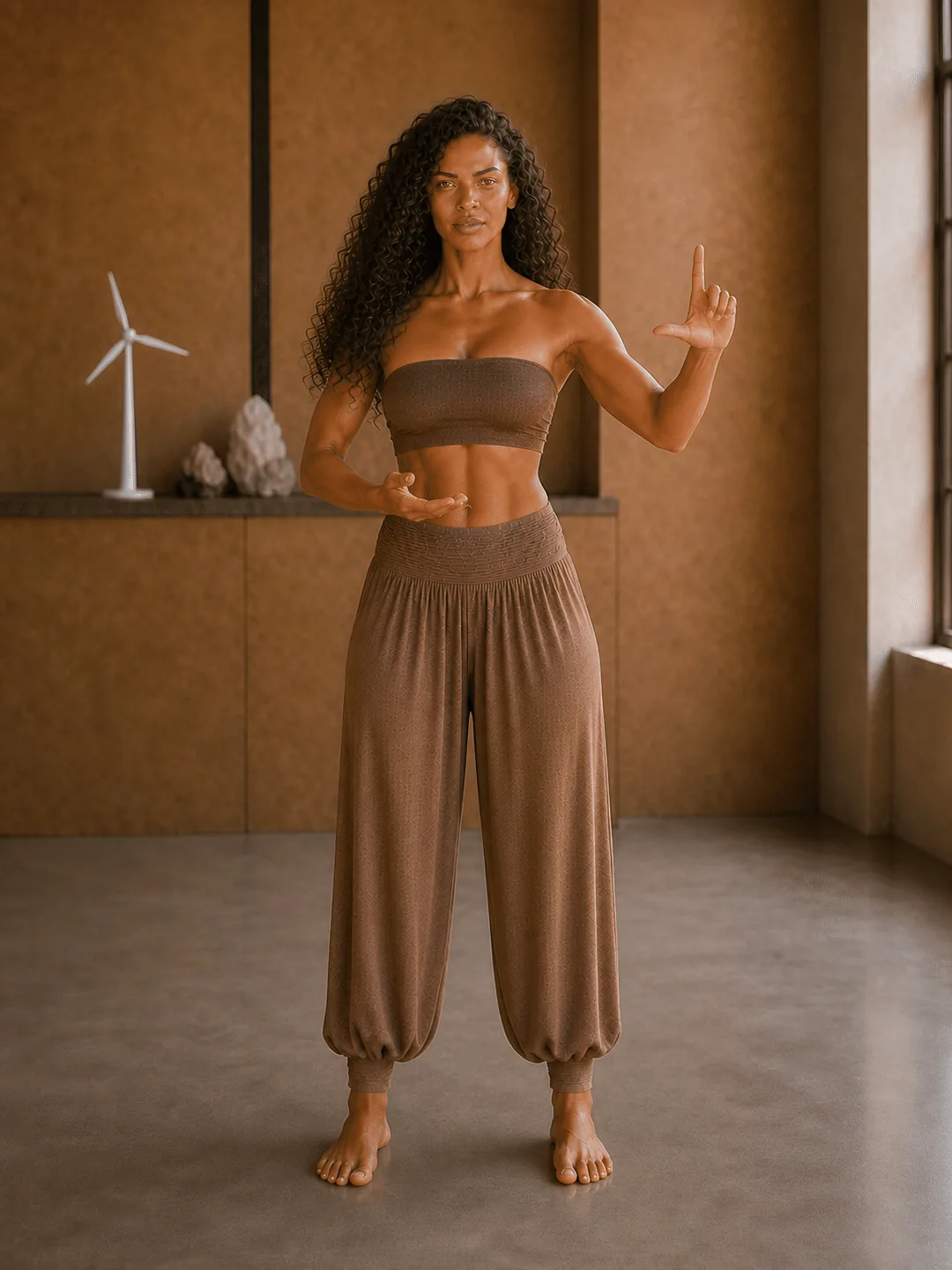
The second brocade: from a wider stance, the arms open like an archer drawing a bow — one hand pressing away, the other drawing back — alternating sides at an unhurried pace.
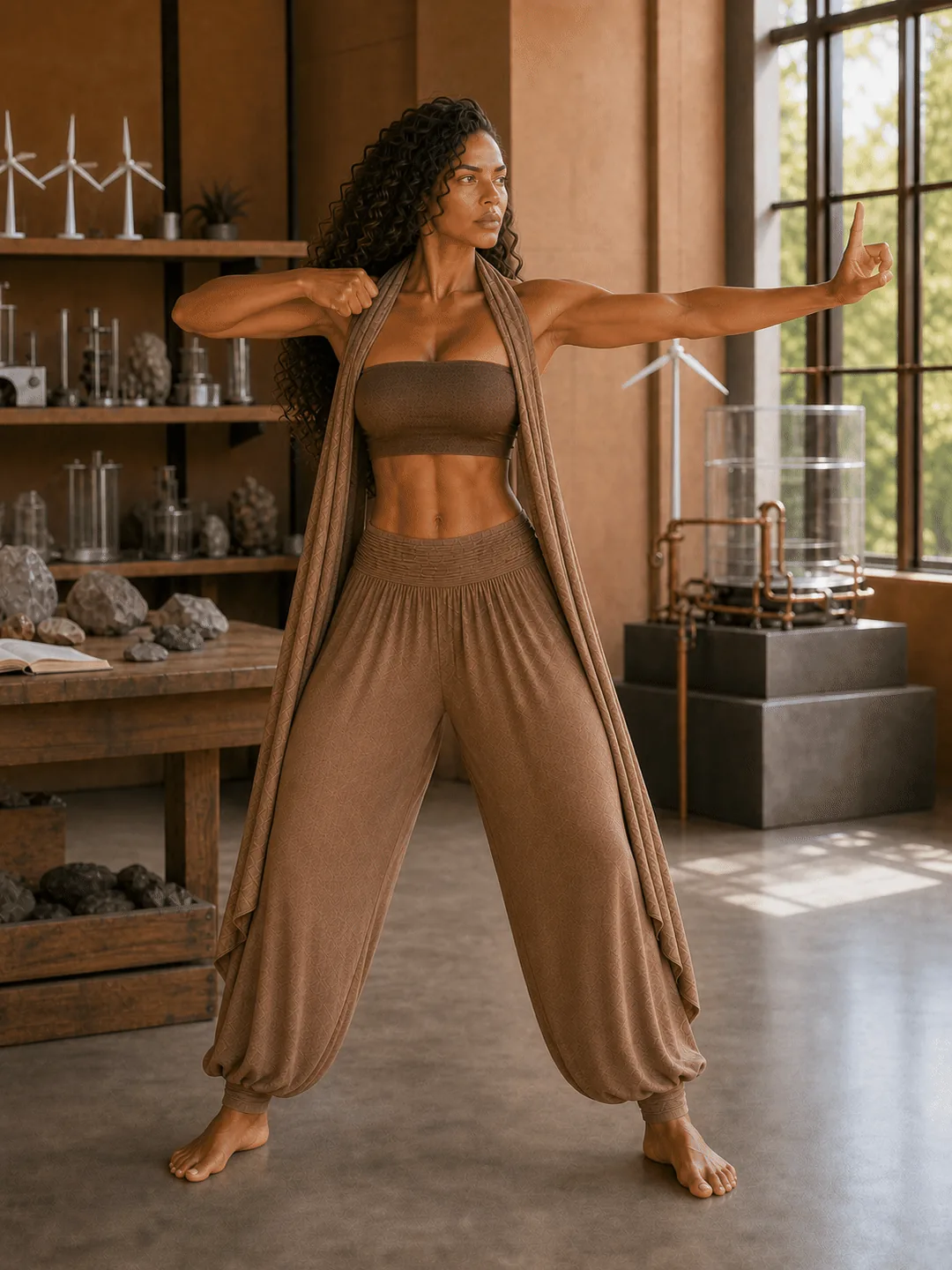
AI-generated demonstration image.
How it's practiced
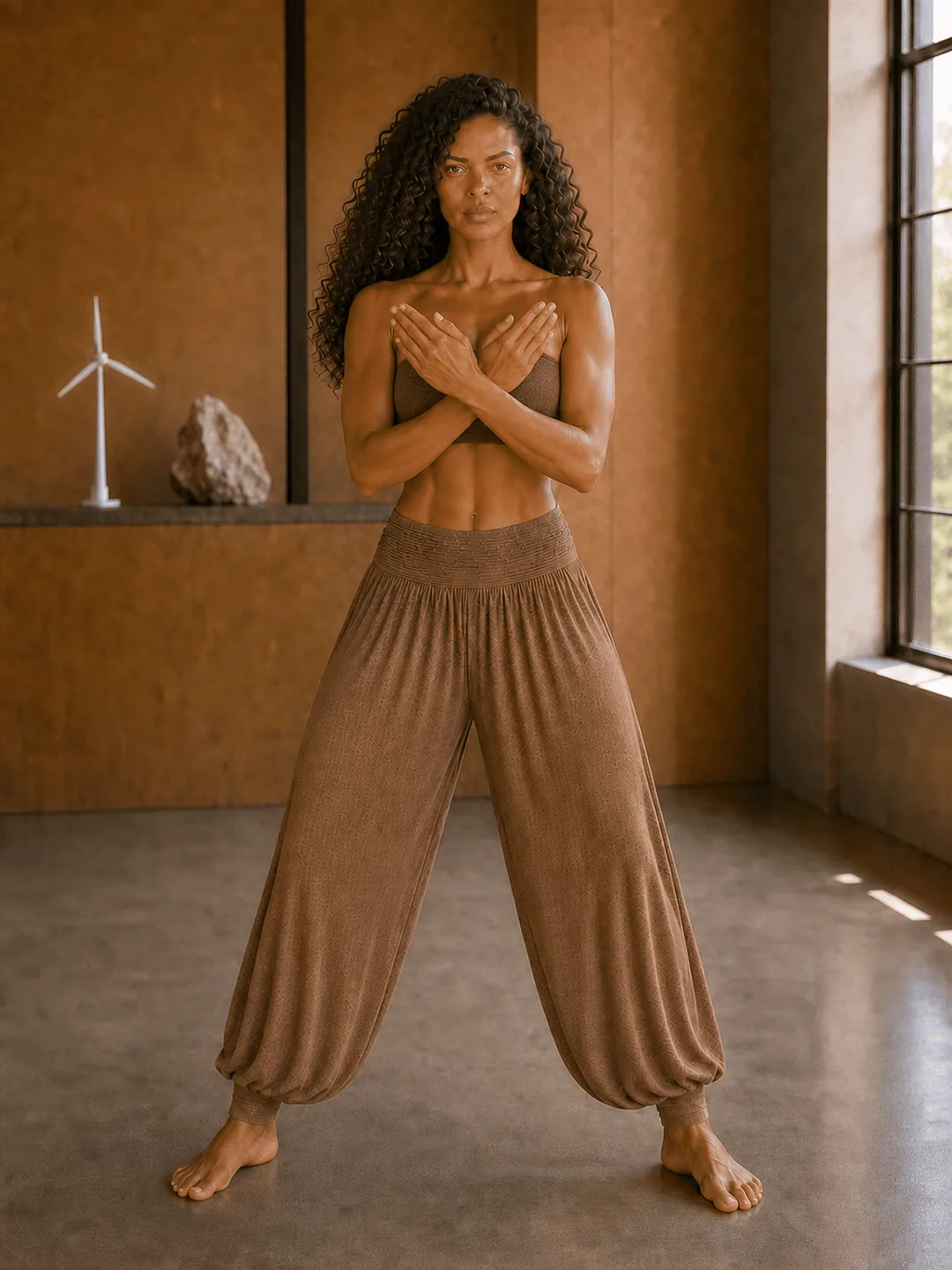
- From a comfortable stance, step the left foot out so the feet are wider than the shoulders. Bend the knees only as far as feels stable — a high, gentle horse stance is enough.
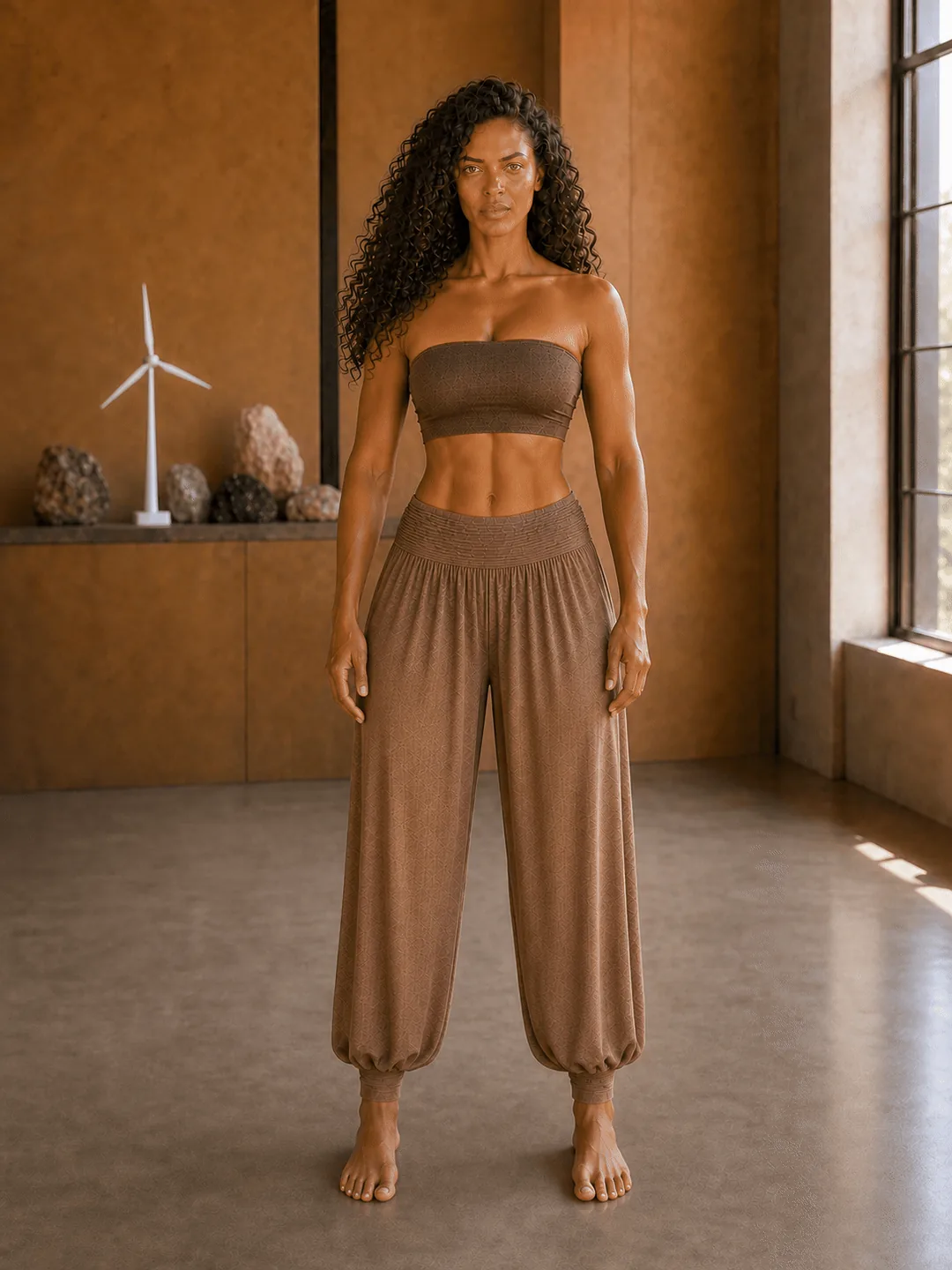
- Cross the hands in front of the chest, left hand outside, both palms facing the body.
- Form the left hand into a gentle 'eight' shape (index finger and thumb open, other fingers folded) and slowly press it out to the left at shoulder height, as if holding a bow.
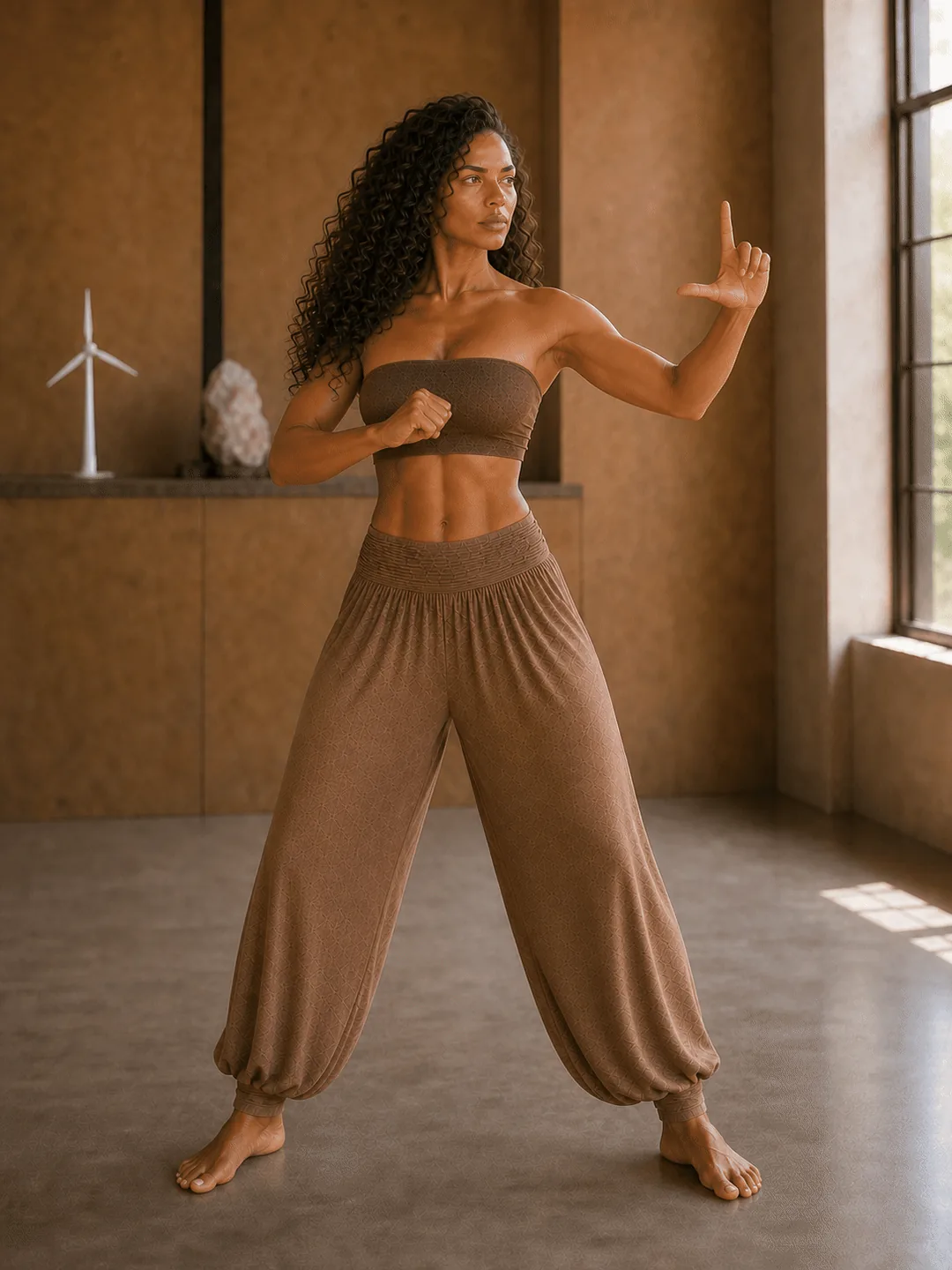
- At the same time, draw the right hand back toward the right shoulder with a soft fist, elbow lifted about level with the wrist, as if drawing a bowstring. Let the head turn to look past the left fingertips without straining the neck.
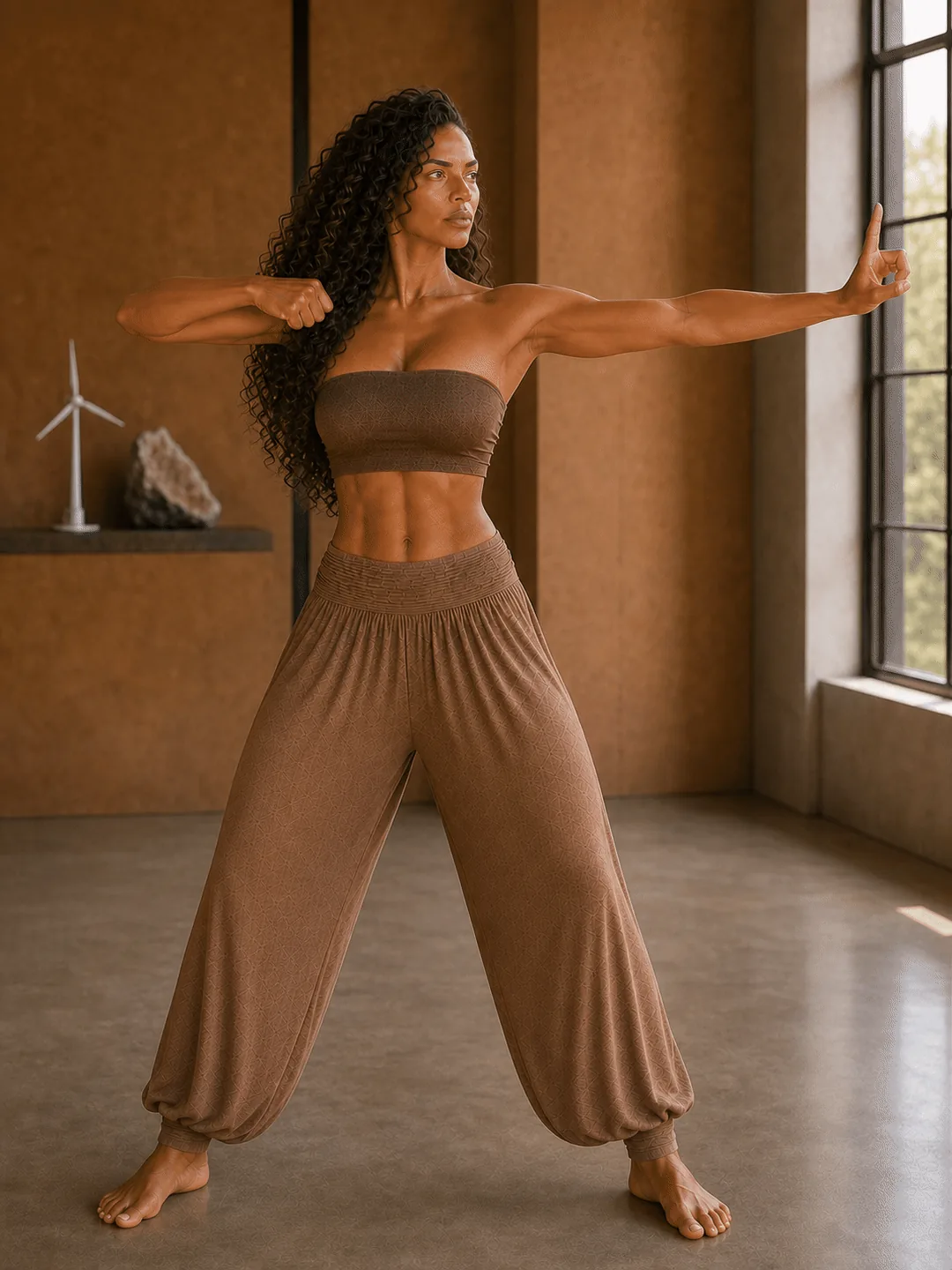
- Pause for a natural breath, feeling width across the chest and upper back.
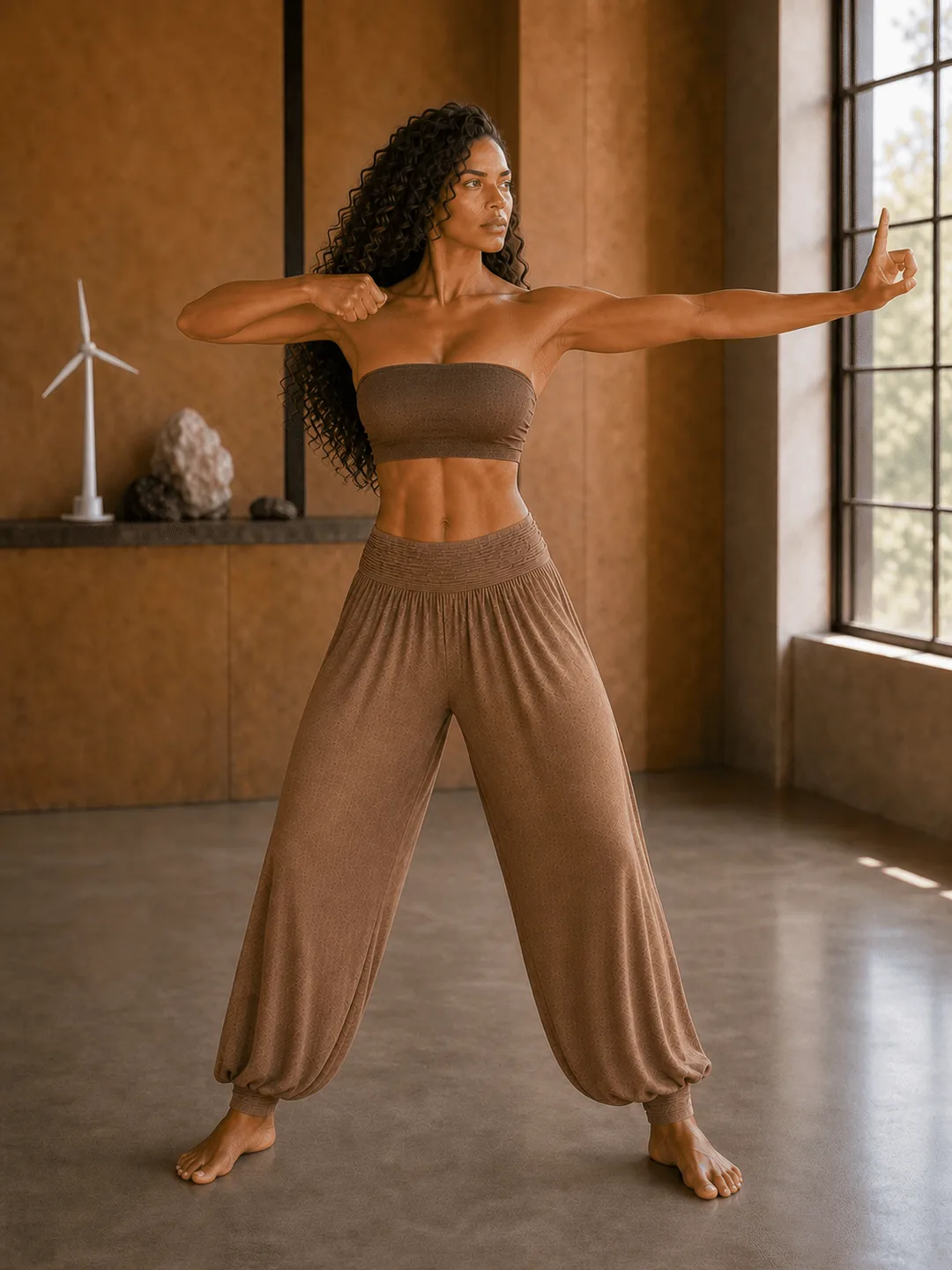
- Release both hands, let them arc softly downward, and return to the crossed position. Repeat on the right side. Alternate sides, ending evenly.
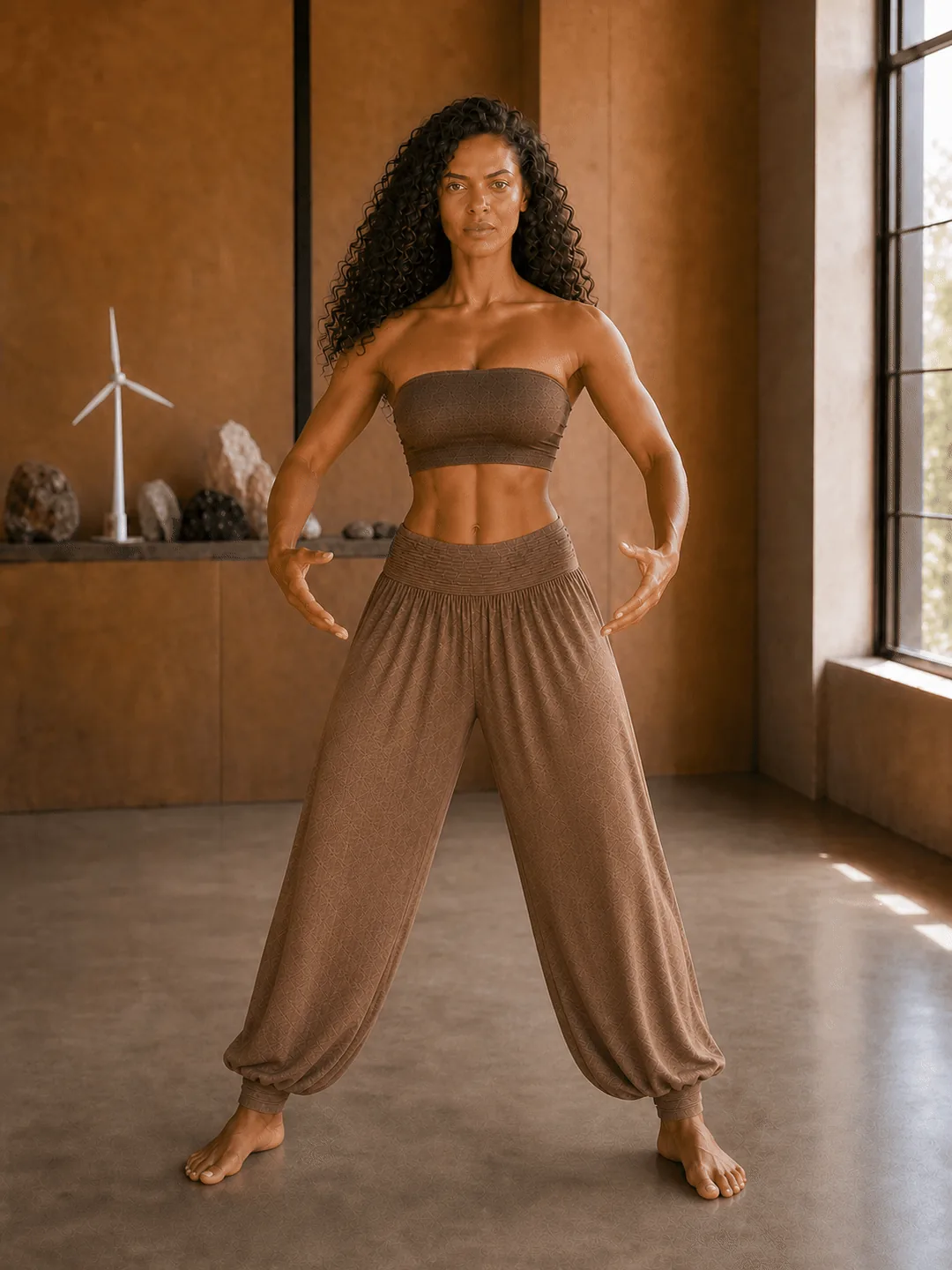
Breath
Natural breathing first. When comfortable, inhale as the arms open into the bow shape and exhale as they release and return. Never hold the breath while the arms are extended.
Variations
Seated Chair
Modern accessibility adaptation: sit tall toward the front of a sturdy armless chair, feet flat and wide. Perform the same crossing, pressing, and drawing pattern with the arms only.
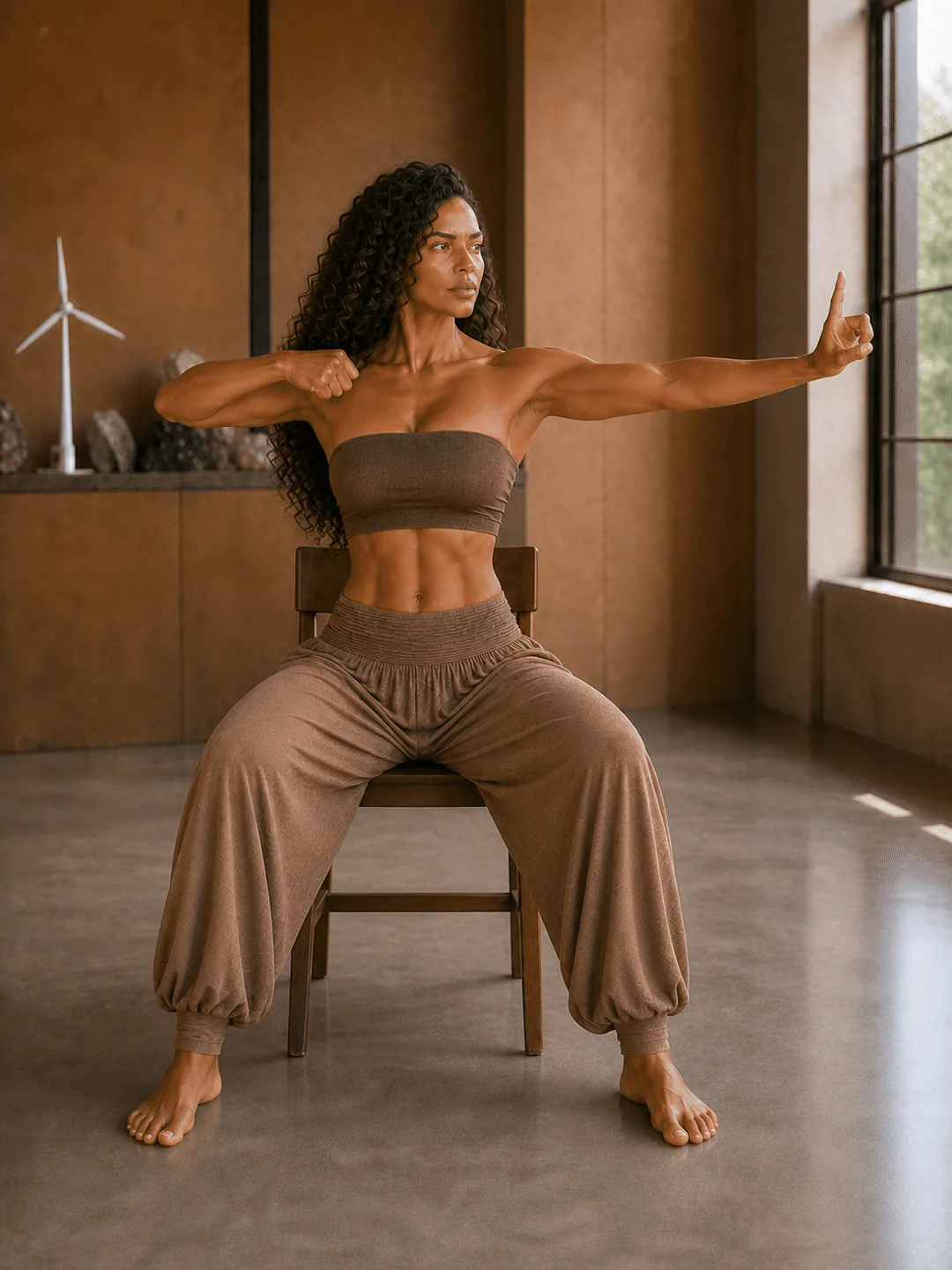
Low Range
Modern accessibility adaptation: keep the feet only slightly wider than the shoulders with minimal knee bend, and open the arms through a smaller, pain-free arc. Skip the head turn if the neck objects.
How hard is it, honestly?
A moderate gap: the traditional form asks noticeably more than the adapted one.
What's happening in the body — and why
One arm presses out while the other draws back, which forces the two shoulder blades to do opposite jobs at the same time. That opposition is the point: it wakes the muscles between the shoulder blades that a keyboard posture leaves permanently lengthened and asleep. The wide stance adds a leg cost that makes the whole thing more than an arm exercise.
Regions most involved. Original diagram — schematic, not anatomical reference.
Muscles
- KINESIOLOGYRhomboids, middle trapezius, and posterior deltoid work on the drawing arm; serratus anterior and anterior deltoid on the pressing arm.
- KINESIOLOGYWrist and finger extensors hold the open 'eight' hand shape.
- KINESIOLOGYQuadriceps, gluteals, and hip stabilizers support the widened stance.
Joints & skeleton
- KINESIOLOGYHorizontal shoulder abduction and adduction with scapular retraction on the drawing side.
- KINESIOLOGYComfortable cervical rotation as the gaze follows the pressing hand.
- KINESIOLOGYHip abduction and knee flexion in the widened stance; keep knees tracking over the feet.
Traditional organ framework
- TRADITIONThe classical title names no organ; many modern teachings associate this movement with opening the chest and, in some lineages, with the lungs. Associations vary by teacher and are traditional framing, not biomedical claims.
Traditional energetic framework
- TRADITIONPractice language describes expanding qi across the chest and through the arms as the bow opens. This is traditional imagery, not a measurable mechanism.
What you might notice
Newer or limited mobility
EXPERIENCEThe wide stance can tire the thighs quickly; keep it narrow and high, or practice seated. The hand shapes matter less than the sense of gentle width across the chest.
Moderate experience
EXPERIENCEEffort in the thighs and between the shoulder blades is common, with a pleasant opening across the chest. Sensations vary.
Experienced
EXPERIENCERefine the evenness of the two arms, the stillness of the trunk, and the soft focus of the gaze rather than sinking lower.
Stop signals
- sharp, pinching, or worsening joint or muscle pain
- knee pain that changes how you stand
- dizziness, faintness, or loss of balance
- chest pressure or pain, palpitations, or unusual shortness of breath
- new numbness, tingling, or weakness
- any severe or persistent symptom: stop and seek appropriate medical help
Effects over time
Right away
EXPERIENCEMany practitioners report feeling more open through the chest and more awake after alternating a few rounds. Responses vary and are not diagnostic.
Weeks
EXPERIENCEThe stance may feel steadier and the arm pattern smoother with repetition. No reliable source establishes a guaranteed timeline for this single movement.
Months
EVIDENCEFull-set evidence only: reviews of multi-week Ba Duan Jin programs suggest possible improvements in aspects of physical function and balance in studied populations. This does not establish a specific benefit from Move 02 alone.
Recovery
Thigh muscles may feel mildly worked if the stance is new. Reduce depth or repetitions if soreness lingers.
Timing & rhythm
- Time of day: PRACTICALNo source-backed time-of-day requirement. Practice when alert and unhurried.
- Food: PRACTICALNo evidence-based fasting interval. Practice when the stance and breath feel comfortable.
- Frequency: Traditionally performed as part of the full eight-movement set; commonly repeated about three times per side in the standardized form. Comfort and form take priority over count.
Pairings
Combos with compounding effect
- qigong.baduanjin.two-hands-hold-up-the-heavens — Classical sequence pairing: vertical lengthening followed by horizontal opening — a complete two-direction reset for desk-bound shoulders.
Strength pairings
- KINESIOLOGYModern cross-training option — not part of Ba Duan Jin: light band pull-aparts or rows train the same scapular retraction pattern under a coach's guidance.
Stretch pairings
- Modern optional pairing: a comfortable doorway chest stretch, unforced.
Everyday life
Any time you reach to push a door while holding something in the other hand, notice the bow shape: one side presses, one side draws. Let the shoulder blades share the work.
Contemplative pairing
Practice phrase: CANONOriginal Yarra practice phrase: Breathing in, I make room; breathing out, I take aim at nothing.
Meditation pairing: A few breaths of standing awareness between sides.
Take care
- knee discomfort → higher stance or seated variant
- shoulder-injury → smaller arc
- neck issues → skip the head turn
- uncontrolled-blood-pressure or dizziness-prone → seated variant
- pregnancy → seated or high-stance variant and professional guidance
Sources & further study
What this page is built on
- Health Qigong — Ba Duan Jin (Chinese Health Qigong Association, official standardized form)
- Peer-reviewed systematic reviews on Ba Duan Jin programs (full-set evidence; cite specific reviews at page build)
Follow it further
- REFERENCEBaduanjin qigong — overview
- EVIDENCEBaduanjin research on PubMed
Images on this page are original to this site. We do not republish third-party instructional photography; where another source is useful, we link to it rather than copy it. See our sources & images policy.
Your practice
Stored only in this browser. Mindful repetitions count; rushing doesn't. Optional goal — not a health target.