Compendium › Qigong › Eight Brocades
Holding One Arm Aloft
调理脾胃须单举 · Tiáolǐ píwèi xū dān jǔ
The third brocade: one palm presses gently toward the sky while the other presses toward the ground, creating an easy opposition through the torso — then the sides exchange.

AI-generated demonstration image.
How it's practiced
- Stand comfortably, feet about shoulder-width, knees soft, hands resting palm-up near the lower abdomen.
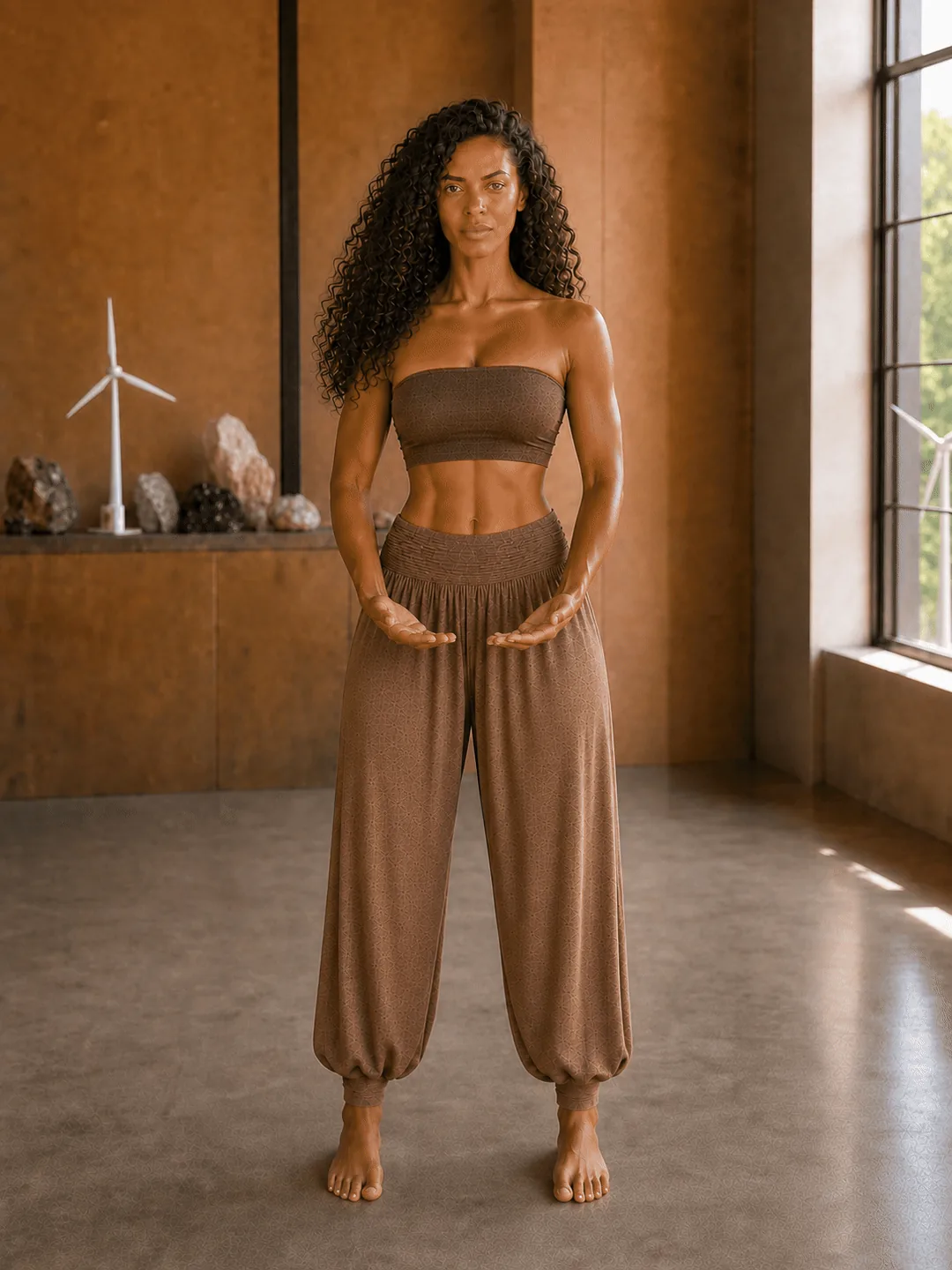
- Turn the left palm over and raise it along the front of the body, rotating the fingers inward then upward, until the palm presses gently toward the sky above the left shoulder, fingers pointing right.

- At the same time, press the right palm gently downward beside the right hip, fingers pointing forward.

- Stay for a natural breath, feeling the easy stretch between the two palms without locking the elbows or shrugging the shoulder.

- Release both hands and let them meet again, palms up, near the lower abdomen.
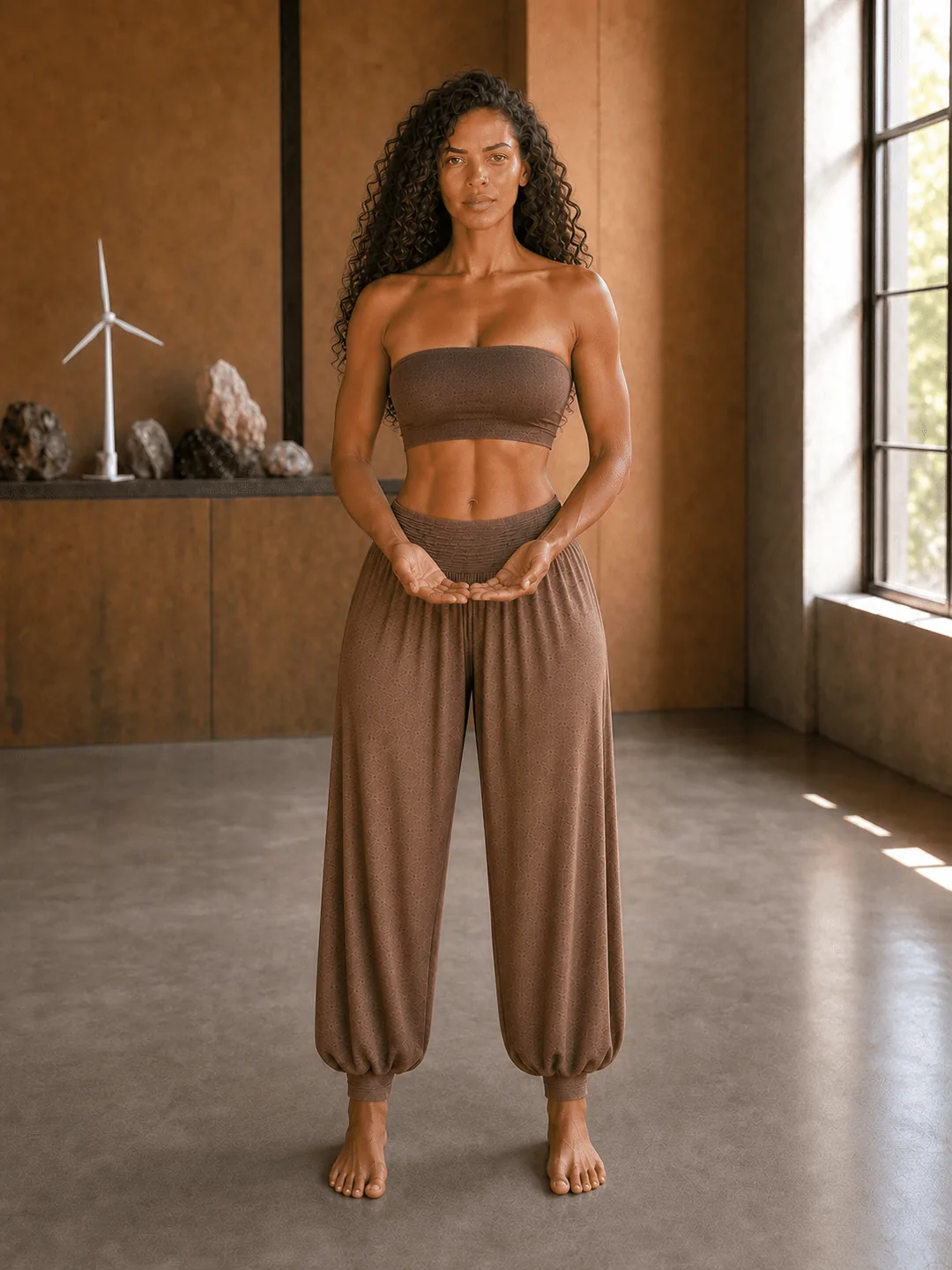
- Repeat with the right palm rising and the left pressing down. Alternate sides, ending evenly.

Breath
Natural breathing first. When easy, inhale as the palms separate into the press and exhale as they release and gather. Keep the throat and jaw soft.
Variations
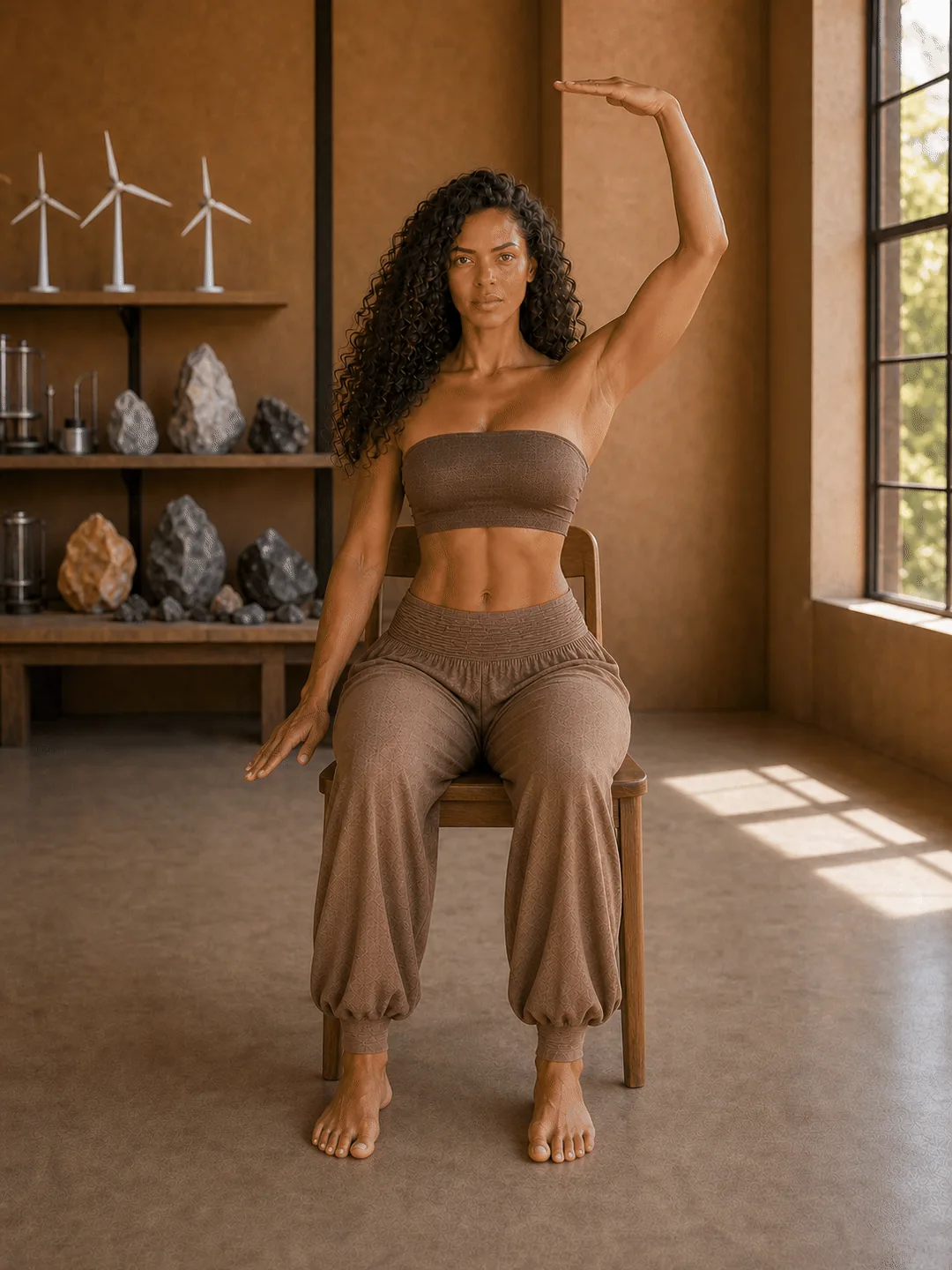
Seated Chair
Modern accessibility adaptation: sit tall, feet flat, and perform the same alternating up-and-down palm presses. Rest the lower hand on the thigh if a downward press is uncomfortable.
Low Range
Modern accessibility adaptation: press the upper palm to face height only, or simply lengthen the fingertips of both hands away from each other at waist and chest height.

How hard is it, honestly?
A moderate gap: the traditional form asks noticeably more than the adapted one.
What's happening in the body — and why
Pressing one palm up and one palm down creates a long diagonal line of tension through the torso. The obliques and the deep trunk muscles have to manage that asymmetry without letting you lean, which is a quiet but real demand — and it restores side-bending range that almost nothing in modern life asks for.
Regions most involved. Original diagram — schematic, not anatomical reference.
Muscles
- KINESIOLOGYShoulder flexors and serratus anterior on the rising side; latissimus and triceps assist the downward press.
- KINESIOLOGYObliques and deep trunk muscles manage the gentle opposition between the two sides.
- KINESIOLOGYForearm rotators turn the palms through the pattern.
Joints & skeleton
- KINESIOLOGYOne shoulder moves into comfortable flexion with the wrist extended; the other stays near neutral with a light downward reach.
- KINESIOLOGYGentle elongation through the thoracic spine and ribs without leaning or backbending.
- KINESIOLOGYForearm pronation/supination as each palm turns.
Traditional organ framework
- TRADITIONThe classical rhyme links this movement to regulating the spleen and stomach. In TCM these names describe functional systems, not the biomedical organs, and the association is traditional framing rather than a medical claim.
Traditional energetic framework
- TRADITIONTeachings describe the opposing palms as separating and harmonizing the body's middle — traditional imagery for the middle burner, not a measurable mechanism.
What you might notice
Newer or limited mobility
EXPERIENCEIf the overhead press is restricted, raise the palm only to face or chest height — the opposition between the hands is the practice. A seated version is complete.
Moderate experience
EXPERIENCEA pleasant lengthening along one side of the torso, alternating; mild shoulder effort. Sensations vary.
Experienced
EXPERIENCERefine the timing of the two palms, keep the trunk quiet and vertical, and let the stretch come from the reach rather than a lean.
Stop signals
- sharp, pinching, or worsening joint or muscle pain
- dizziness, faintness, or loss of balance
- chest pressure or pain, palpitations, or unusual shortness of breath
- new numbness, tingling, or weakness
- any severe or persistent symptom: stop and seek appropriate medical help
Effects over time
Right away
EXPERIENCESome practitioners feel taller and describe an easy, wrung-out looseness through the middle after alternating sides. Responses vary and are not diagnostic.
Weeks
EXPERIENCEThe palm rotations may become smoother and the opposition easier to feel. No reliable source establishes a guaranteed timeline for this single movement.
Months
EVIDENCEFull-set evidence only: multi-week Ba Duan Jin program studies suggest possible improvements in aspects of physical function in studied populations; no Move-03-specific claim is supported.
Recovery
Gentle; no soreness expected at base level. Ease the range if the shoulders or mid-back complain.
Timing & rhythm
- Time of day: PRACTICALNo source-backed requirement. A pleasant mid-work reset because it needs no floor and little space.
- Food: PRACTICALNo evidence-based interval. Traditional teachings often prefer lighter stomachs for bending or pressing movements; choose what feels comfortable.
- Frequency: Part of the full standardized set; commonly about three repetitions per side. Comfort over count.
Pairings
Combos with compounding effect
- qigong.baduanjin.two-hands-hold-up-the-heavens, qigong.baduanjin.drawing-the-bow — Classical opening trio: lift, widen, then oppose — three planes of gentle mobilization in under five minutes.
Strength pairings
- KINESIOLOGYModern cross-training option — not part of Ba Duan Jin: a light single-arm overhead carry trains the same one-side-up stability pattern under a coach's guidance.
Stretch pairings
- Modern optional pairing: a relaxed standing side reach, unforced.
Everyday life
Putting one dish on a high shelf while steadying the counter with the other hand is this movement in disguise. Let the down hand actually press.
Contemplative pairing
Practice phrase: CANONOriginal Yarra practice phrase: Breathing in, sky and ground; breathing out, I stand between them.
Meditation pairing: One quiet breath with both palms resting at the abdomen between sides.
Take care
- shoulder-injury → lower the top press
- uncontrolled-blood-pressure or dizziness-prone → seated variant
- wrist discomfort → soften the palm angles
- pregnancy → seated variant welcome; professional guidance for any symptoms
Sources & further study
What this page is built on
- Health Qigong — Ba Duan Jin (Chinese Health Qigong Association, official standardized form)
- Peer-reviewed systematic reviews on Ba Duan Jin programs (full-set evidence; cite specific reviews at page build)
Follow it further
- REFERENCEBaduanjin qigong — overview
- EVIDENCEBaduanjin research on PubMed
Images on this page are original to this site. We do not republish third-party instructional photography; where another source is useful, we link to it rather than copy it. See our sources & images policy.
Your practice
Stored only in this browser. Mindful repetitions count; rushing doesn't. Optional goal — not a health target.