Compendium › Qigong › Eight Brocades
Wise Owl Gazes Backwards
五劳七伤往后瞧 · Wǔ láo qī shāng wǎng hòu qiáo
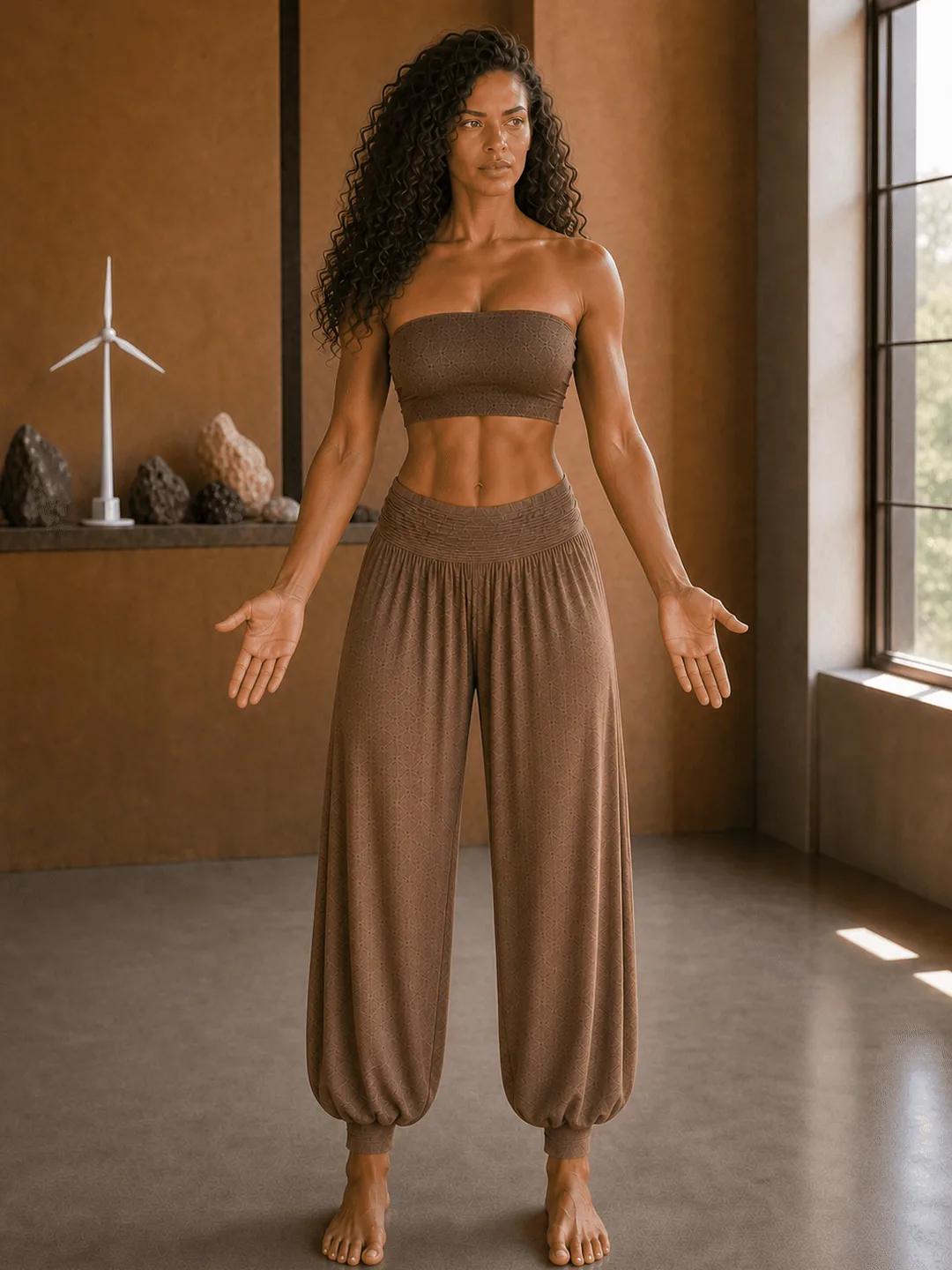
The fourth brocade: a slow, easy turn of the head and a slight outward roll of the arms to glance behind — one side, then the other — like an owl surveying a quiet field.

AI-generated demonstration image.
How it's practiced
- Stand comfortably, feet about shoulder-width, knees soft, arms relaxed at the sides with palms facing the thighs.

- Let both arms rotate gently outward so the palms turn to face forward, shoulder blades settling down and slightly together.
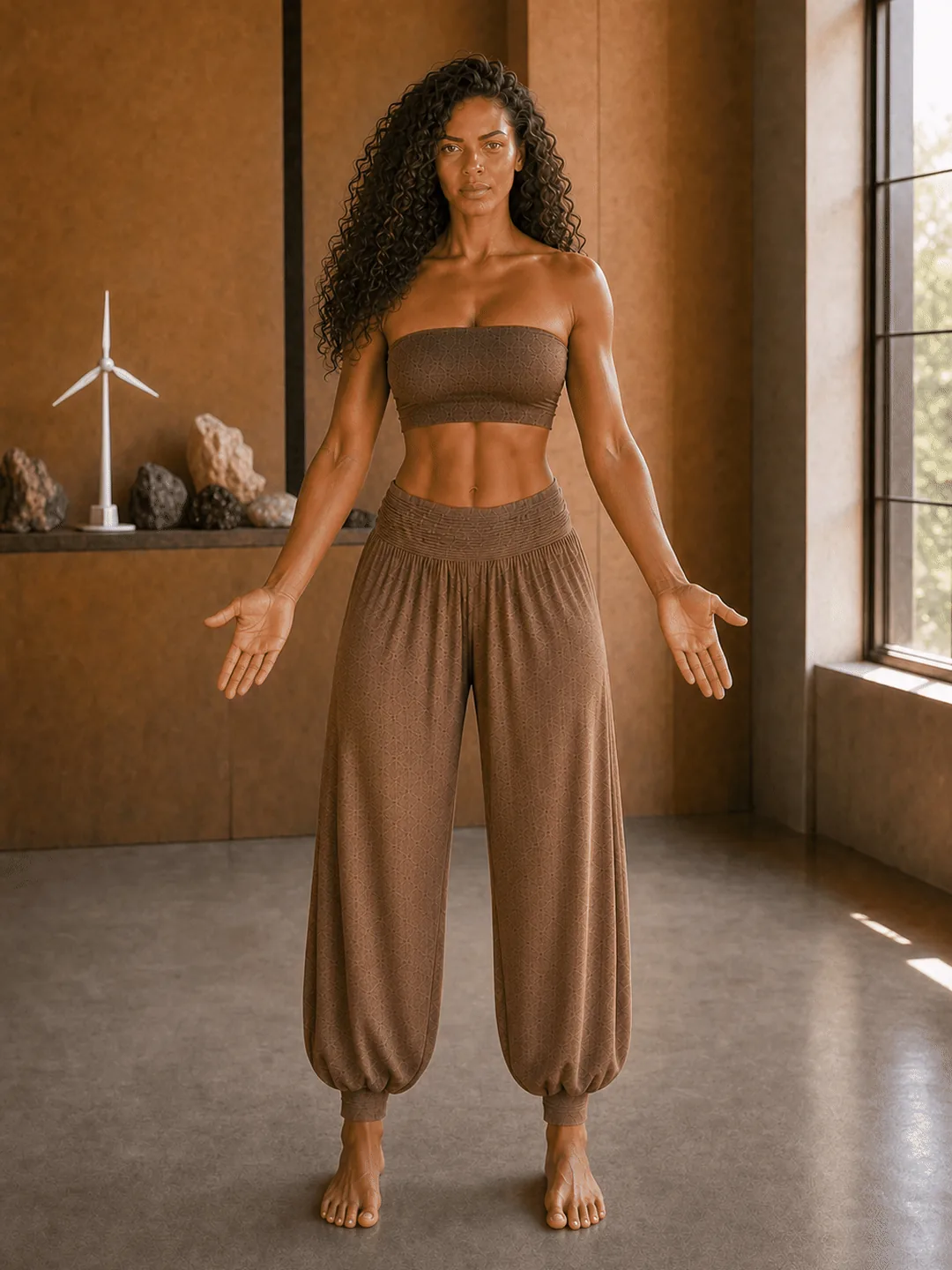
- Keeping the trunk facing forward, slowly turn the head to the left, letting the eyes lead, to glance comfortably behind you.
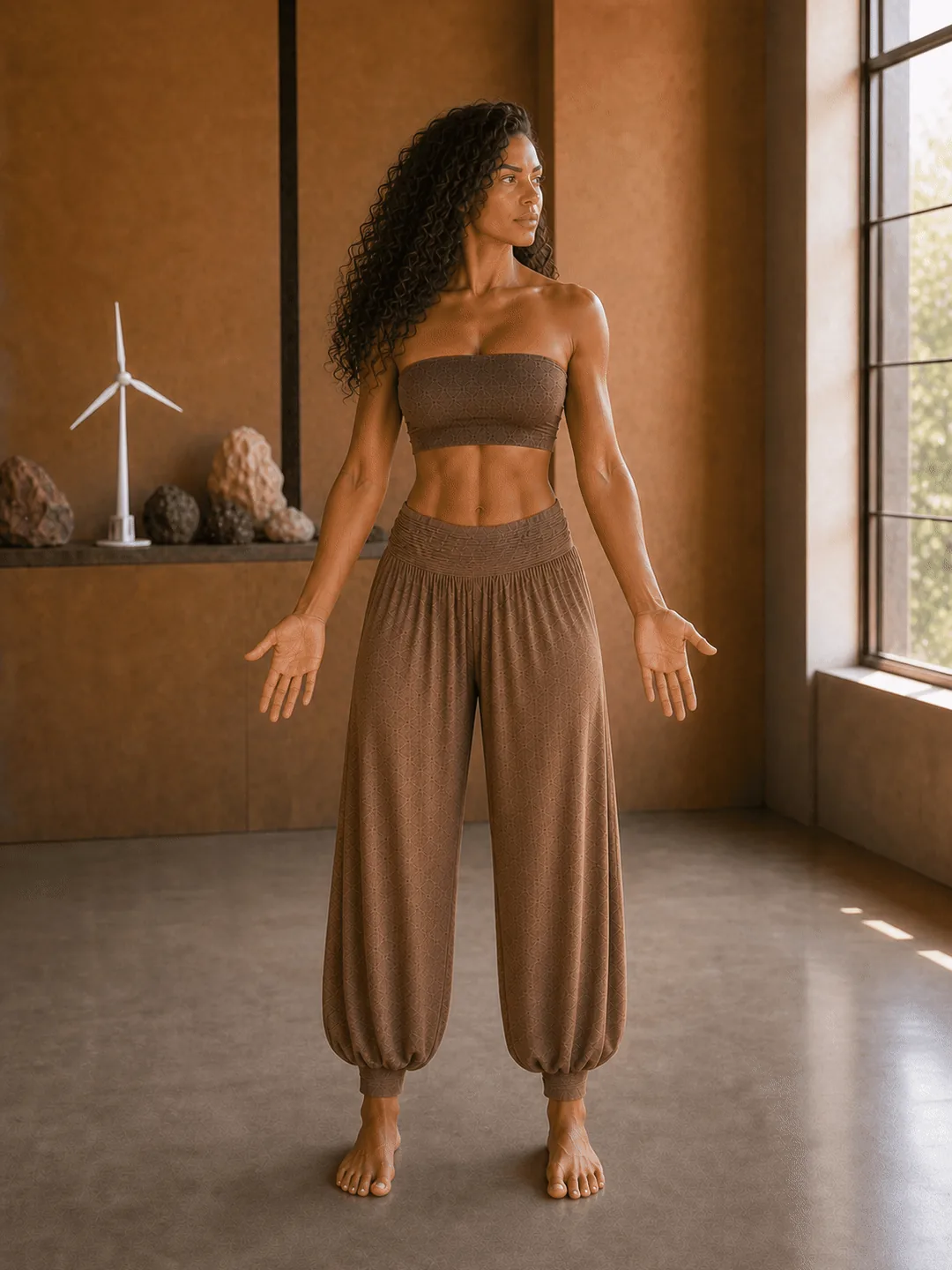
- Pause for a natural breath at your easy end of range — a glance, not a wrench.
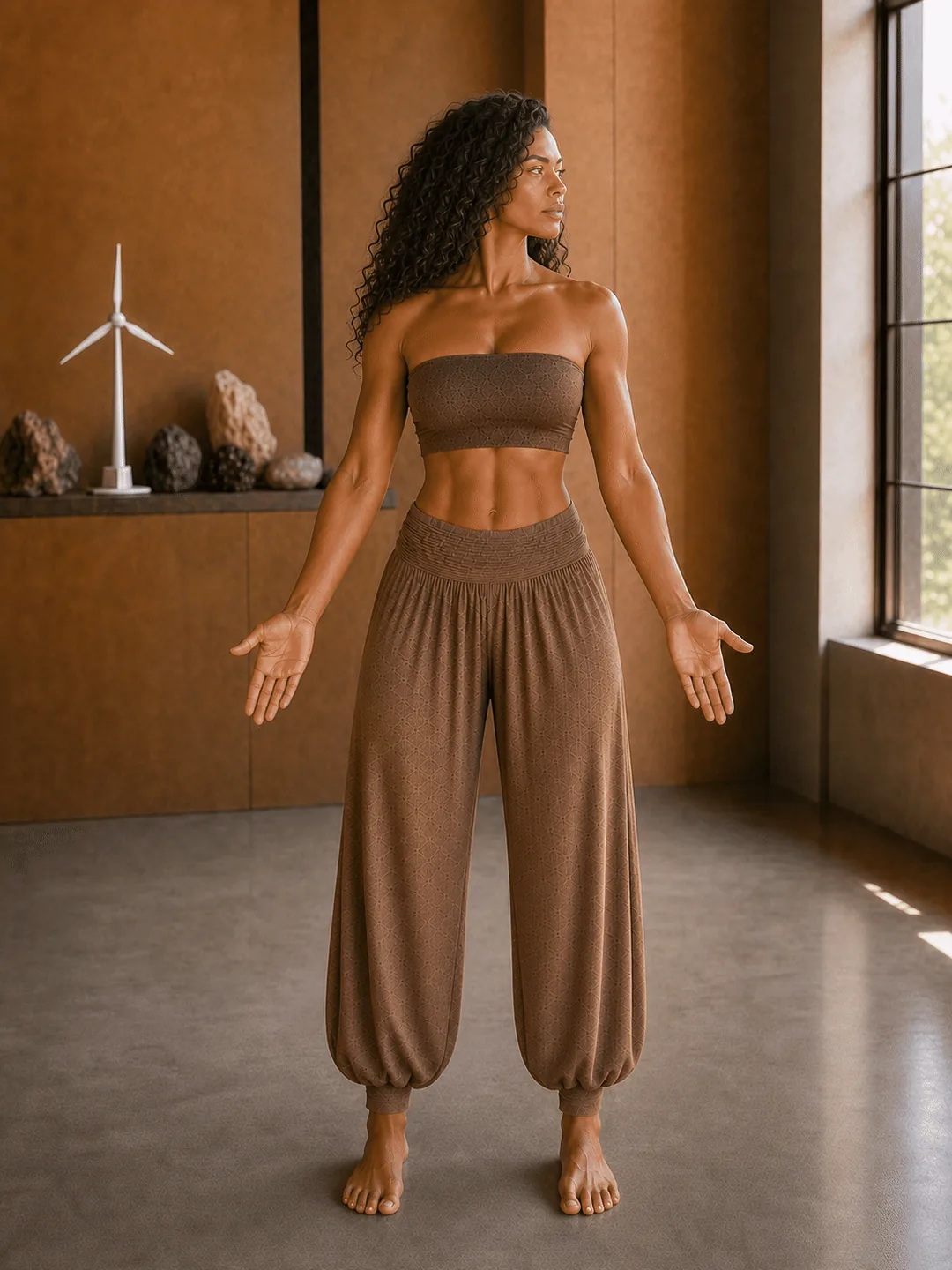
- Slowly return the head to center as the arms rotate back to neutral.

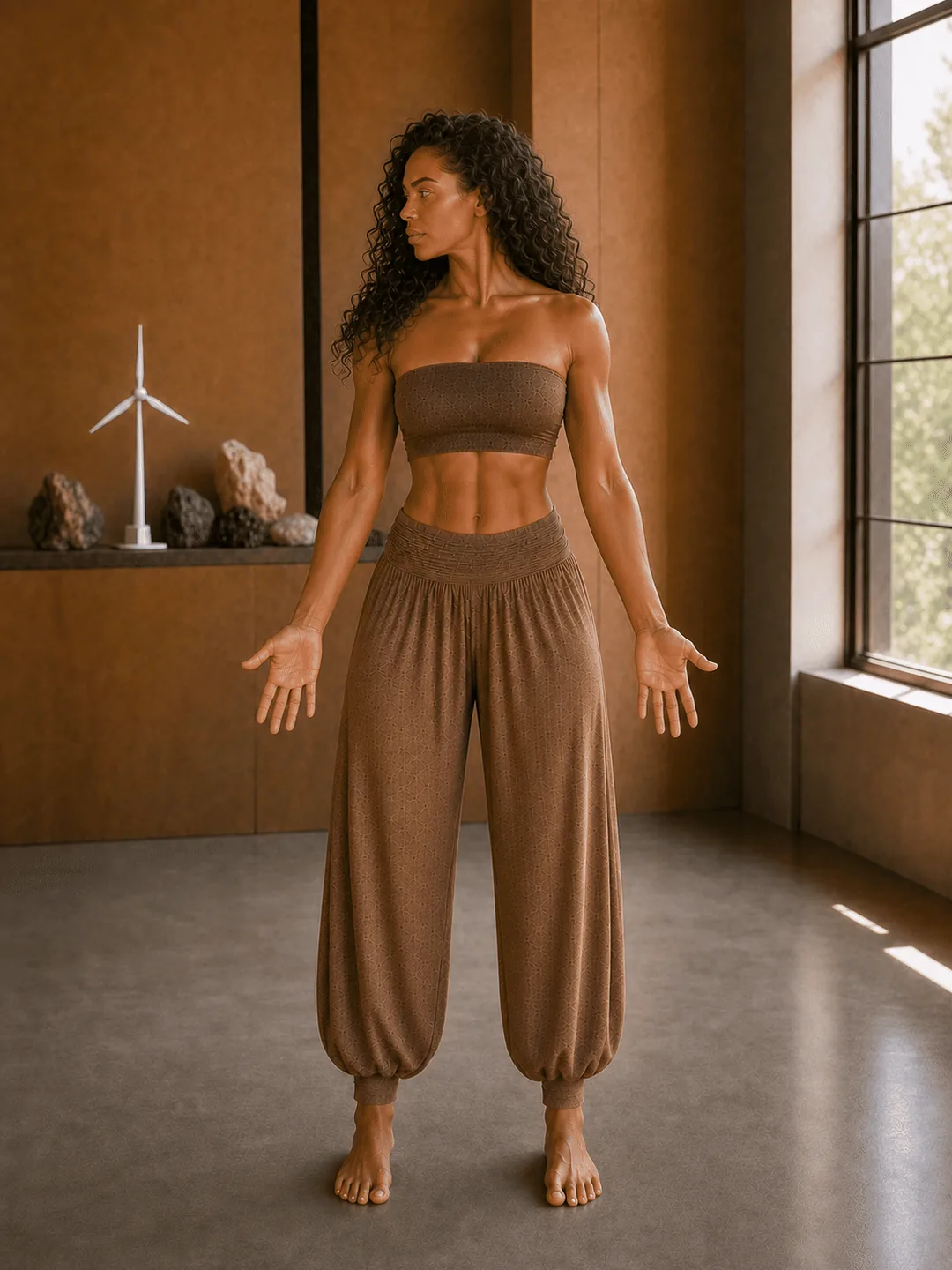
- Repeat to the right. Alternate sides, ending evenly.
Breath
Natural breathing throughout. If pairing arises easily, inhale as the arms roll open and the head turns; exhale returning to center. Never force breath or range.
Variations
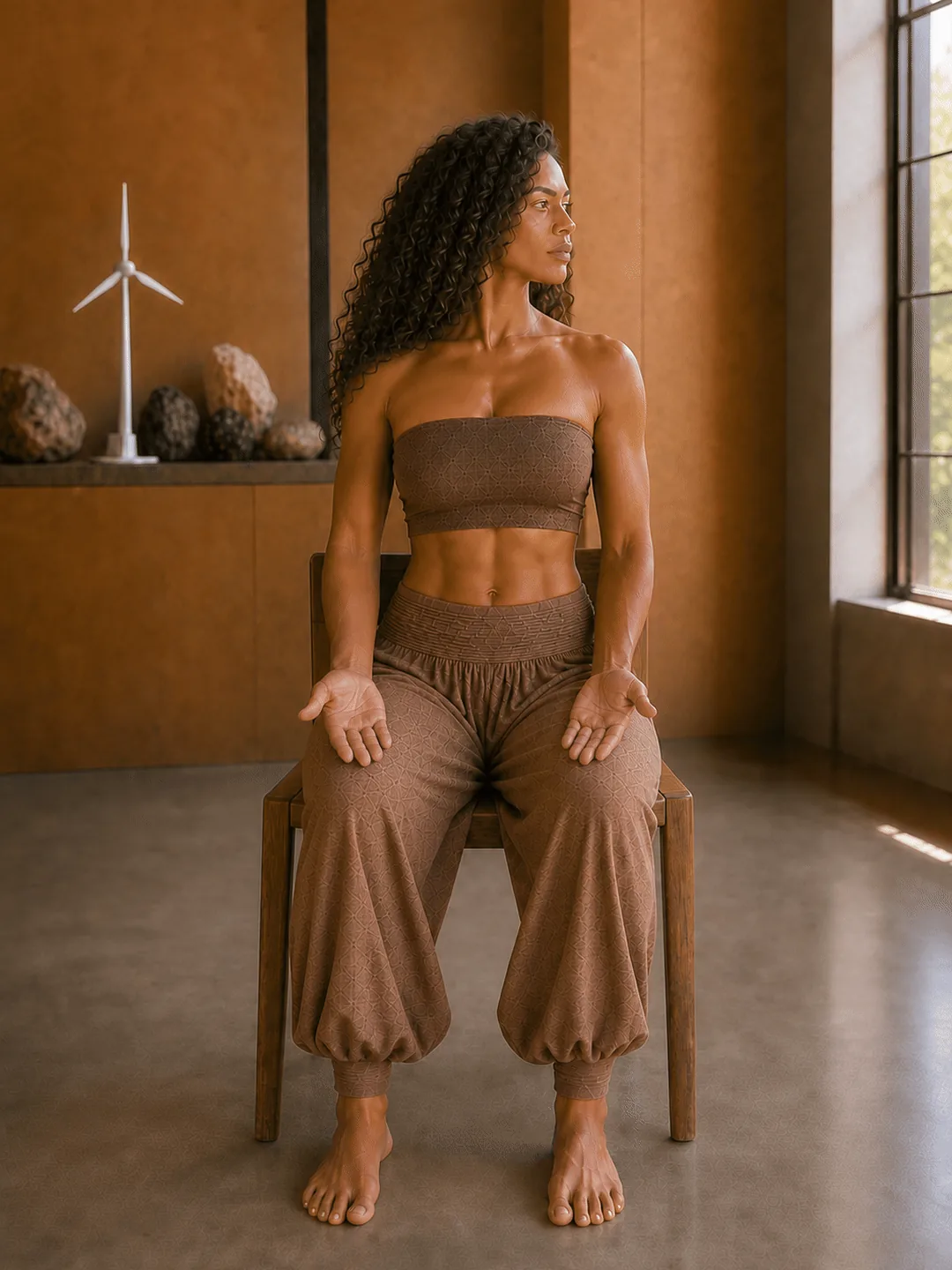
Seated Chair
Modern accessibility adaptation: sit tall with feet flat and hands resting on the thighs; perform the same eye-led head turn with a gentle outward roll of the forearms.
Low Range
Modern accessibility adaptation: move only the eyes to glance sideways and let the head follow a few degrees, or skip the head turn entirely and practice just the arm roll and shoulder-blade settle.
How hard is it, honestly?
A moderate gap: the traditional form asks noticeably more than the adapted one.
What's happening in the body — and why
The eyes lead and the neck follows — that ordering matters, because eye movement naturally recruits the deep neck rotators before the big superficial ones grab. Meanwhile the arms rolling outward pulls the shoulders back from their forward-rounded default. It is the most direct antidote to screen posture in the whole set.
Regions most involved. Original diagram — schematic, not anatomical reference.
Muscles
- KINESIOLOGYDeep cervical rotators and upper trapezius manage the head turn; eye muscles lead the movement.
- KINESIOLOGYInfraspinatus and posterior deltoid produce the outward arm roll; lower trapezius settles the shoulder blades.
- KINESIOLOGYPostural trunk muscles keep the ribs quiet while only the head and arms move.
Joints & skeleton
- KINESIOLOGYComfortable cervical rotation with the chin level — no tipping back.
- KINESIOLOGYExternal rotation at the shoulders with light scapular retraction.
- KINESIOLOGYThe thoracic spine stays tall and near-still; this is a neck-and-eyes movement, not a trunk twist.
Traditional organ framework
- TRADITIONThe classical rhyme speaks of easing the 'five strains and seven impairments' — an old catch-all for the wear of daily life. It names no single organ; the phrase is traditional framing, not a diagnosis or treatment claim.
Traditional energetic framework
- TRADITIONSome teachings describe the gentle arm roll as opening the chest and throat region while the gaze extends awareness behind the body. Traditional imagery, not a mechanism.
What you might notice
Newer or limited mobility
EXPERIENCENecks that live at desks often turn less far than expected — that's information, not failure. Turn only to the easy edge; even a few degrees with slow breath counts fully.
Moderate experience
EXPERIENCEA mild, pleasant stretch along the side of the neck and a sense of the shoulder blades waking up. Sensations vary.
Experienced
EXPERIENCELet the eyes genuinely lead, keep the chin level through the whole arc, and notice whether the two sides differ — without correcting anything by force.
Stop signals
- pain, sharpness, or electric sensations in the neck or down the arms
- dizziness, visual disturbance, or nausea during head turns — stop immediately
- new numbness, tingling, or weakness
- any severe or persistent symptom: stop and seek appropriate medical help
Effects over time
Right away
EXPERIENCEMany desk workers report the neck feeling looser and vision feeling 'wider' after a few slow rounds. Responses vary and are not diagnostic.
Weeks
EXPERIENCEComfortable rotation range often feels easier to access with gentle repetition. No reliable source establishes a guaranteed timeline for this single movement.
Months
EVIDENCEFull-set evidence only: multi-week Ba Duan Jin program studies suggest possible improvements in aspects of physical function in studied populations; no Move-04-specific claim is supported.
Recovery
Very gentle; no soreness expected. If the neck feels irritated afterward, reduce range and speed next time.
Timing & rhythm
- Time of day: PRACTICALNo source-backed requirement. Especially welcome after long screen sessions.
- Food: PRACTICALNo evidence-based interval; unaffected by meals for most people.
- Frequency: Part of the full standardized set; commonly about three repetitions per side. It also stands alone well as a screen-break micro-practice.
Pairings
Combos with compounding effect
- qigong.baduanjin.two-hands-hold-up-the-heavens, breath.functional.physiological-sigh — Desk-reset stack: lengthen, glance behind both shoulders, sigh — under two minutes, no floor, no equipment.
Strength pairings
- KINESIOLOGYModern cross-training option — not part of Ba Duan Jin: gentle band external rotations train the same shoulder-opening pattern under a coach's guidance.
Stretch pairings
- Modern optional pairing: slow, unforced ear-toward-shoulder side bends.
Everyday life
Checking behind you before backing out of a parking spot, done slowly and with the eyes leading, is a complete repetition. The owl would approve of your mirror check.
Contemplative pairing
Practice phrase: CANONOriginal Yarra practice phrase: Breathing in, I look back kindly; breathing out, the past stays where it is.
Meditation pairing: A brief eyes-closed pause at center between sides.
Take care
- neck injury, recent whiplash, or cervical spine conditions → eyes-only variant and professional guidance
- dizziness or vertigo history → seated variant, tiny range, stop at any symptom
- uncontrolled-blood-pressure → seated variant
Sources & further study
What this page is built on
- Health Qigong — Ba Duan Jin (Chinese Health Qigong Association, official standardized form)
- Peer-reviewed systematic reviews on Ba Duan Jin programs (full-set evidence; cite specific reviews at page build)
Follow it further
- REFERENCEBaduanjin qigong — overview
- EVIDENCEBaduanjin research on PubMed
Images on this page are original to this site. We do not republish third-party instructional photography; where another source is useful, we link to it rather than copy it. See our sources & images policy.
Your practice
Stored only in this browser. Mindful repetitions count; rushing doesn't. Optional goal — not a health target.