Compendium › Qigong › Eight Brocades
Sway the Head and Shake the Tail
摇头摆尾去心火 · Yáo tóu bǎi wěi qù xīn huǒ
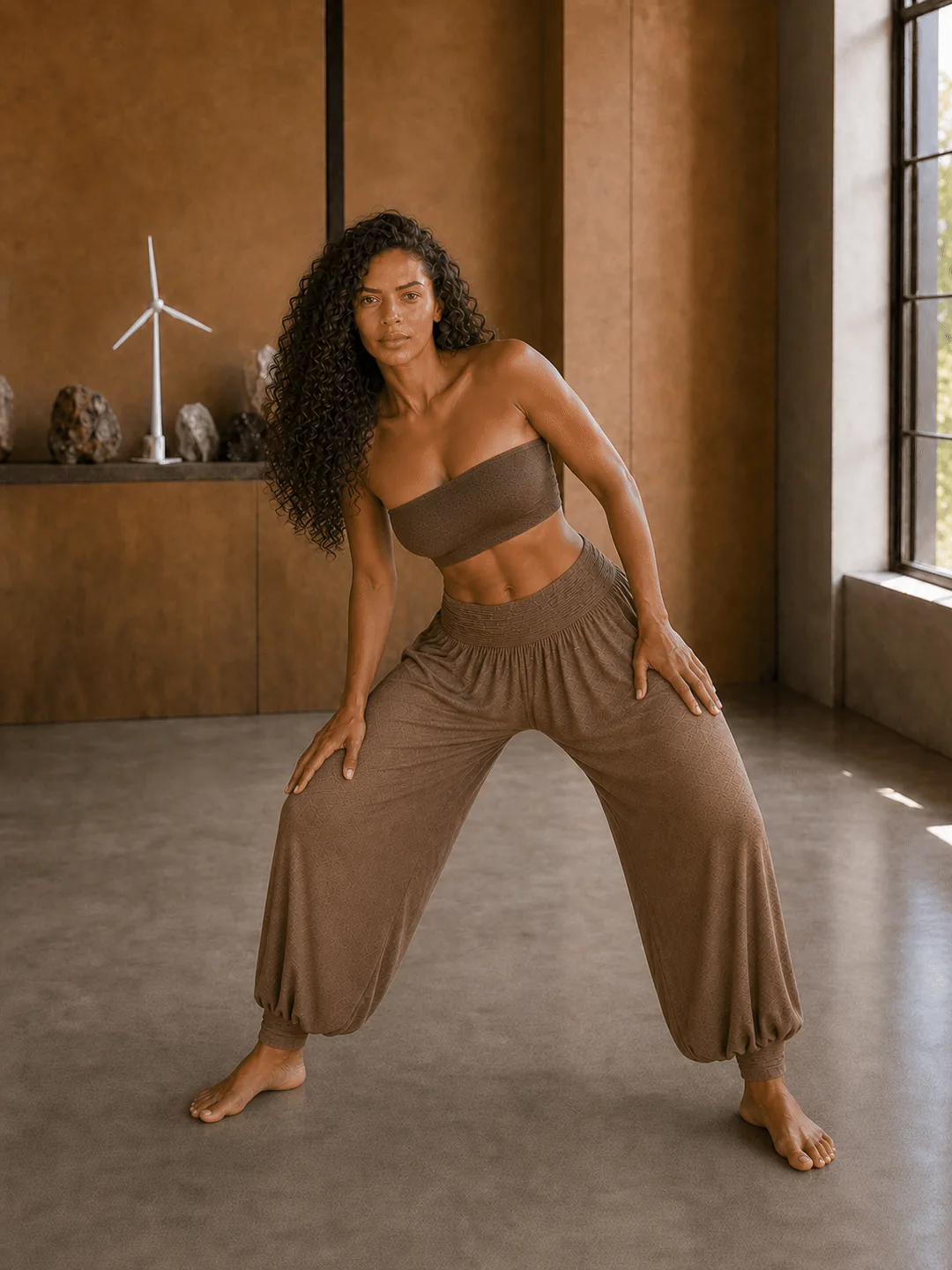
The fifth brocade: from a supported wide stance with hands on the thighs, the trunk circles slowly to one side and back — a rounded, unhurried sway rather than a deep bend.
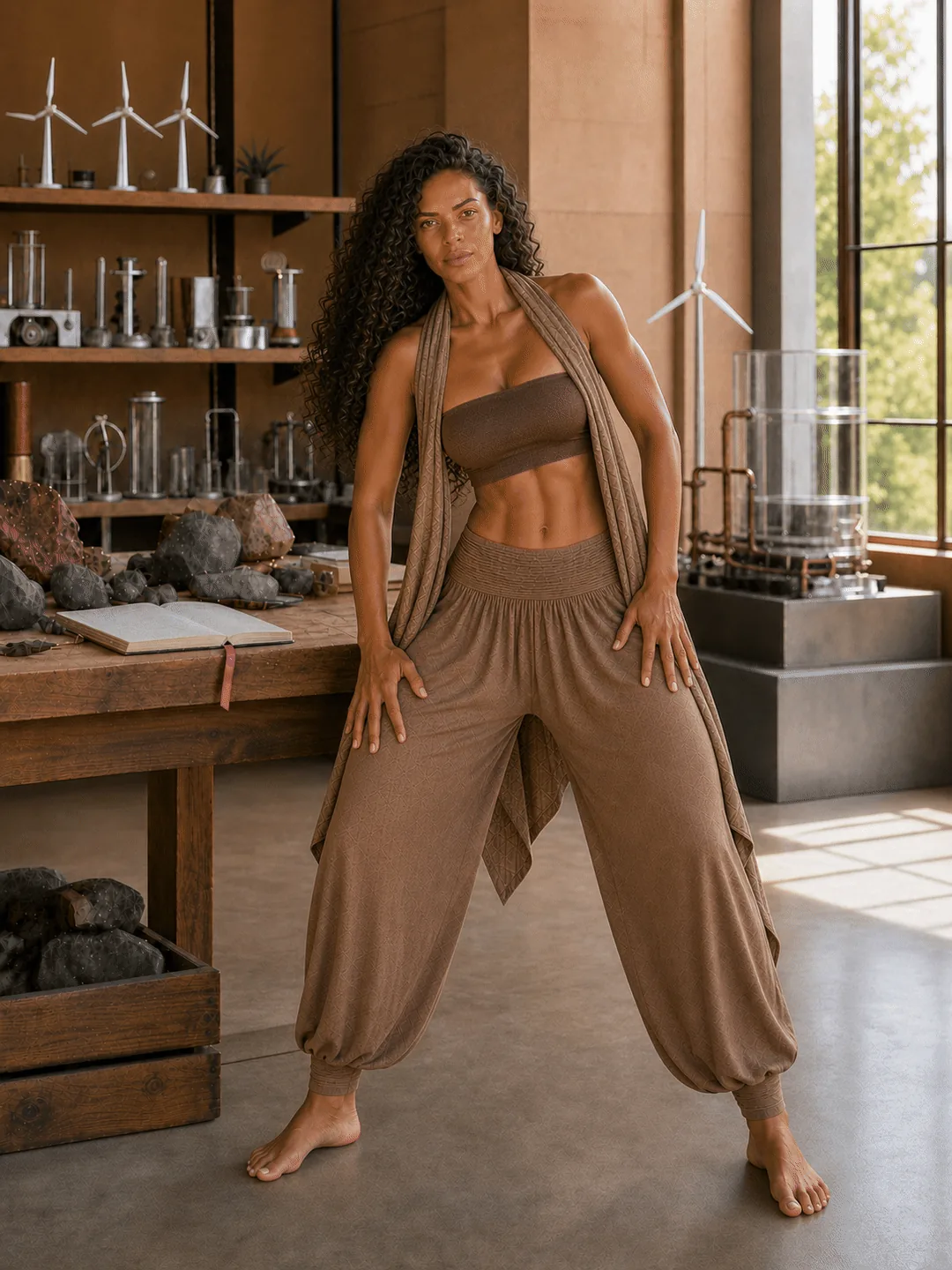
AI-generated demonstration image.
How it's practiced
- Step into a wide, stable stance and bend the knees to a comfortable height. Place both hands on the tops of the thighs, fingers pointing inward, letting the arms genuinely support the trunk.
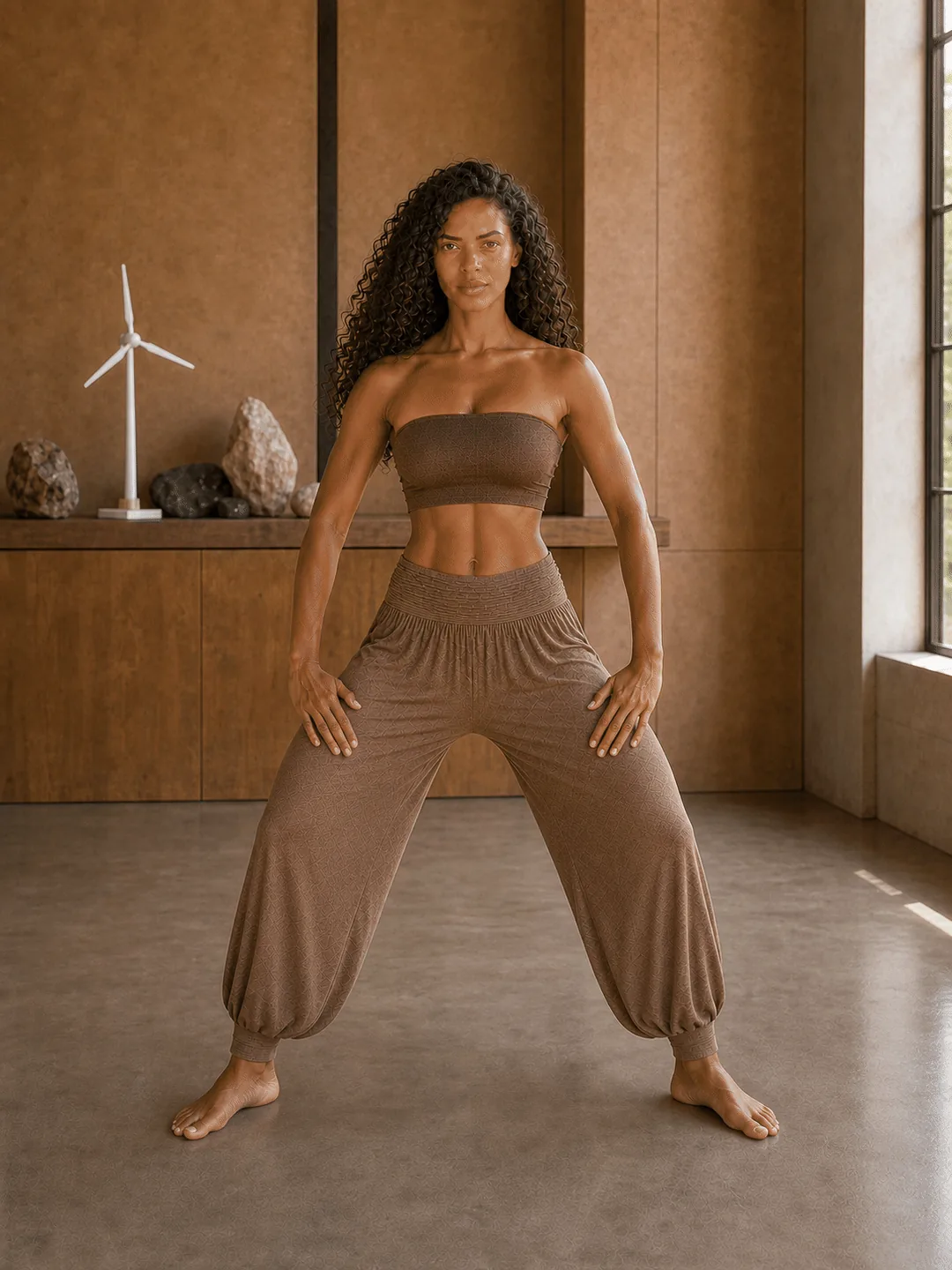
- Keeping the weight even, lean the trunk forward slightly so the thighs and hands carry it.
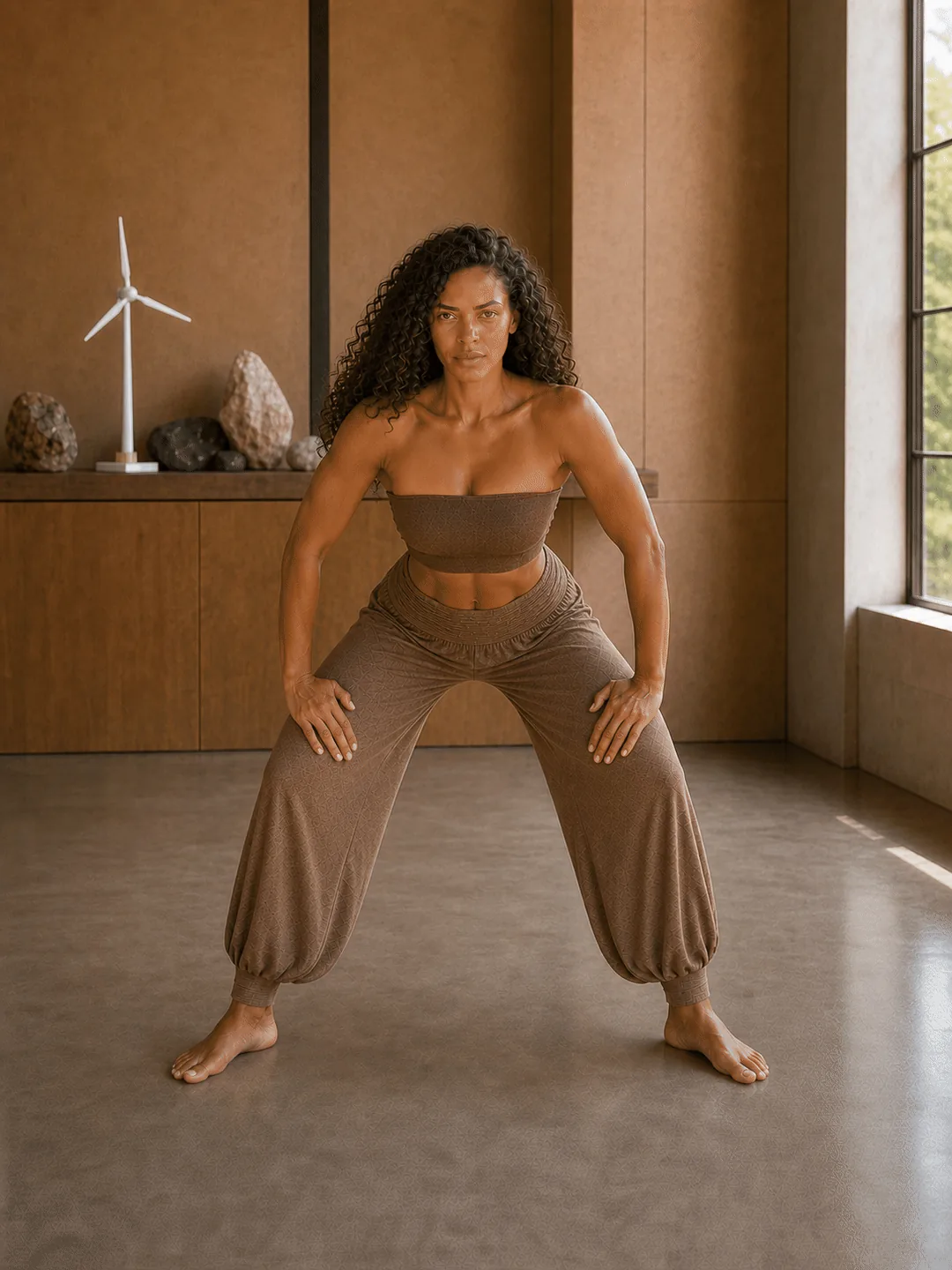
- Slowly circle the trunk and head toward the left: sideways, gently around, and back upright. Keep the circle small and smooth — the movement is a sway, not a swing.

- Pause upright for a natural breath.
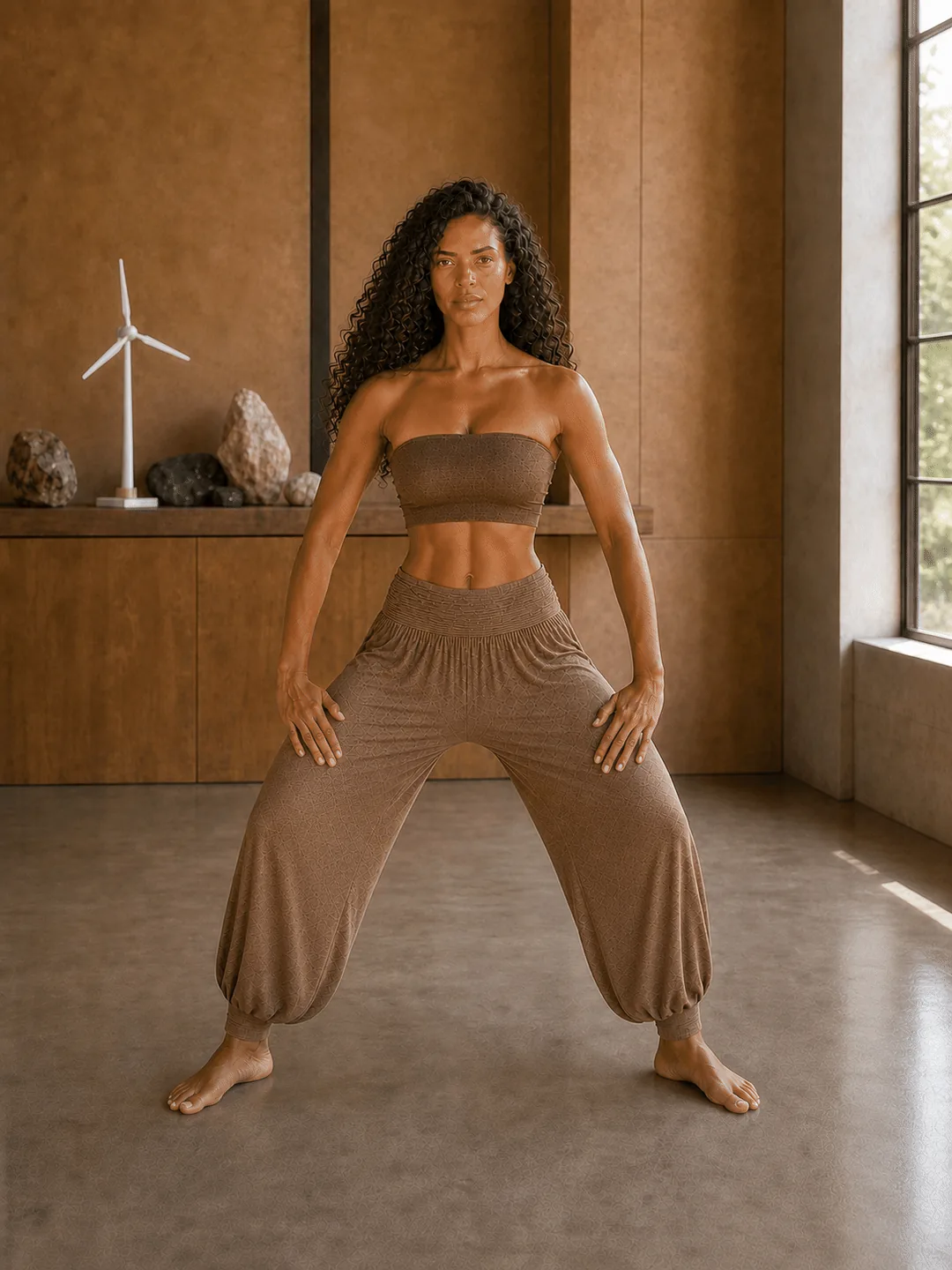
- Circle to the right the same way.
- Alternate sides, ending evenly, then step the feet back together and stand quietly for a breath.

Breath
Natural breathing only in this beginner-facing version. Move slowly enough that the breath never shortens. If any breath-holding appears, make the circle smaller.
Variations
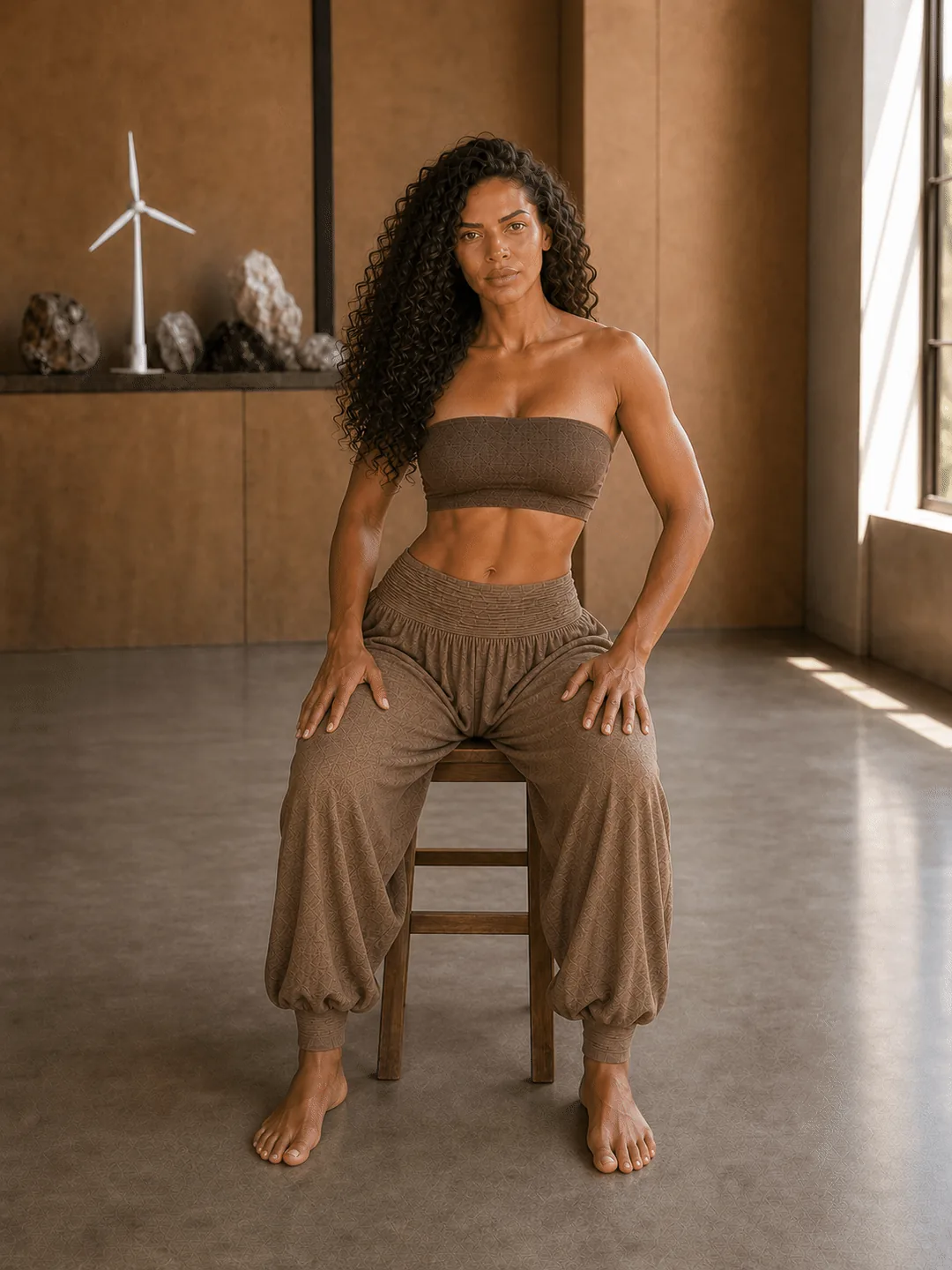
Seated Chair
Modern accessibility adaptation: sit toward the front of a sturdy chair, hands on thighs, and trace the same small, smooth trunk circles with full support.
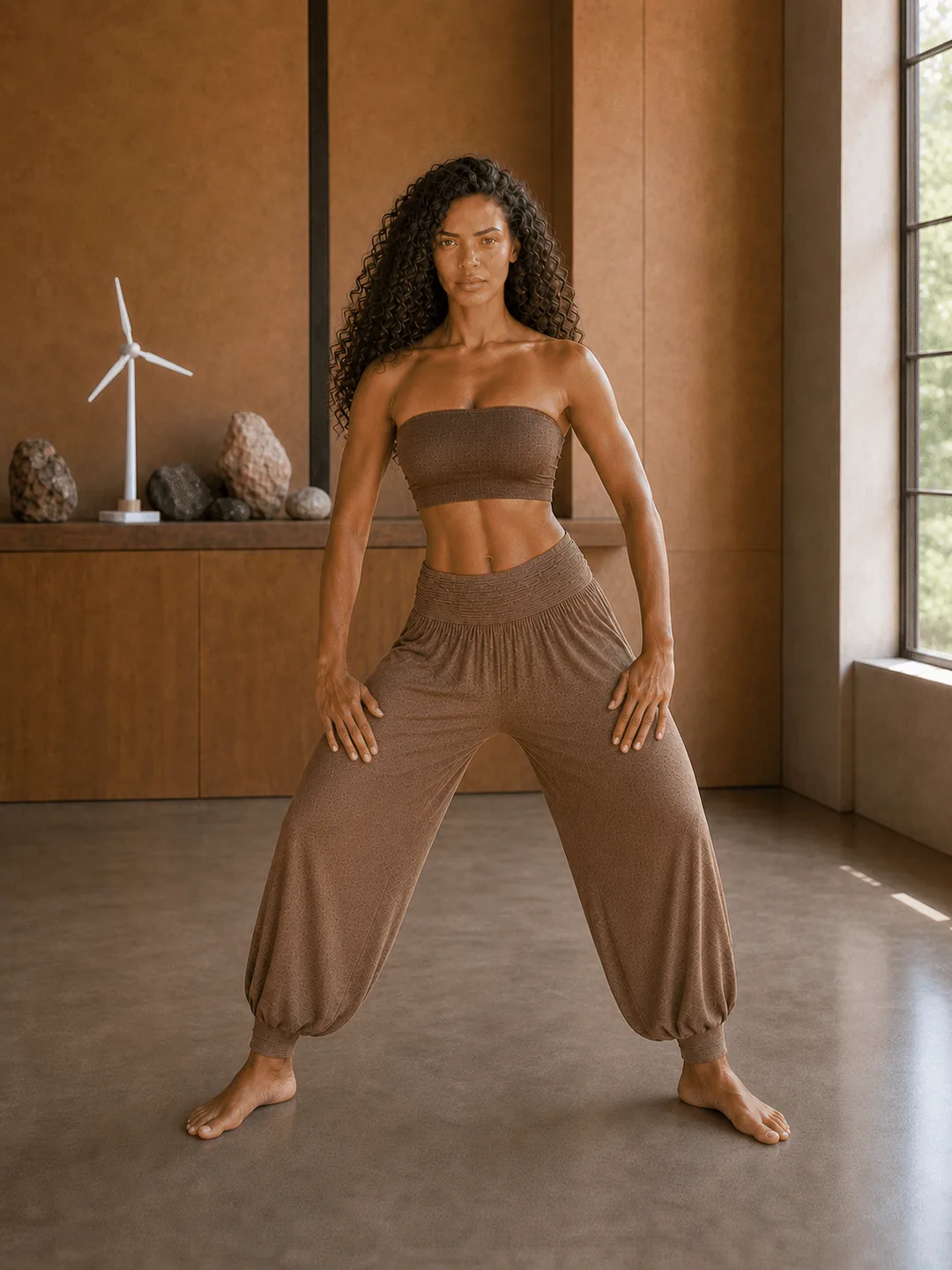
Low Range
Modern accessibility adaptation: reduce the movement to a gentle side-to-side sway of the trunk with no circling and no forward lean.
How hard is it, honestly?
A moderate gap: the traditional form asks noticeably more than the adapted one.
What's happening in the body — and why
Hands on thighs means the arms carry part of the trunk's weight, which lets the spine move through a circle it could not safely control unsupported. The waist muscles work in every direction rather than one, and the slow tempo keeps the head's changing position from becoming a dizziness problem. Support is what makes the range affordable.
Regions most involved. Original diagram — schematic, not anatomical reference.
Muscles
- KINESIOLOGYSpinal erectors, obliques, and deep trunk muscles guide the controlled circle; the arms brace against the thighs to share the load.
- KINESIOLOGYQuadriceps and gluteals hold the supported stance.
- KINESIOLOGYNeck muscles carry the head smoothly through the arc without dropping it fully.
Joints & skeleton
- KINESIOLOGYSmall circumduction through the thoracic and lumbar spine within a comfortable, supported range.
- KINESIOLOGYHips and knees stay bent and stable; the pelvis shifts subtly opposite the trunk ('the tail').
- KINESIOLOGYThe neck follows the trunk's arc gently — no throwing the head back.
Traditional organ framework
- TRADITIONThe classical rhyme says this movement 'dispels heart fire' — in TCM, an image of agitation or restlessness rather than the biomedical heart. Traditional framing only; it is not a cardiac claim or treatment.
Traditional energetic framework
- TRADITIONTeachings describe the circling as settling excess upward energy downward. Traditional imagery, not a mechanism.
What you might notice
Newer or limited mobility
EXPERIENCEThe supported lean can still feel like work for the legs and back. Keep the stance high, the circle tiny, or use the seated variant — the sway matters, not the size.
Moderate experience
EXPERIENCEMild effort in the thighs and trunk with a loosening feeling through the waist and lower back. Sensations vary.
Experienced
EXPERIENCESmooth the transition points of the circle and keep the weight even through both feet; let the head trail the spine rather than lead it.
Stop signals
- back pain that sharpens or radiates
- dizziness, lightheadedness, or nausea during circling — stop immediately and rest
- chest pressure or pain, palpitations, or unusual shortness of breath
- new numbness, tingling, or weakness
- any severe or persistent symptom: stop and seek appropriate medical help
Effects over time
Right away
EXPERIENCEPractitioners often describe feeling settled and pleasantly loosened through the middle after slow rounds. Responses vary and are not diagnostic.
Weeks
EXPERIENCEThe circle usually becomes smoother and steadier with practice. No reliable source establishes a guaranteed timeline for this single movement.
Months
EVIDENCEFull-set evidence only: multi-week Ba Duan Jin program studies suggest possible improvements in aspects of physical function and balance in studied populations; no Move-05-specific claim is supported.
Recovery
Legs and waist may feel mildly worked. Reduce depth, range, or repetitions if soreness lingers past a day.
Timing & rhythm
- Time of day: PRACTICALNo source-backed requirement. Because it involves head movement, choose a moment when you feel steady — not immediately after standing up quickly.
- Food: PRACTICALMost comfortable away from full meals because of the forward lean; no evidence-based interval.
- Frequency: Part of the full standardized set; commonly about three repetitions per side. Comfort over count.
Pairings
Combos with compounding effect
- qigong.baduanjin.two-hands-hold-the-feet — Classical adjacency: supported circling prepares the waist and legs for the gentler hinge that follows.
Strength pairings
- KINESIOLOGYModern cross-training option — not part of Ba Duan Jin: supported hip hinges (to a box) train trunk control in a related pattern under a coach's guidance.
Stretch pairings
- Modern optional pairing: gentle supported side bends with a hand on a counter.
Everyday life
Wiping a large table in slow circles while the legs stay soft is a cousin of this sway. Let the whole trunk draw the circle, not just the arm.
Contemplative pairing
Practice phrase: CANONOriginal Yarra practice phrase: Breathing in, I circle; breathing out, the water settles.
Meditation pairing: A standing pause with eyes soft after the final circle, noticing stillness after motion.
Take care
- low-back conditions → seated or sway-only variant and professional guidance
- dizziness, vertigo, or balance disorders → seated variant, tiny range, stop at any symptom
- uncontrolled-blood-pressure → avoid the forward lean; seated variant
- pregnancy → seated sway variant and professional guidance
- hip or knee pain in wide stances → narrow, higher stance
Sources & further study
What this page is built on
- Health Qigong — Ba Duan Jin (Chinese Health Qigong Association, official standardized form)
- Peer-reviewed systematic reviews on Ba Duan Jin programs (full-set evidence; cite specific reviews at page build)
Follow it further
- REFERENCEBaduanjin qigong — overview
- EVIDENCEBaduanjin research on PubMed
Images on this page are original to this site. We do not republish third-party instructional photography; where another source is useful, we link to it rather than copy it. See our sources & images policy.
Your practice
Stored only in this browser. Mindful repetitions count; rushing doesn't. Optional goal — not a health target.