Compendium › Qigong › Eight Brocades
Two Hands Hold the Feet
两手攀足固肾腰 · Liǎng shǒu pān zú gù shèn yāo
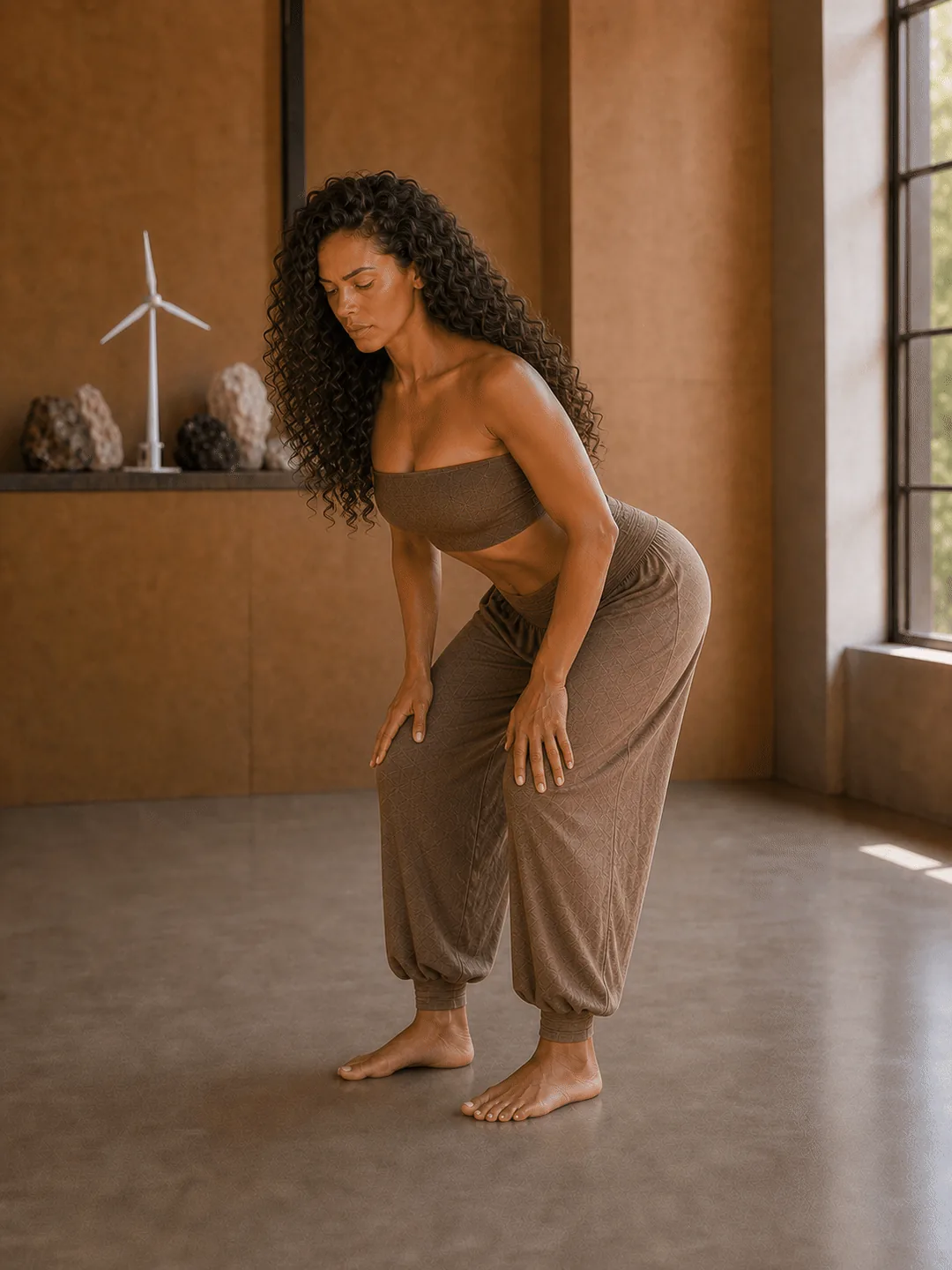
The sixth brocade: a slow, supported journey down the back of the body — hands tracing the back and legs toward the feet as far as comfortable — and an equally slow return to standing.
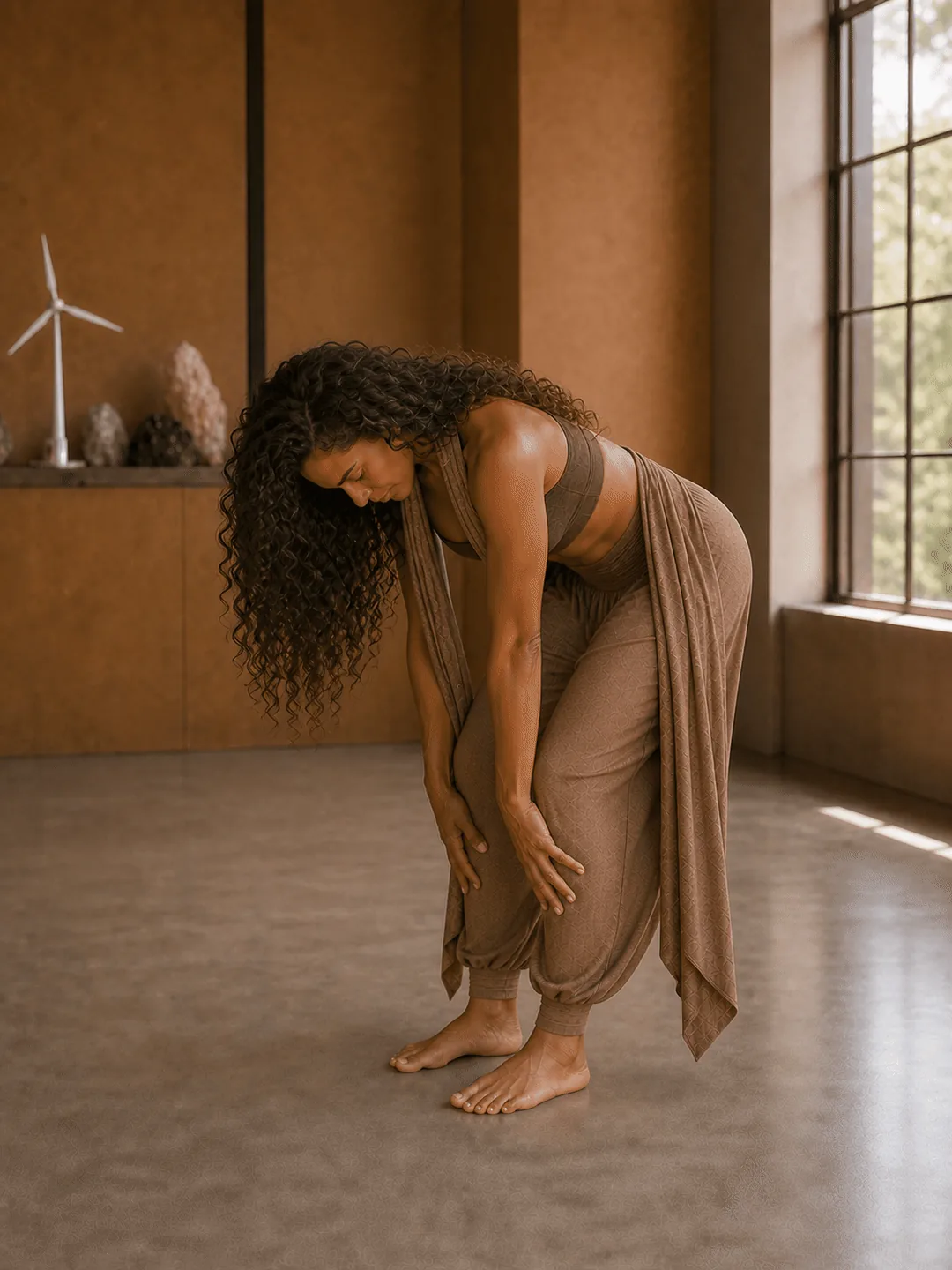
AI-generated demonstration image.
How it's practiced
- Stand with feet about shoulder-width, knees soft. Bring the palms to the lower back, fingers pointing down.
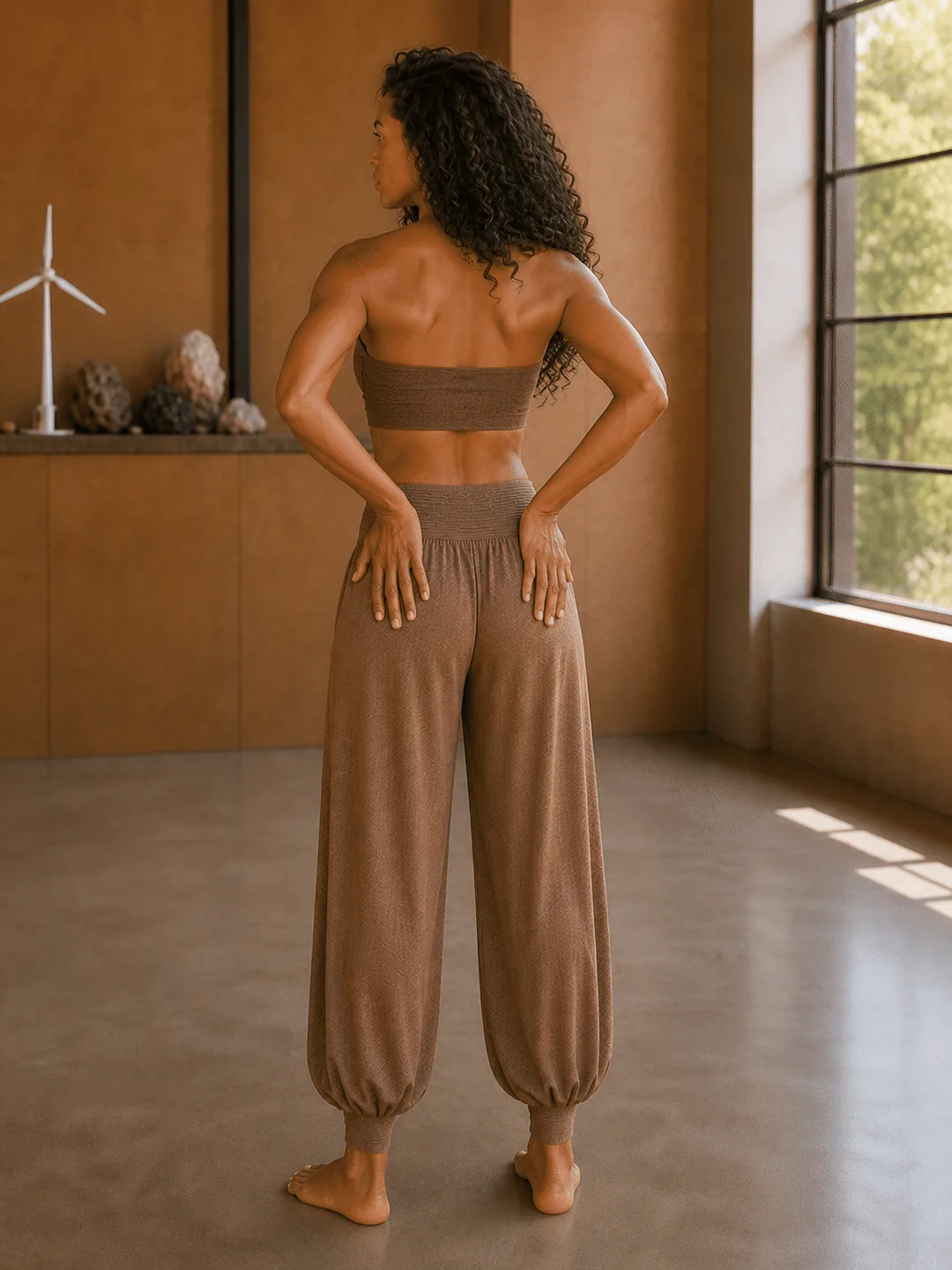
- Lengthen upward through the crown, then begin to fold slowly forward from the hips, letting the hands glide down the back of the legs.
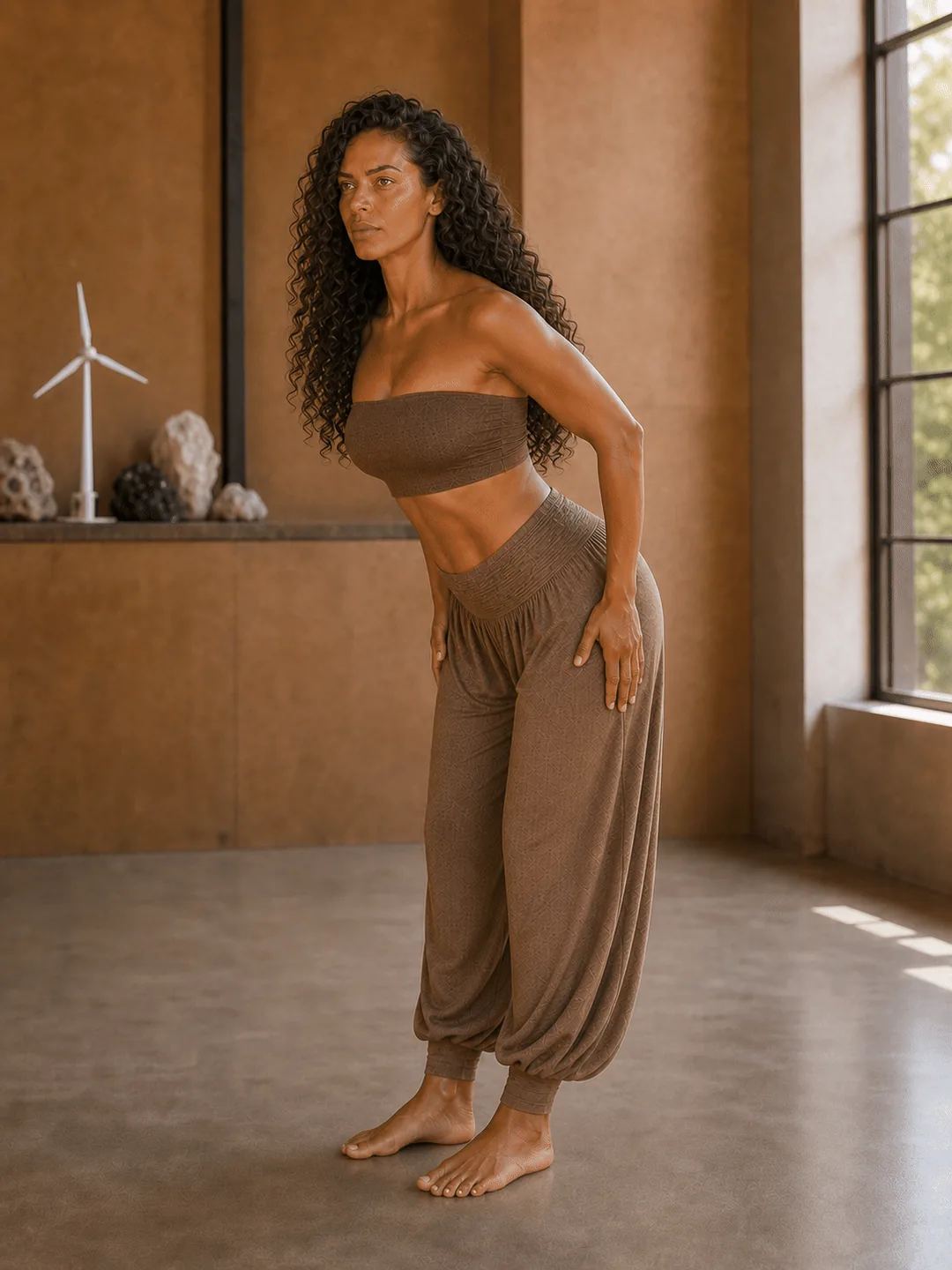
- Fold only as far as the backs of the legs comfortably allow — shins and knees are honorable destinations; the feet are optional, not required.
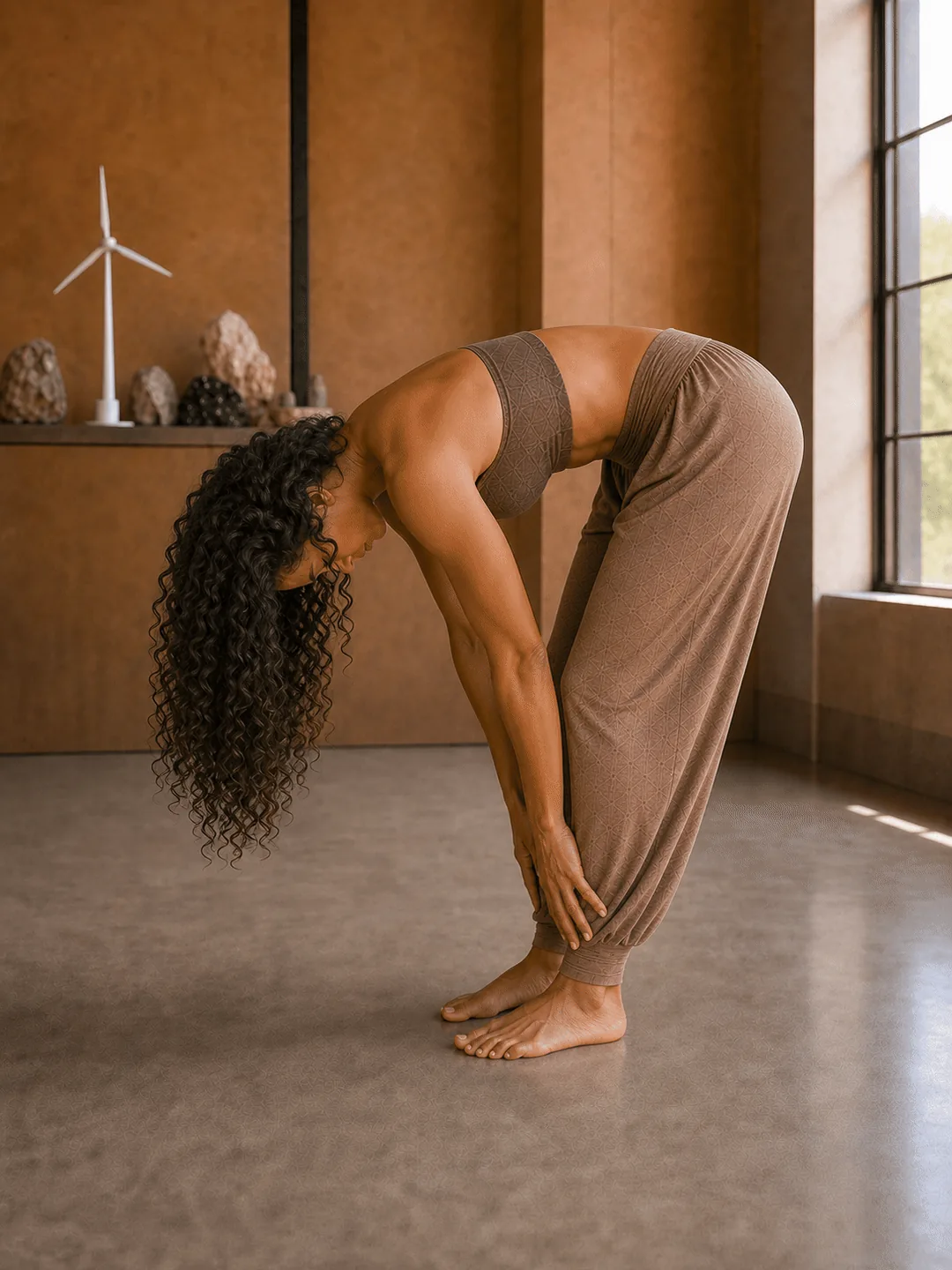
- Let the head and neck hang easily, without forcing the gaze anywhere.
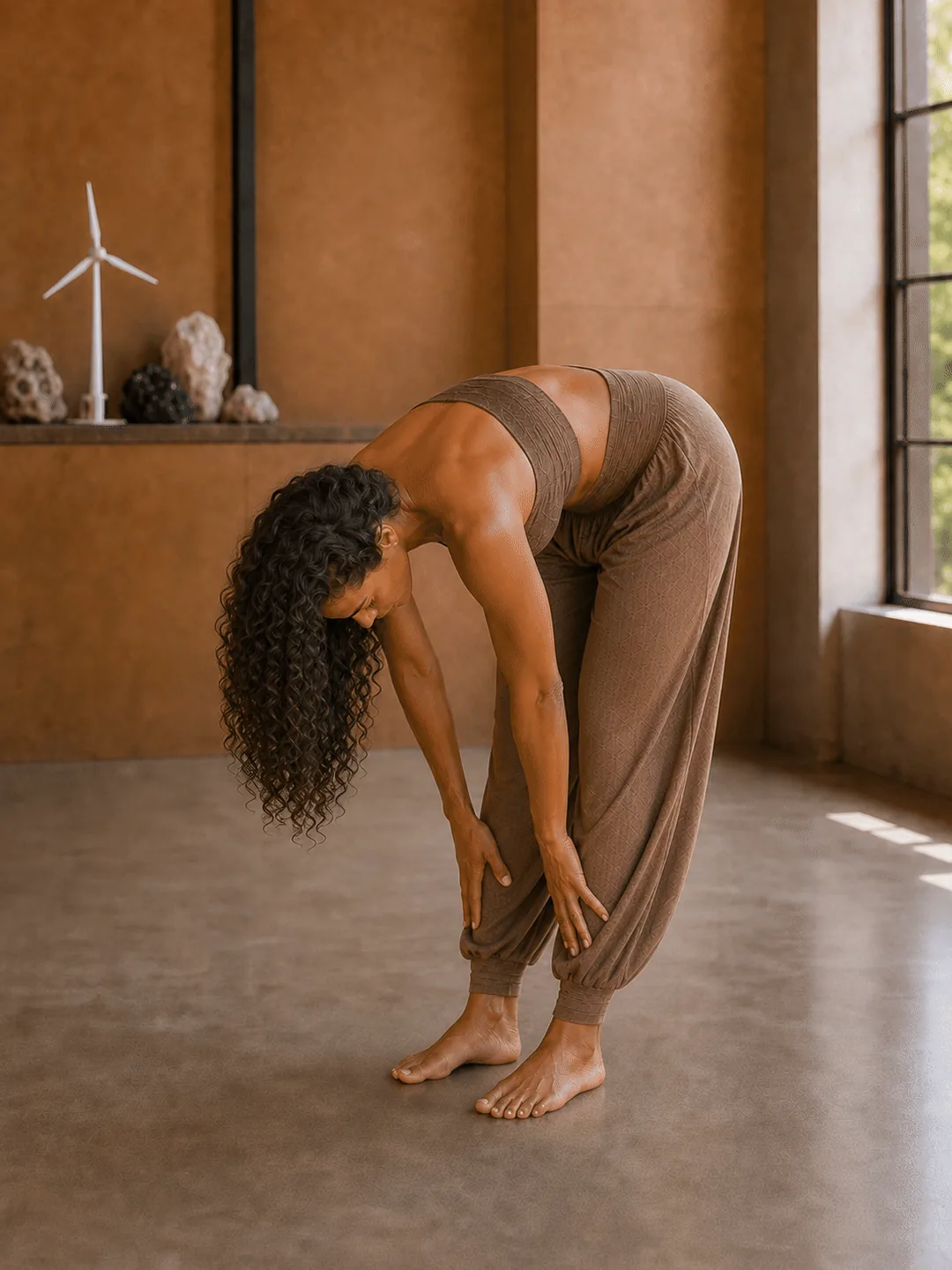
- Bend the knees slightly, and rise slowly by pressing the feet down and unrolling the spine, hands gliding back up the legs to the lower back.
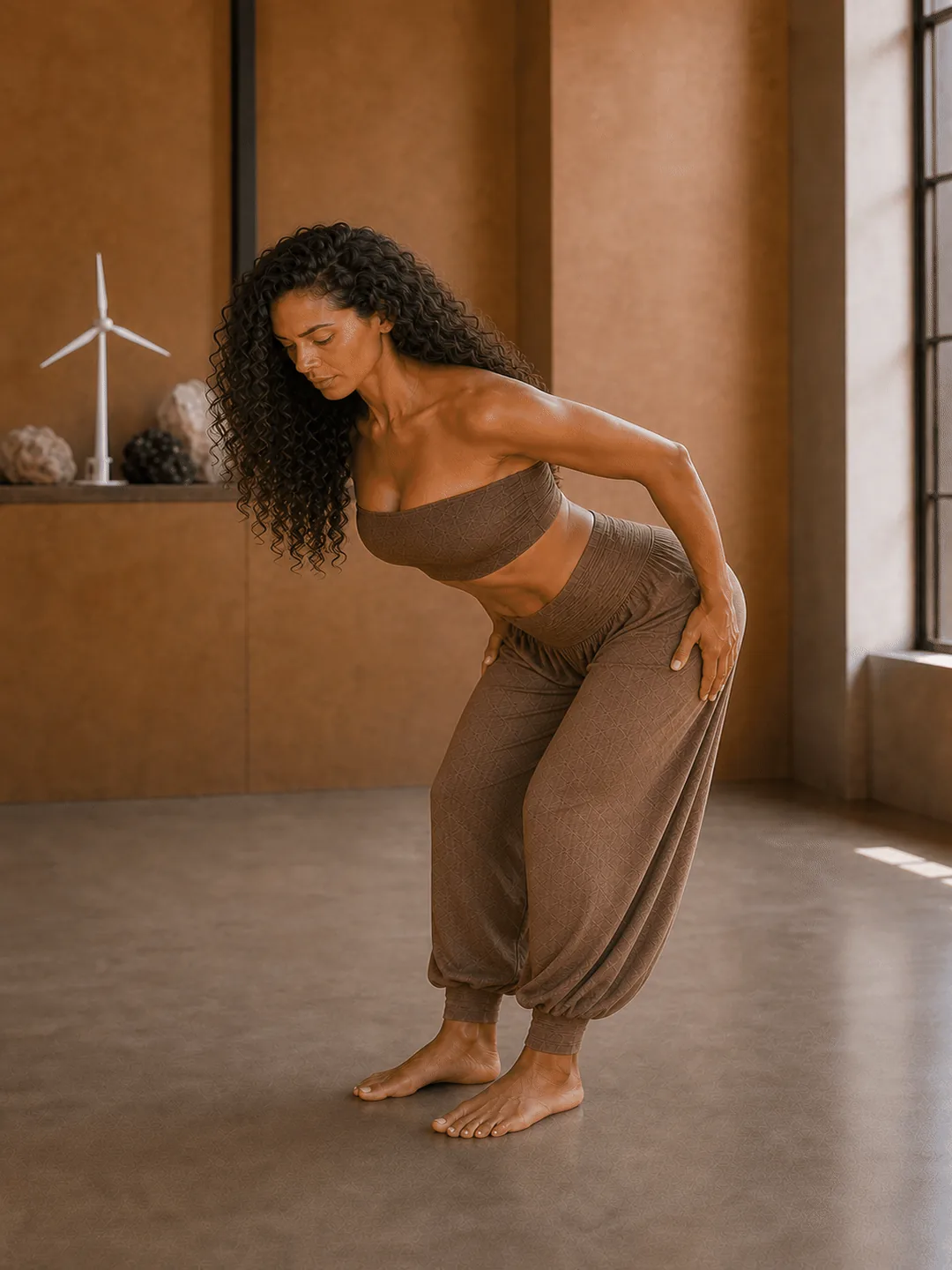
- Stand quietly for a full breath before the next repetition. Rise even more slowly if any lightheadedness whispers.
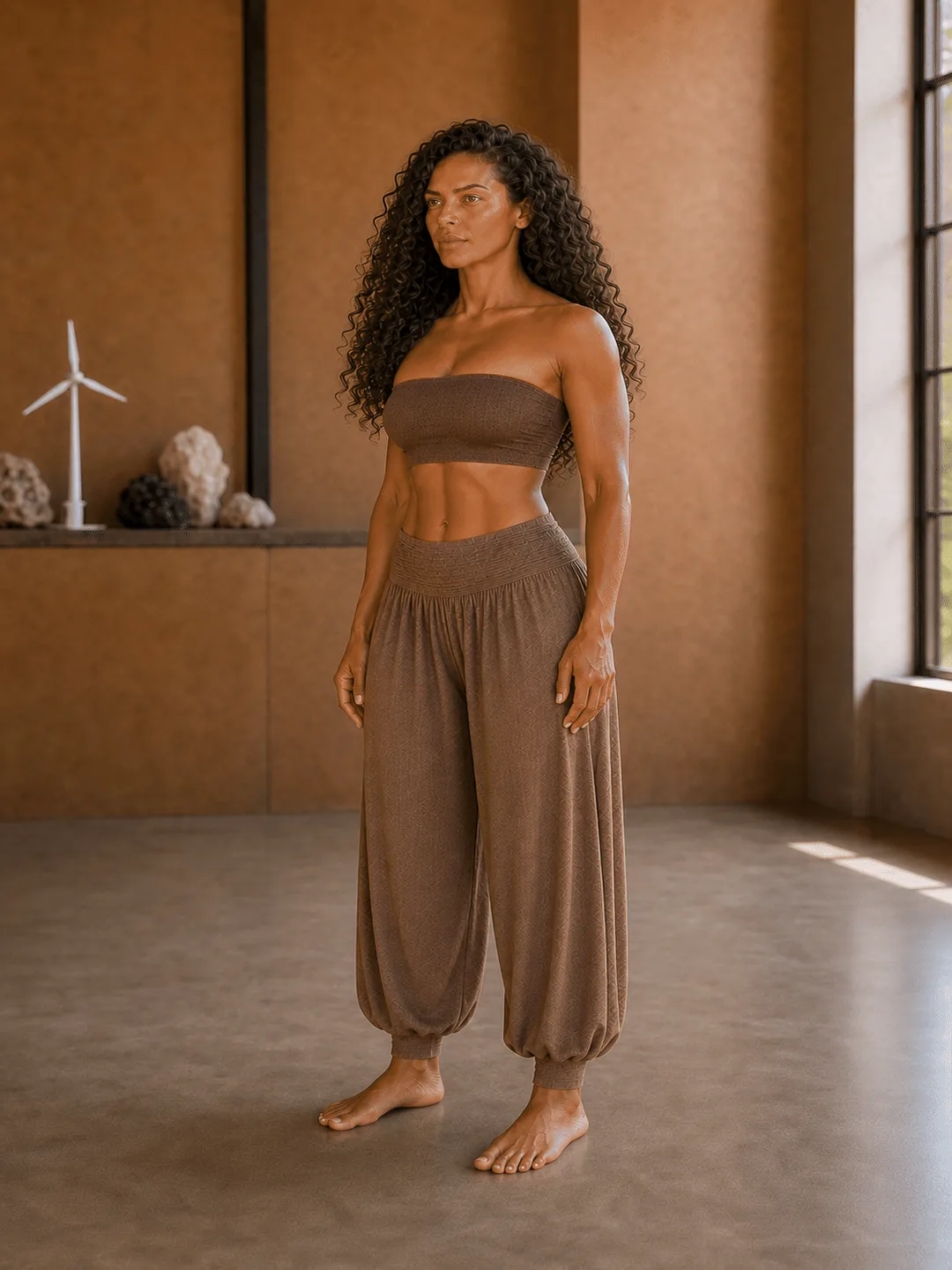
Breath
Natural breathing; commonly the fold happens on an exhale and the rise on an inhale, but never force the pairing. Do not hold the breath while folded.
Variations
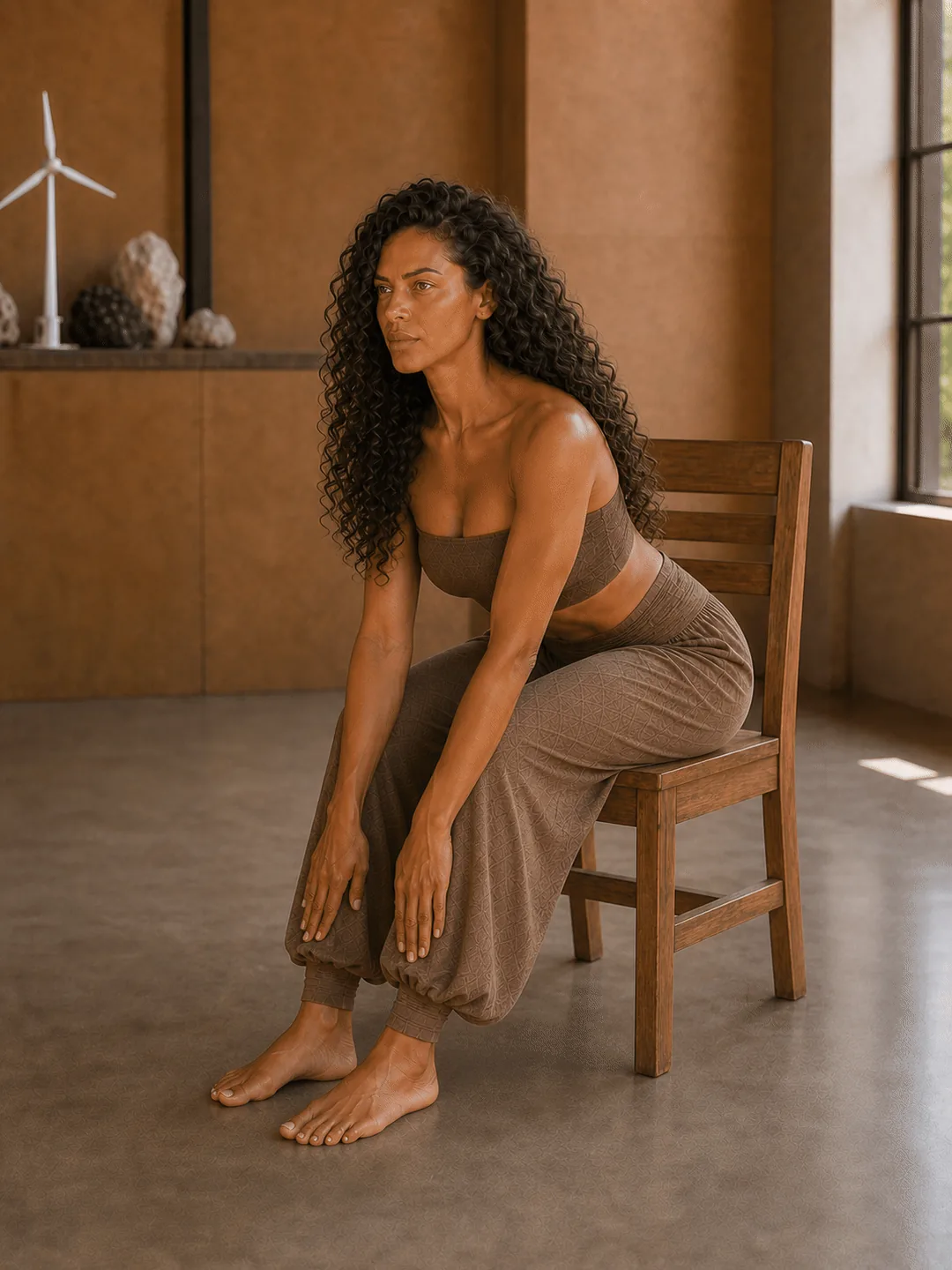
Seated Chair
Modern accessibility adaptation: from a sturdy chair, slide the hands down the shins toward the ankles only as far as comfortable, then rise slowly with the hands walking back up the legs.
Low Range
Modern accessibility adaptation: fold only to mid-thigh with well-bent knees, or simply trace the hands from lower back to thighs and back while standing tall.
How hard is it, honestly?
A moderate gap: the traditional form asks noticeably more than the adapted one.
What's happening in the body — and why
Hands tracing down the legs give the nervous system a continuous map of where you are in space, which is why this fold feels safer than an unsupported one. The hamstrings lengthen under low load, and the slow rise trains the spinal muscles eccentrically then concentrically. The deliberate slowness on the way up is blood-pressure courtesy, not ceremony.
Regions most involved. Original diagram — schematic, not anatomical reference.
Muscles
- KINESIOLOGYHamstrings and calves lengthen during the fold; spinal erectors work eccentrically on the way down and concentrically on the rise.
- KINESIOLOGYGluteals and hamstrings power the return to standing.
- KINESIOLOGYThe hands' contact along the legs gives constant proprioceptive feedback.
Joints & skeleton
- KINESIOLOGYHip flexion with a gently rounding spine — a relaxed fold, not a flat-back deadlift.
- KINESIOLOGYKnees stay soft throughout; ankles dorsiflex slightly as weight shifts.
- KINESIOLOGYHead position changes are significant: rise slowly to respect blood-pressure changes.
Traditional organ framework
- TRADITIONThe classical rhyme links this movement to strengthening the kidneys and waist. In TCM, 'kidney' names a functional system associated with the lower back region — traditional framing, not a claim about renal medicine.
Traditional energetic framework
- TRADITIONTeachings describe the hands tracing the Bladder channel down the back body. Traditional map, not a mechanism.
What you might notice
Newer or limited mobility
EXPERIENCETight hamstrings may stop the fold high on the thighs — completely fine. Bend the knees generously or use the seated variant; the slow travel is the practice, not the depth.
Moderate experience
EXPERIENCEA clear back-of-leg stretch and a pleasant sense of the spine lengthening on the rise. Sensations vary.
Experienced
EXPERIENCESlow the transitions further, keep the weight centered over the whole foot, and treat the last few degrees of range as scenery rather than a goal.
Stop signals
- low-back pain that sharpens or radiates down a leg
- more than brief lightheadedness on rising — sit down and rest
- chest pressure or pain, palpitations, or unusual shortness of breath
- new numbness, tingling, or weakness
- any severe or persistent symptom: stop and seek appropriate medical help
Effects over time
Right away
EXPERIENCEMany practitioners report the back of the body feeling longer and the mind quieter after slow folds. Responses vary and are not diagnostic.
Weeks
EXPERIENCEComfortable folding range often increases gradually with relaxed repetition. No reliable source establishes a guaranteed timeline for this single movement.
Months
EVIDENCEFull-set evidence only: multi-week Ba Duan Jin program studies suggest possible improvements in flexibility-related measures in studied populations; no Move-06-specific claim is supported.
Recovery
Hamstrings may feel gently worked. If the low back is sensitive afterward, bend the knees more and reduce depth next time.
Timing & rhythm
- Time of day: PRACTICALNo source-backed requirement. Folds often feel stiffer first thing in the morning; that is normal tissue behavior, not a fault.
- Food: PRACTICALMore comfortable away from full meals because of the fold; no evidence-based interval.
- Frequency: Part of the full standardized set; commonly about three slow repetitions. Comfort over count.
Pairings
Combos with compounding effect
- qigong.baduanjin.sway-head-shake-tail — Classical adjacency: the supported sway warms the waist and legs before this deeper travel down the back body.
Strength pairings
- KINESIOLOGYModern cross-training option — not part of Ba Duan Jin: light hip-hinge patterns (Romanian-deadlift technique with a dowel) train the same chain under a coach's guidance.
Stretch pairings
- Modern optional pairing: a relaxed supported calf stretch at a wall.
Everyday life
Picking laundry off the floor piece by piece, slowly, with soft knees and a hand tracing your own leg on the way down, is a complete practice round. The basket can wait.
Contemplative pairing
Practice phrase: CANONOriginal Yarra practice phrase: Breathing out, I bow to the ground; breathing in, the ground gives me back.
Meditation pairing: Three unhurried breaths standing tall after the final rise.
Take care
- low-back conditions, disc history, or sciatica → seated or low-range variant and professional guidance
- uncontrolled-blood-pressure, glaucoma, or conditions worsened by head-below-heart positions → avoid the full fold; use the low-range variant
- dizziness-prone → rise extra slowly or choose the seated variant
- late-pregnancy → seated variant and professional guidance
- osteoporosis → limit spinal rounding; professional guidance
Sources & further study
What this page is built on
- Health Qigong — Ba Duan Jin (Chinese Health Qigong Association, official standardized form)
- Peer-reviewed systematic reviews on Ba Duan Jin programs (full-set evidence; cite specific reviews at page build)
Follow it further
- REFERENCEBaduanjin qigong — overview
- EVIDENCEBaduanjin research on PubMed
Images on this page are original to this site. We do not republish third-party instructional photography; where another source is useful, we link to it rather than copy it. See our sources & images policy.
Your practice
Stored only in this browser. Mindful repetitions count; rushing doesn't. Optional goal — not a health target.