Compendium › Qigong › Eight Brocades
Clench the Fists and Glare
攒拳怒目增气力 · Zǎn quán nù mù zēng qìlì
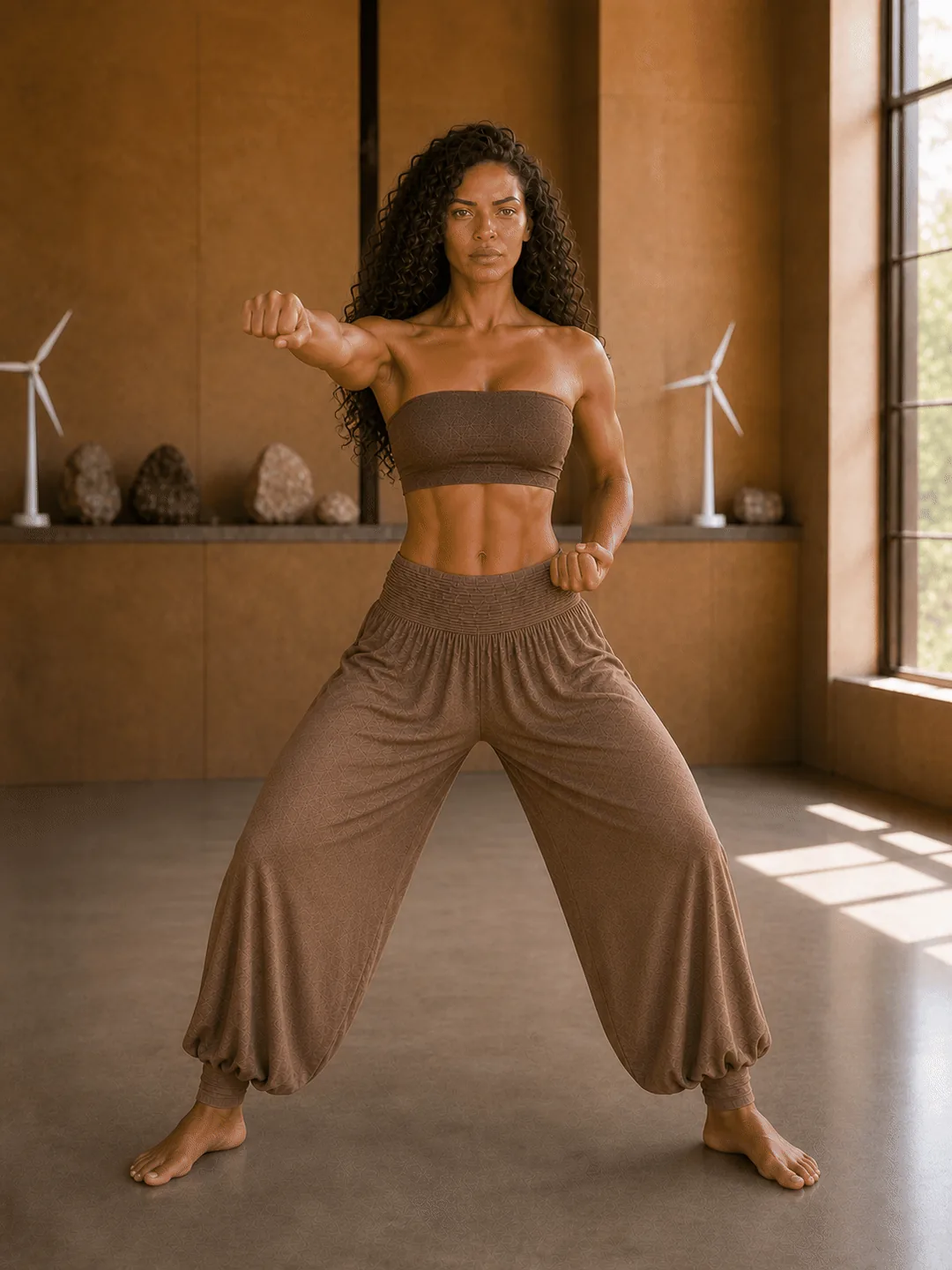
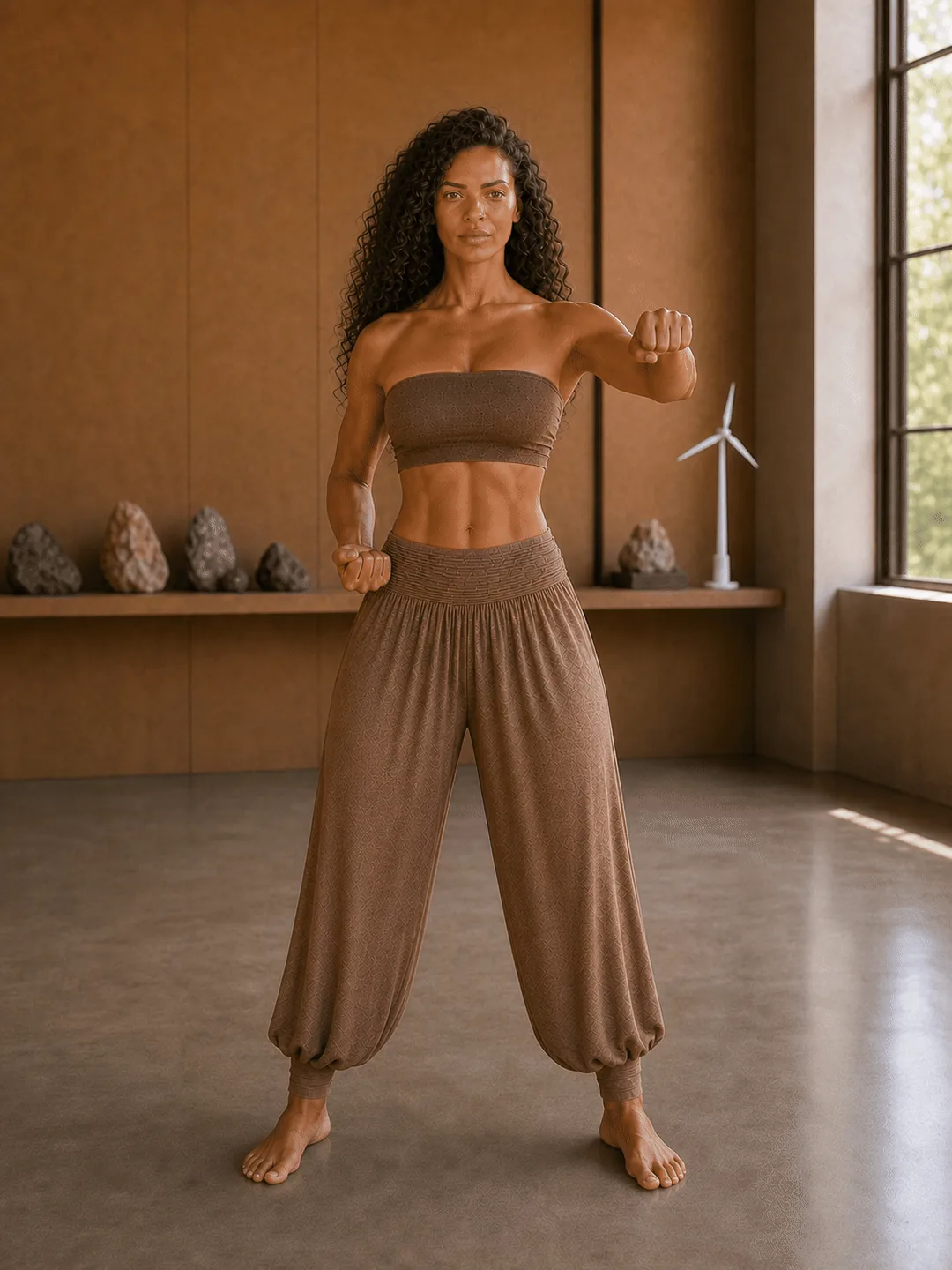
The seventh brocade: from a supported stance, one fist extends slowly forward with a focused gaze, then softens and returns — deliberate intensity held inside an unhurried frame.

AI-generated demonstration image.
How it's practiced
- Step into a comfortable wide stance with knees bent to a stable height. Bring both hands to the waist as soft fists, palms facing upward.

- Choose a point ahead of you at eye level and let the gaze rest there, alert and steady.
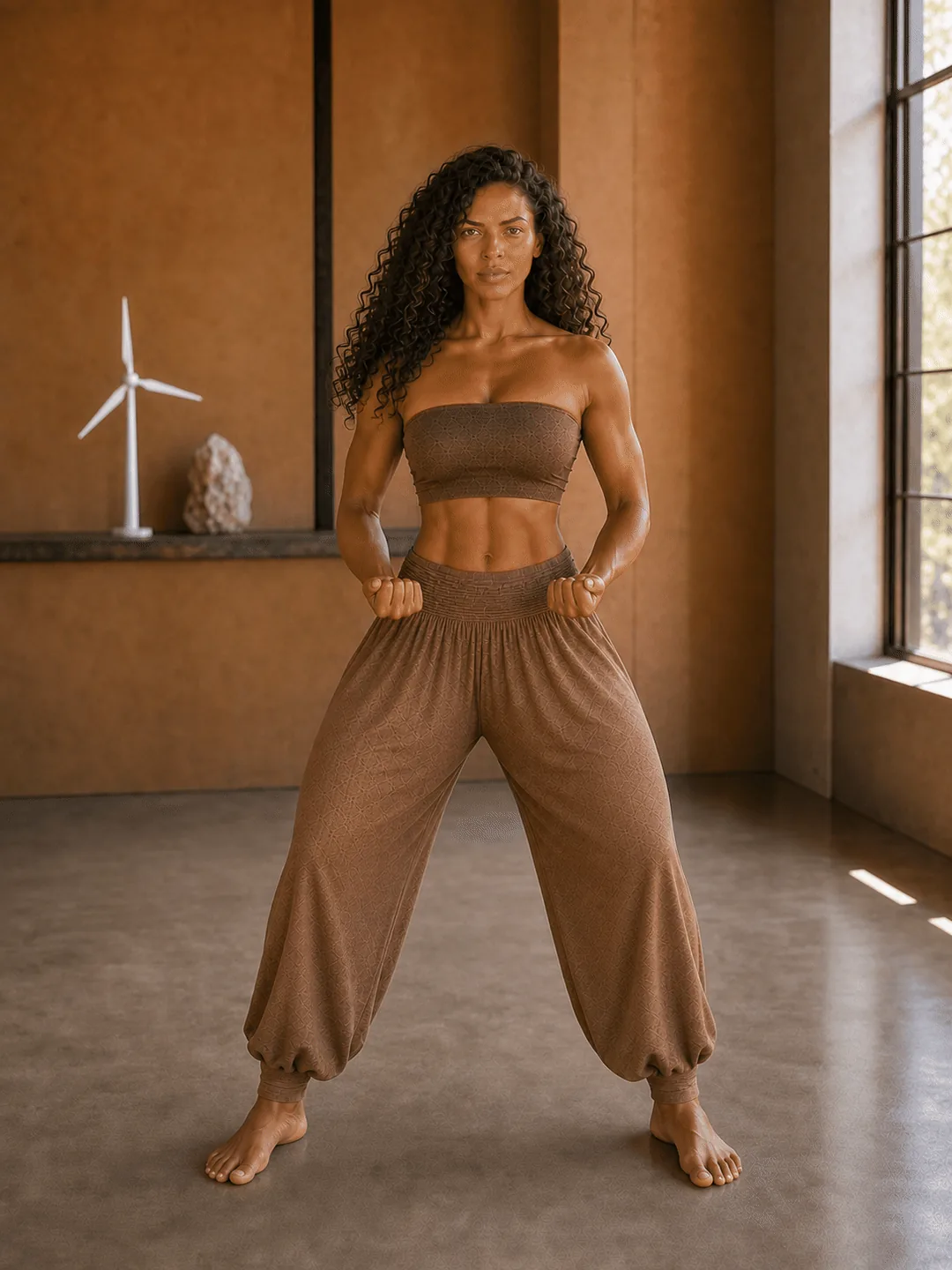
- Slowly extend the left fist straight forward at shoulder height, rotating it so the palm faces down at full comfortable extension. Let the gaze sharpen — focused, not angry at anything real.

- Open the hand, rotate the palm up, and imagine gathering something before re-forming the soft fist.
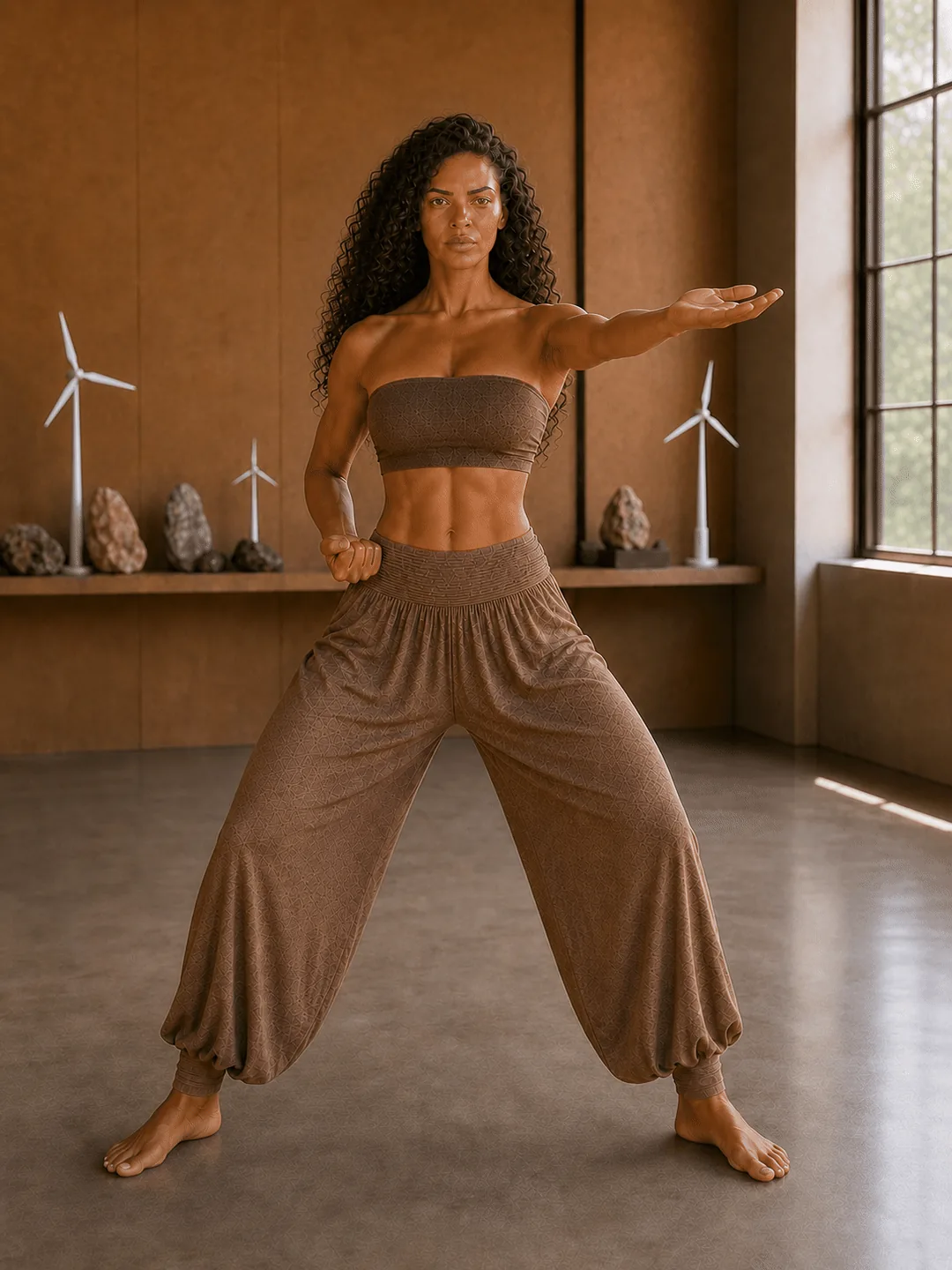
- Draw the fist unhurriedly back to the waist, letting the face and eyes soften completely.

- Repeat with the right fist. Alternate sides, ending evenly, then release the stance and shake out the hands.
Breath
Natural breathing; commonly exhale on the slow extension and inhale on the return. The 'glare' is in the eyes, never in held breath or a clenched jaw.
Variations
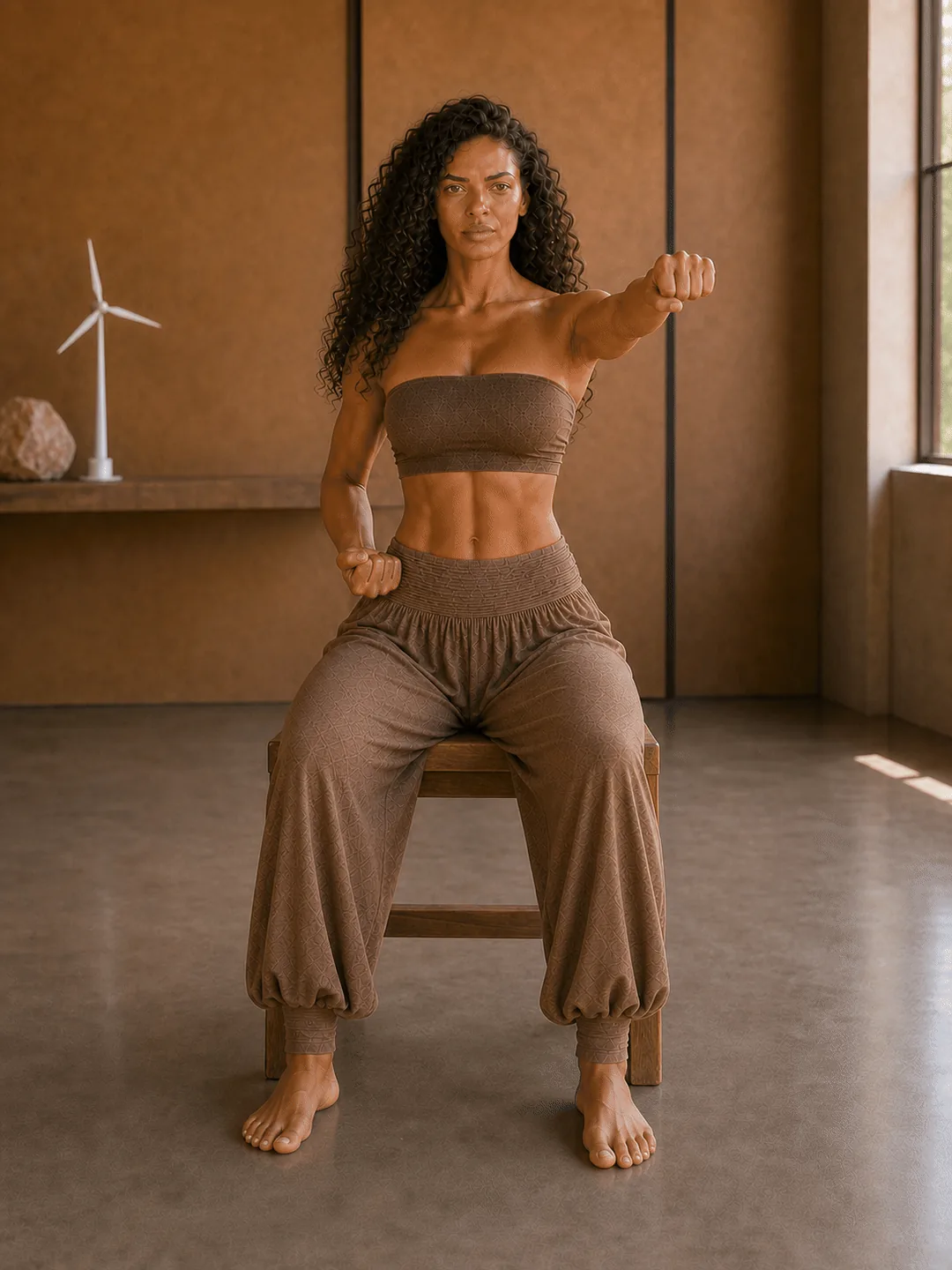
Seated Chair
Modern accessibility adaptation: sit tall with feet planted and perform the same slow alternating press, focus, and release from the waist.
Low Range
Modern accessibility adaptation: extend the arm only halfway, or practice open-palmed with no fist at all; keep the gaze soft if focusing strains the eyes.
How hard is it, honestly?
A moderate gap: the traditional form asks noticeably more than the adapted one.
What's happening in the body — and why
This is the only movement in the set that deliberately builds tension and then deliberately drops it. That contrast is the mechanism — you cannot learn to release what you never noticed you were holding. The slow press trains controlled effort; the release trains the far rarer skill of letting the face and jaw go completely.
Regions most involved. Original diagram — schematic, not anatomical reference.
Muscles
- KINESIOLOGYForearm flexors grip lightly in the fist; triceps and anterior deltoid drive the slow press; biceps control the return.
- KINESIOLOGYQuadriceps and gluteals hold the stance.
- KINESIOLOGYFacial and ocular focus engage deliberately — then release deliberately, which is half the exercise.
Joints & skeleton
- KINESIOLOGYShoulder flexion to roughly ninety degrees with forearm rotation through the press.
- KINESIOLOGYWrist stays neutral inside the soft fist — no white knuckles.
- KINESIOLOGYThe trunk remains square and quiet; power stays smooth rather than ballistic.
Traditional organ framework
- TRADITIONThe classical rhyme says this movement 'increases strength and qi'; some lineages associate the glare with the Liver system, whose 'opening' is said to be the eyes. Associations vary by teacher and are traditional framing, not biomedical claims.
Traditional energetic framework
- TRADITIONTeachings describe directing intent (yi) through the fist and gaze, then releasing it fully. Traditional imagery, not a mechanism.
What you might notice
Newer or limited mobility
EXPERIENCEThe stance can be as high as needed, or seated. If making a fist is uncomfortable, press with an open palm — the slow focus-and-release is the heart of the movement.
Moderate experience
EXPERIENCEMild whole-arm effort and a noticeable mood of concentration during the press, with a distinct relief on the release. Sensations vary.
Experienced
EXPERIENCEKeep the press slow and even from start to finish and study the contrast between full focus and full softening — especially in the face.
Stop signals
- sharp, pinching, or worsening joint or muscle pain
- headache or eye strain building across repetitions — soften the gaze or stop
- dizziness or faintness
- chest pressure or pain, palpitations, or unusual shortness of breath
- any severe or persistent symptom: stop and seek appropriate medical help
Effects over time
Right away
EXPERIENCEPractitioners often describe feeling clear-headed and pleasantly 'gathered' after the alternating focus-release cycles. Responses vary and are not diagnostic.
Weeks
EXPERIENCEThe press typically becomes smoother and the release more complete with practice. No reliable source establishes a guaranteed timeline for this single movement.
Months
EVIDENCEFull-set evidence only: multi-week Ba Duan Jin program studies suggest possible improvements in aspects of physical function in studied populations; no Move-07-specific claim is supported.
Recovery
Forearms may feel lightly worked. Loosen the fist if gripping leaves residual tension.
Timing & rhythm
- Time of day: PRACTICALNo source-backed requirement. Some practitioners avoid strongly focusing movements immediately before sleep; follow your own response.
- Food: PRACTICALNo evidence-based interval; the stance is more comfortable away from heavy meals.
- Frequency: Part of the full standardized set; commonly about three repetitions per side. Comfort over count.
Pairings
Combos with compounding effect
- qigong.baduanjin.wise-owl-gazes-backwards — Focus hygiene pair: deliberate sharp focus and release, then wide easy gazing — a complete attention workout for screen-tired eyes.
Strength pairings
- KINESIOLOGYModern cross-training option — not part of Ba Duan Jin: slow tempo presses with very light load echo the same controlled pattern under a coach's guidance.
Stretch pairings
- Modern optional pairing: gentle wrist and finger extension stretches after the final round.
Everyday life
Opening a stubborn jar is this movement with a purpose: stance, grip, focus, breath — and full release afterward, including the face.
Contemplative pairing
Practice phrase: CANONOriginal Yarra practice phrase: Breathing out, I mean it; breathing in, I let it go completely.
Meditation pairing: One soft-gaze breath between sides, letting the eyes rest on nothing in particular.
Take care
- hand, wrist, or elbow conditions → open-palm variant
- eye conditions aggravated by intense focus, or headache-prone → soft-gaze variant
- uncontrolled-blood-pressure → seated variant, loose fists, natural breath only
- knee discomfort → higher or seated stance
Sources & further study
What this page is built on
- Health Qigong — Ba Duan Jin (Chinese Health Qigong Association, official standardized form)
- Peer-reviewed systematic reviews on Ba Duan Jin programs (full-set evidence; cite specific reviews at page build)
Follow it further
- REFERENCEBaduanjin qigong — overview
- EVIDENCEBaduanjin research on PubMed
Images on this page are original to this site. We do not republish third-party instructional photography; where another source is useful, we link to it rather than copy it. See our sources & images policy.
Your practice
Stored only in this browser. Mindful repetitions count; rushing doesn't. Optional goal — not a health target.