Compendium › Qigong › Standing post
Wuji Standing
无极桩 · Wújí zhuāng
The simplest standing practice: feet grounded, knees soft, arms at rest — standing still on purpose, letting the structure carry itself while attention stays home.

AI-generated demonstration image.
How it's practiced
- Stand with feet about shoulder-width, toes forward or slightly out, weight even between both feet and balanced between heel and forefoot.
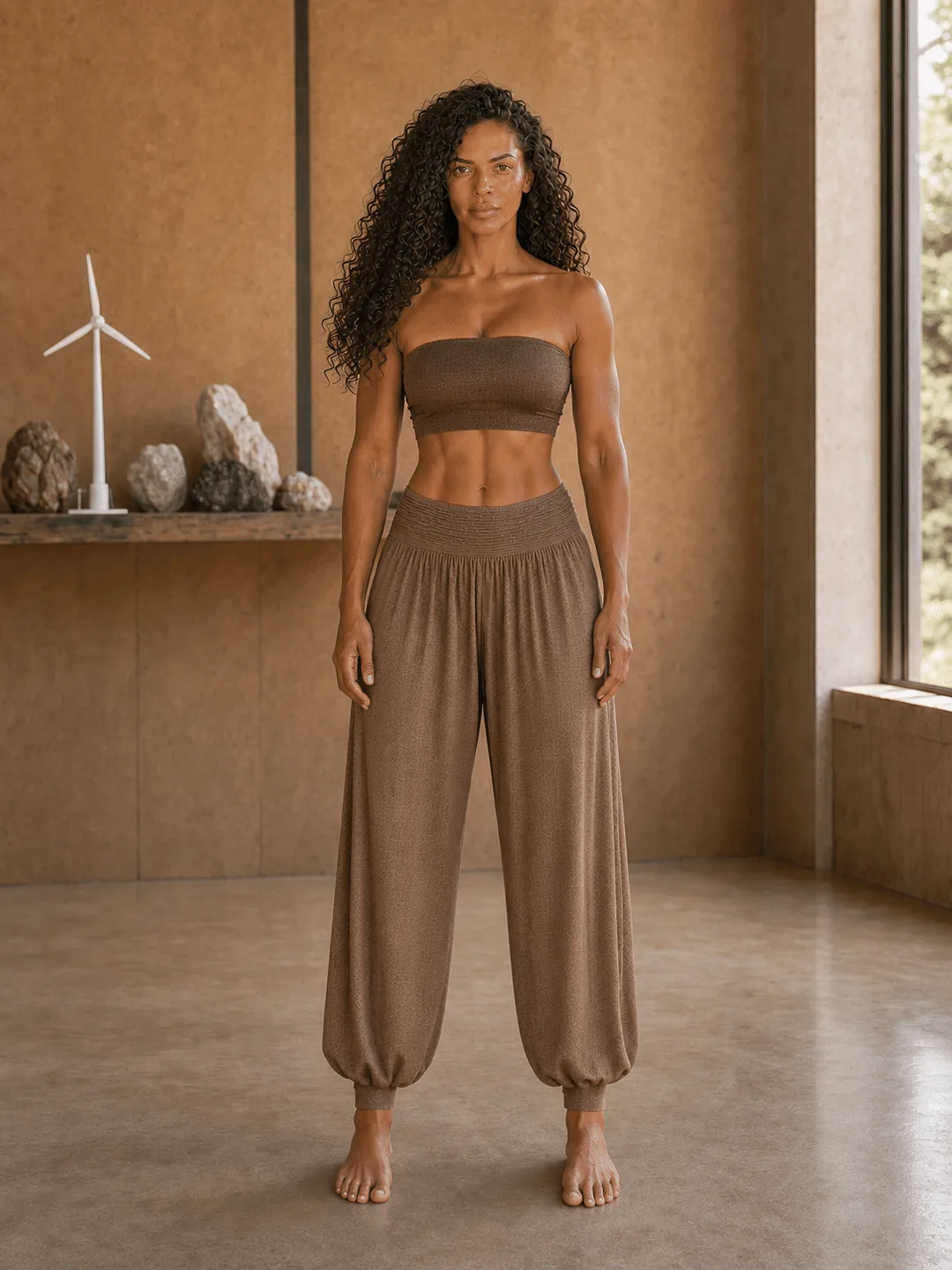
- Soften the knees — unlocked, not bent into effort.

- Let the pelvis hang level, neither tucked nor tilted; imagine sitting a centimeter into a very tall stool.

- Let the hands rest at the sides, shoulders heavy, chest neither puffed nor collapsed.
- Let the head float level, as if lightly suspended from above; soften the jaw and the gaze.
- Stand and breathe naturally for one to five minutes. When the mind leaves, bring it back to the feet — that return is the exercise.
Breath
Entirely natural. The practice is to leave the breath alone and notice it anyway.
Variations
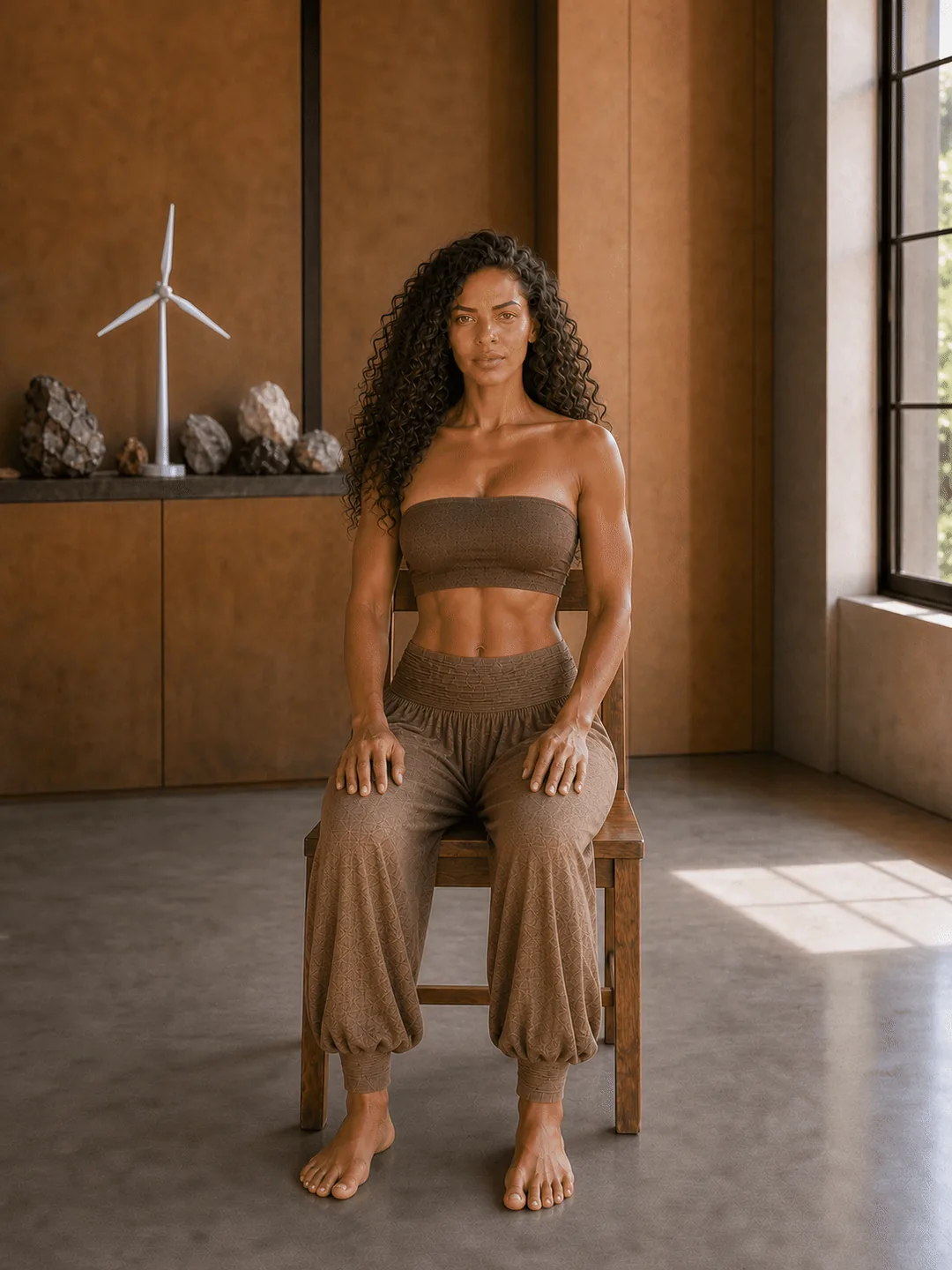
Seated Chair
Modern accessibility adaptation: the same stacked, quiet uprightness from a firm chair — feet planted, hands resting, attention home.
Supported
Stand with the back near a wall or fingertips on a counter, using touch only as reassurance.

Advanced
Traditional progression: raise the arms to a rounded 'holding the ball' position at chest height and extend duration — noticeably more demanding.
How hard is it, honestly?
A wide gap. The friendly version and the traditional version are nearly different disciplines wearing the same name — worth knowing before you go looking for more.
What's happening in the body — and why
Standing still is not resting: the deep postural muscles work continuously at low intensity while your body makes hundreds of tiny balance corrections a minute. Because nothing is moving, every unnecessary tension you carry becomes audible — the shoulders report first, then the jaw. The practice is an audit of effort you did not know you were spending.
Regions most involved. Original diagram — schematic, not anatomical reference.
Muscles
- KINESIOLOGYDeep postural muscles — spinal stabilizers, hip stabilizers, foot intrinsics — hold quiet, low-level activity.
- KINESIOLOGYThe practice reveals unnecessary tension: shoulders, jaw, and hands report in as they let go.
Joints & skeleton
- KINESIOLOGYJoints stack near neutral: ankle under knee under hip under shoulder under ear.
- KINESIOLOGYMicro-sway is normal and useful — balance is a live negotiation, not a freeze.
Traditional organ framework
- —
Traditional energetic framework
- TRADITIONWuji names the undifferentiated stillness before movement in Daoist cosmology; teachings describe qi settling to the lower dantian while standing. Traditional framing, not a mechanism.
What you might notice
Newer or limited mobility
EXPERIENCETwo minutes can feel surprisingly long — that is normal, not failure. Stand near a wall or chair for confidence, or practice the seated variant with the same tall, quiet attention.
Moderate experience
EXPERIENCEWarmth in the hands, mild trembling in the legs, and a parade of small tensions revealing themselves are all commonly reported. Sensations vary.
Experienced
EXPERIENCEExtend duration gradually and study ever-smaller adjustments — the practice becomes an audit of effort you didn't know you were spending.
Stop signals
- dizziness or faintness — sit down
- sharp joint pain (dull postural fatigue is expected; sharpness is not)
- numbness beyond mild tingling
- any severe or persistent symptom: stop and seek appropriate medical help
Effects over time
Right away
EXPERIENCECommonly: a settled, collected feeling and clearer awareness of habitual tensions. Responses vary.
Weeks
EXPERIENCEStanding tolerance and postural comfort typically grow week by week. No guaranteed timeline is supported.
Months
EVIDENCEStanding practice appears within many studied qigong/taichi programs associated with balance benefits in reviews; isolated wuji-standing evidence is limited. No specific claims made.
Recovery
Legs may feel worked after longer stands. Shake out gently afterward — traditional and sensible.
Timing & rhythm
- Time of day: TRADITIONMany lineages favor morning standing. [PRACTICAL] Any steady, unhurried moment works.
- Food: PRACTICALComfortable any time; very full meals can make standing feel heavy.
- Frequency: Daily-friendly. One to five minutes to start; tradition extends this gradually.
Pairings
Combos with compounding effect
- qigong.baduanjin.two-hands-hold-up-the-heavens — Classical order: stillness first, then movement — the brocades open from exactly this stance.
- breath.functional.coherent-breathing — Stack stillness with slow rhythm for a complete five-minute reset.
Strength pairings
- KINESIOLOGYModern cross-training option: light suitcase carries train the same quiet anti-sway stability under a coach's guidance.
Stretch pairings
- Gentle calf and hip-flexor stretches pair well after longer stands.
Everyday life
Every queue is a free standing session. The person ahead of you paying in coins is not an obstacle; they are a patron of your practice.
Contemplative pairing
Practice phrase: CANONOriginal Yarra practice phrase: Nothing to do; nowhere to lean; already held.
Meditation pairing: This is standing meditation; it needs no pairing, only minutes.
Take care
- orthostatic hypotension, dizziness, or fainting history → seated or supported variant only
- pregnancy → supported variant welcome
- prolonged-standing restrictions (circulatory or other) → professional guidance; seated variant
- knee discomfort → check the knees are soft, not braced
Sources & further study
What this page is built on
- Zhan zhuang / standing-post descriptions in standard qigong references (e.g., lineage manuals; cite edition at page build)
- Balance-related findings in qigong/taichi program reviews (full-program evidence; cite at page build)
Follow it further
- REFERENCEZhan zhuang — overview
- EVIDENCEQigong and balance research on PubMed
Images on this page are original to this site. We do not republish third-party instructional photography; where another source is useful, we link to it rather than copy it. See our sources & images policy.
Your practice
Stored only in this browser. Mindful repetitions count; rushing doesn't. Optional goal — not a health target.